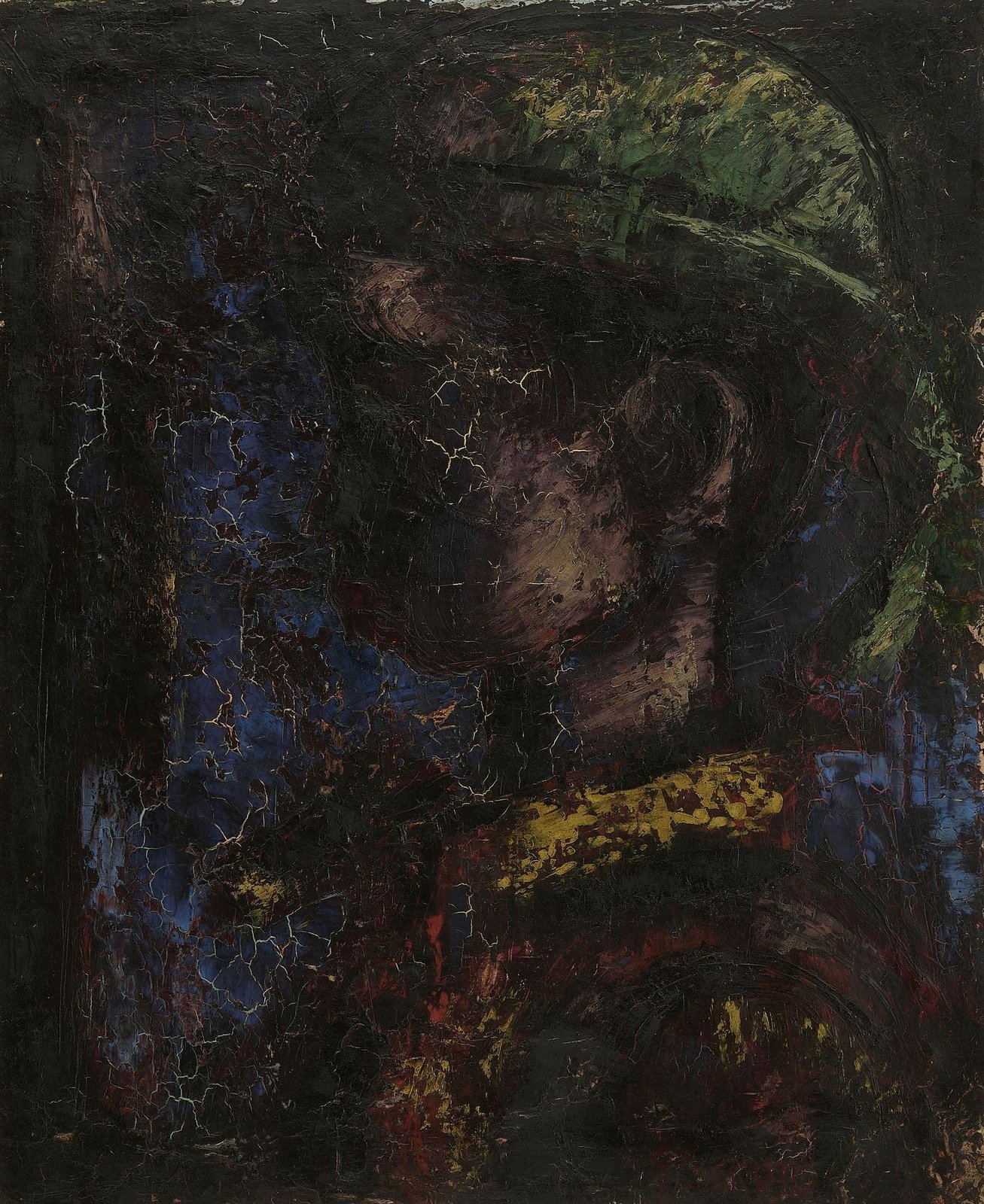
Gerard Sekoto, a South African painter and musician born in 1913, gave everyday scenes of Black urban life a commanding presence. After training as a teacher, he devoted himself to painting, working in Johannesburg, Cape Town and Pretoria. His simplified, solid figures inhabit spaces built through colour and light. In Street Scene, painted in 1945, bodies, buildings and shadows form an image that combines a clear structure with close attention to human presence.
Sekoto left for France in 1947. Exile did not sever his connection with South African neighbourhoods, whose inhabitants and ordinary gestures remained important subjects. Music also accompanied this journey. Through its attention to people, his work affirms a dignity threatened by segregation, while giving recollection an independent and enduring life in paint.
This profile brings together identity references for Gerard Sekoto and paintings, drawings and works on paper documented in auction catalogues.
Documented auction references
1auction reference
1auction house
1documented result with a price
Genève Enchères
References include catalogue entries and available results; they do not all represent completed sales. Attributed works and special lots are excluded from the priced results.
SwissArtGallery documentary note based on the cited sources. Titles, media and qualifications are provided in the profile language; the original catalogue wording remains available in each record. Profile updated :
Etel Adnan, born in Beirut in 1925, worked simultaneously as a poet, essayist and visual artist. Trained in philosophy, she developed her painting between abstraction and the suggest…
William Kentridge, born in Johannesburg in 1955, develops a practice in which drawing, cinema and theatre continually inform one another. His animation technique uses charcoal drawin…
Lee Ufan, born in Korea and based in Japan from 1956, brings painting and sculpture together with theoretical reflection. He became a central figure in Mono-ha, a movement examining…