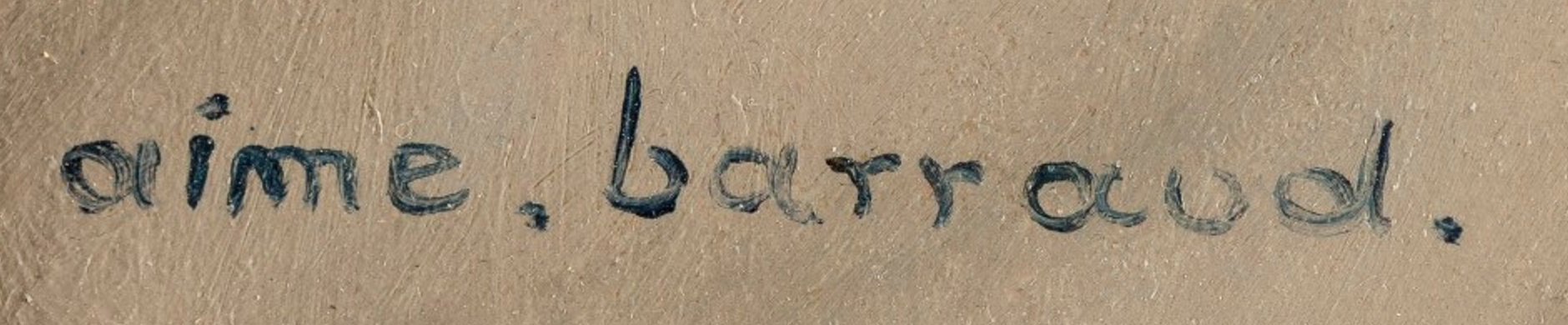
Aimé Barraud
Born in 1902.
Died in 1954.
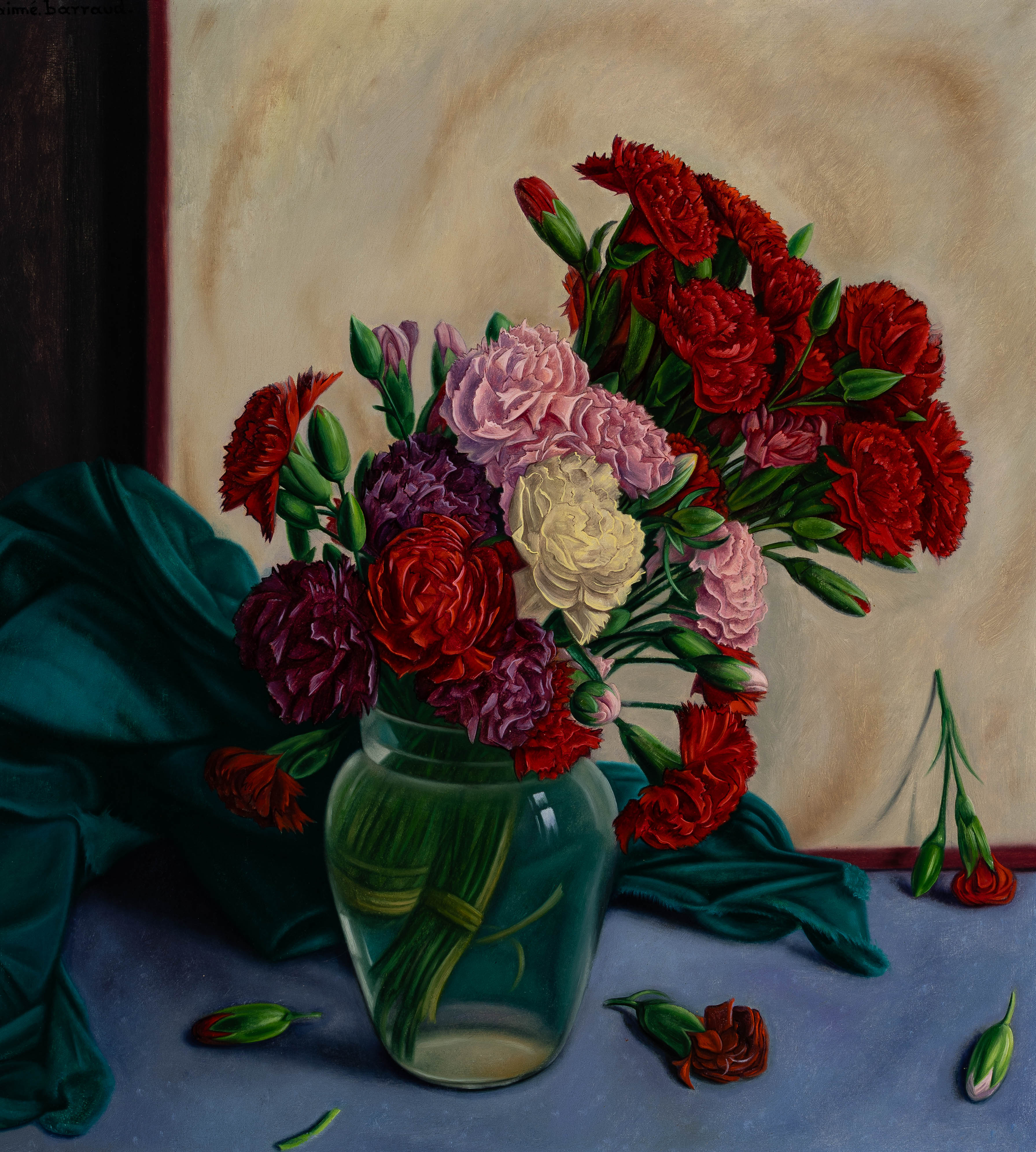
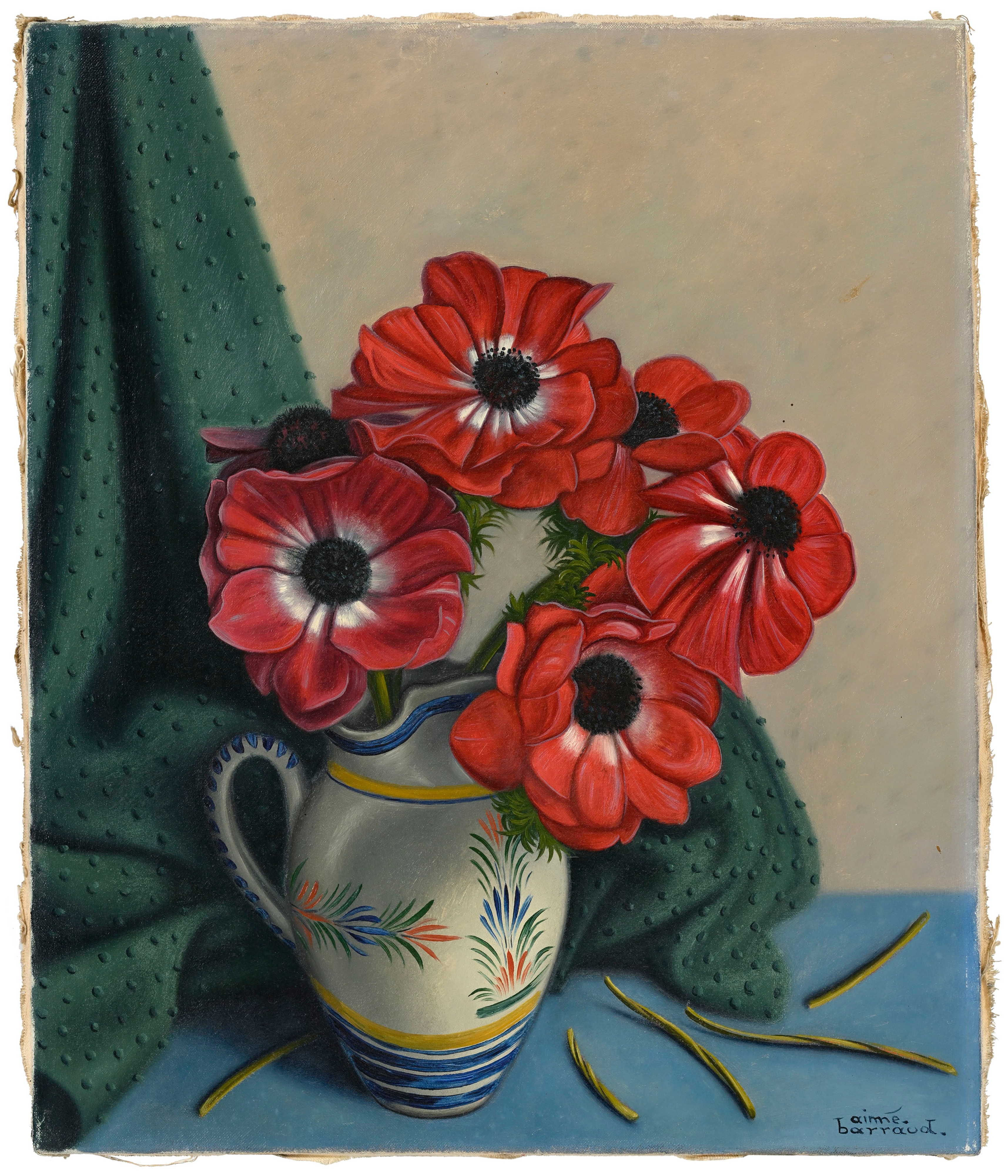
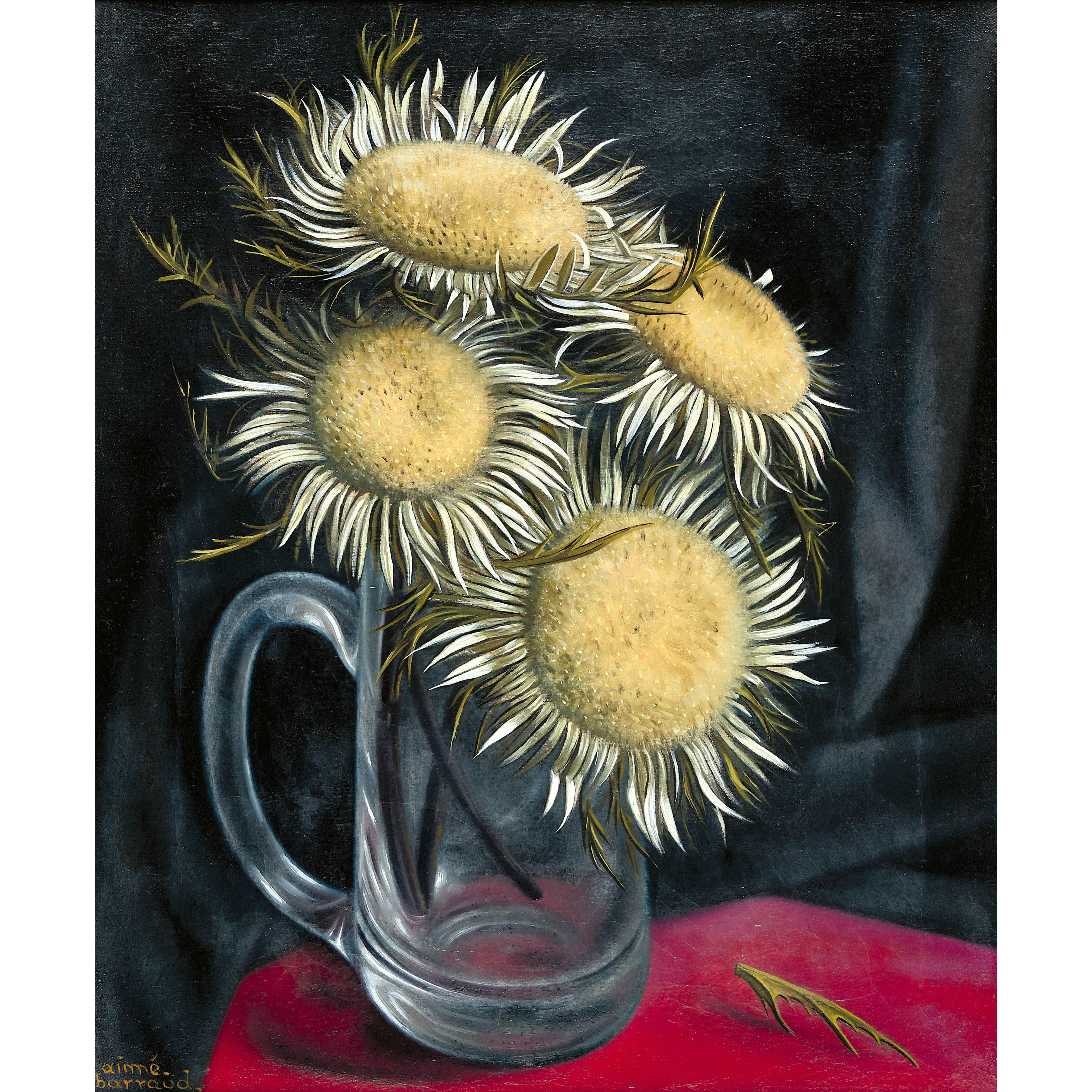
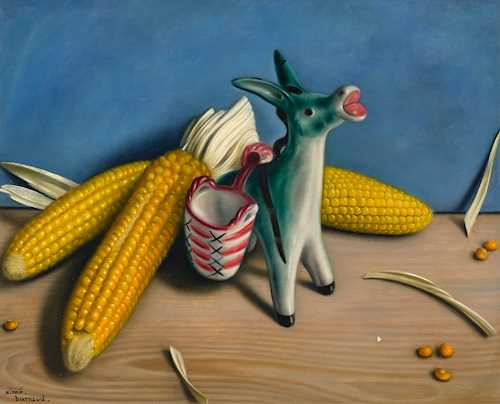
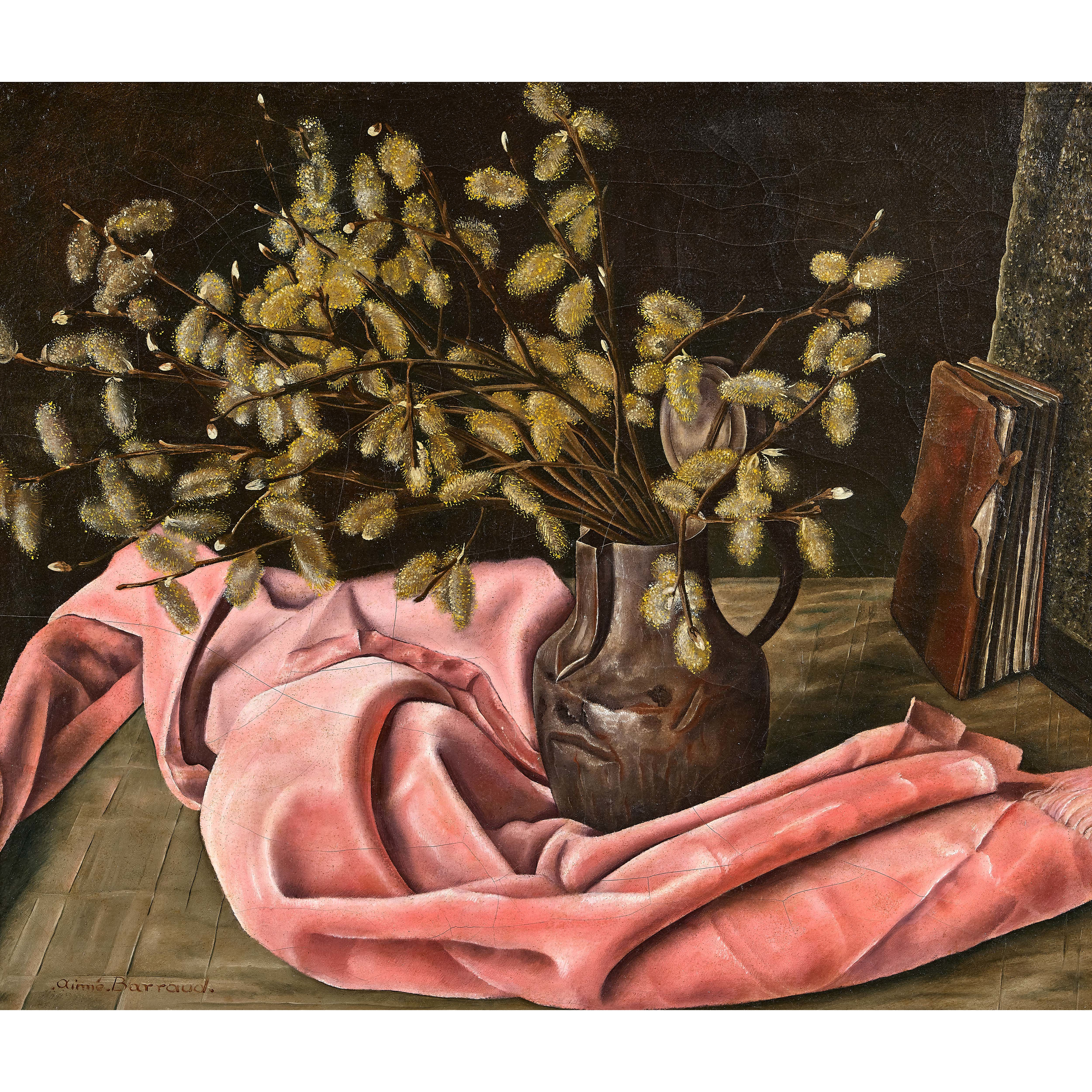
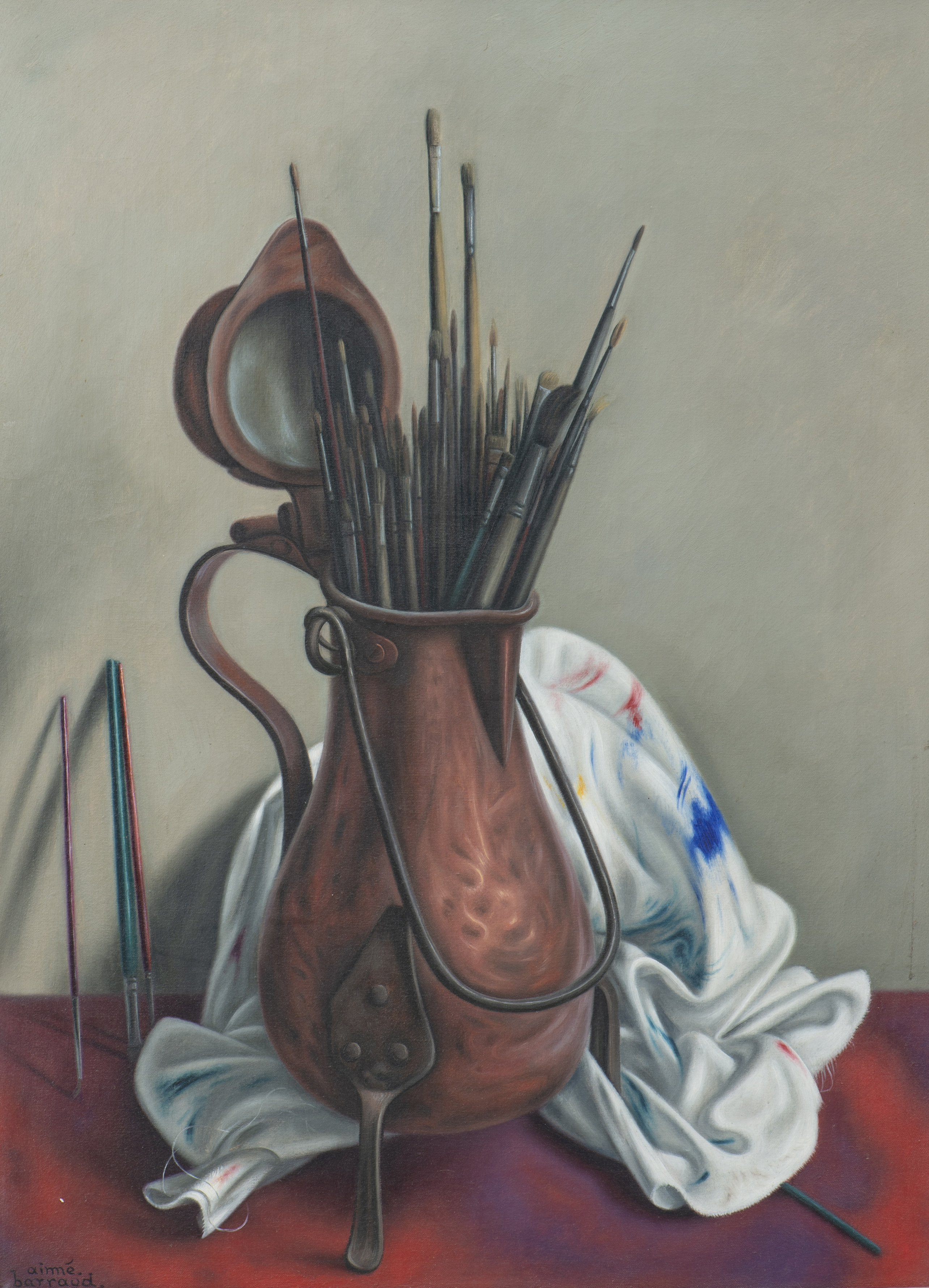
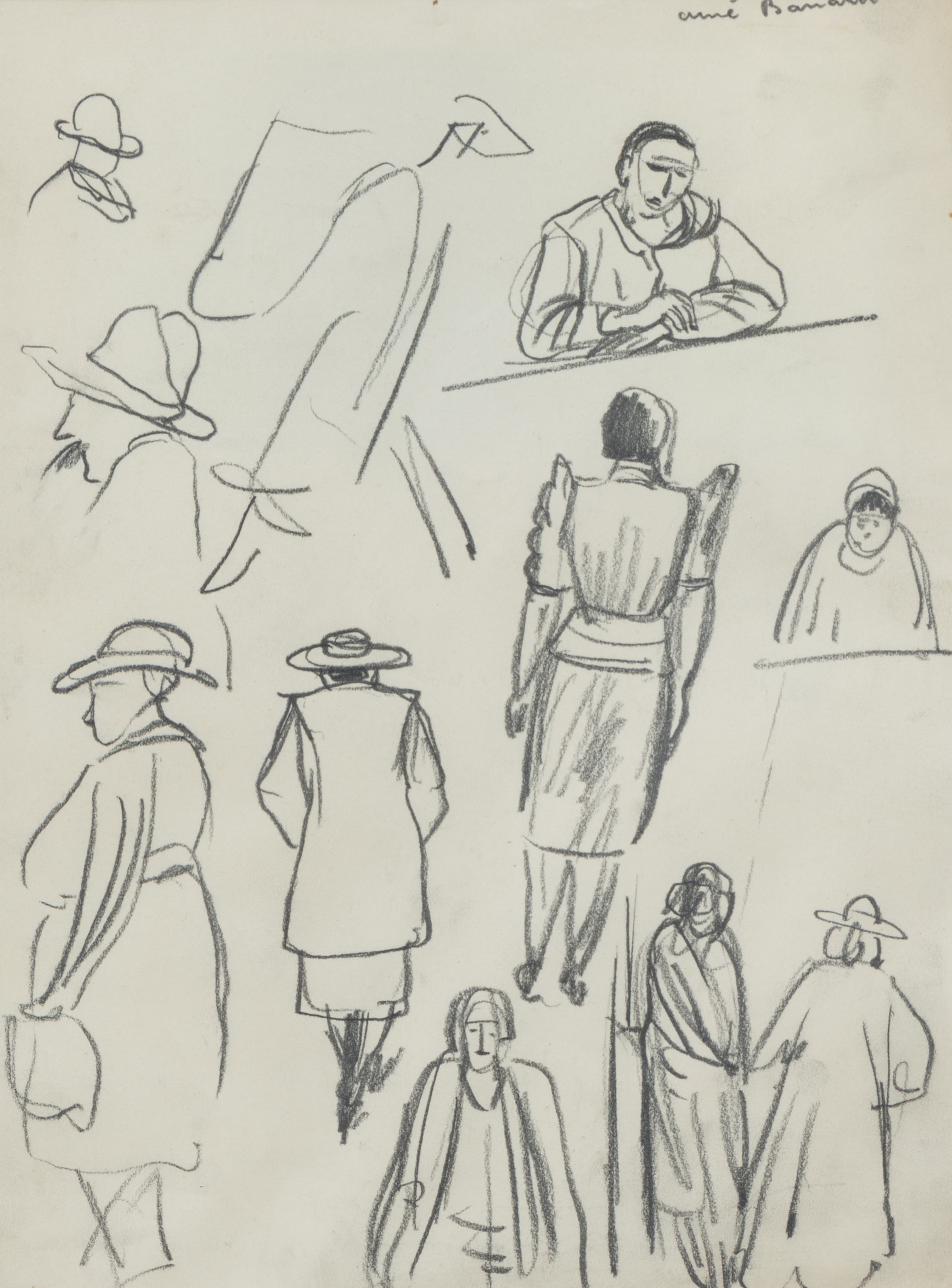
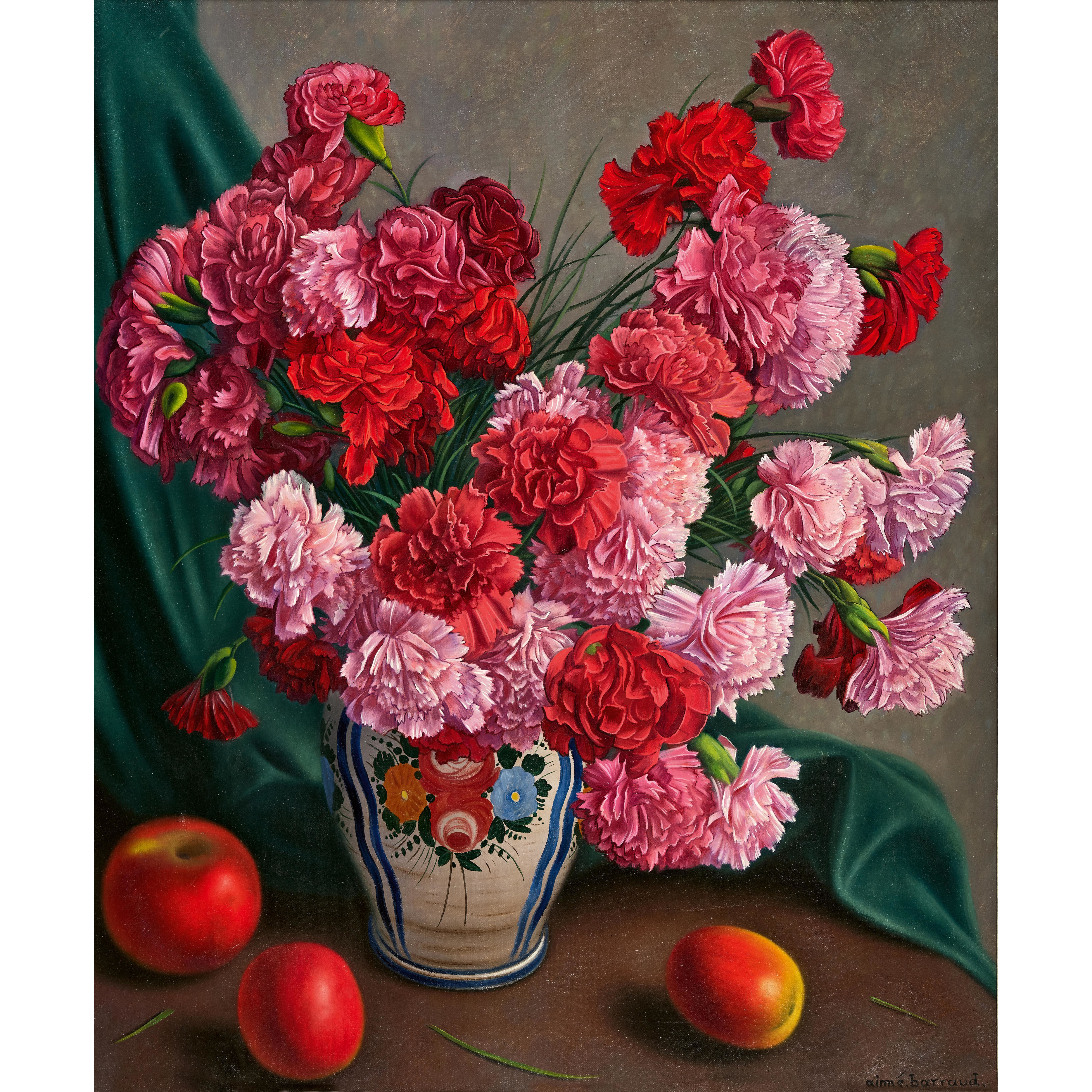
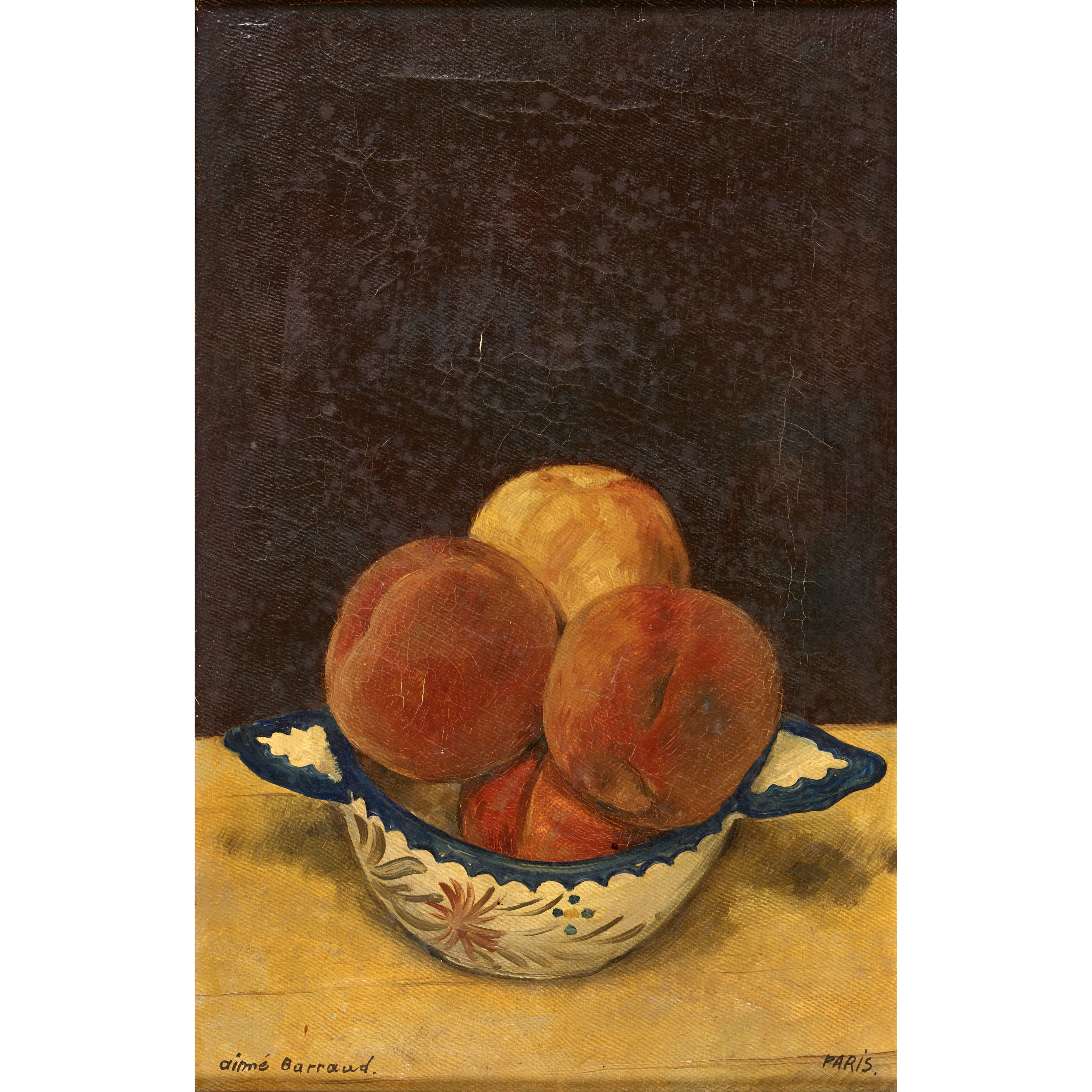
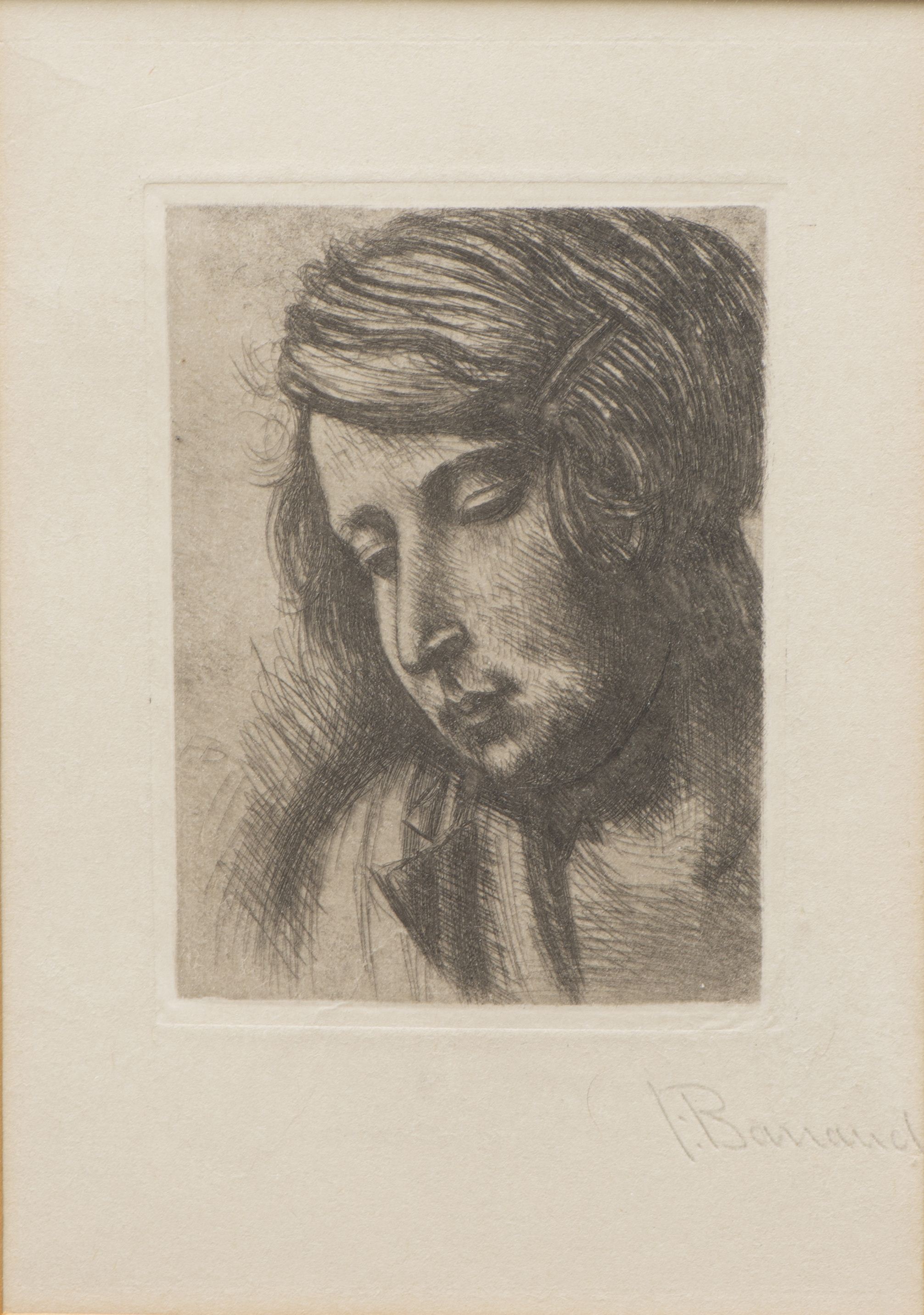
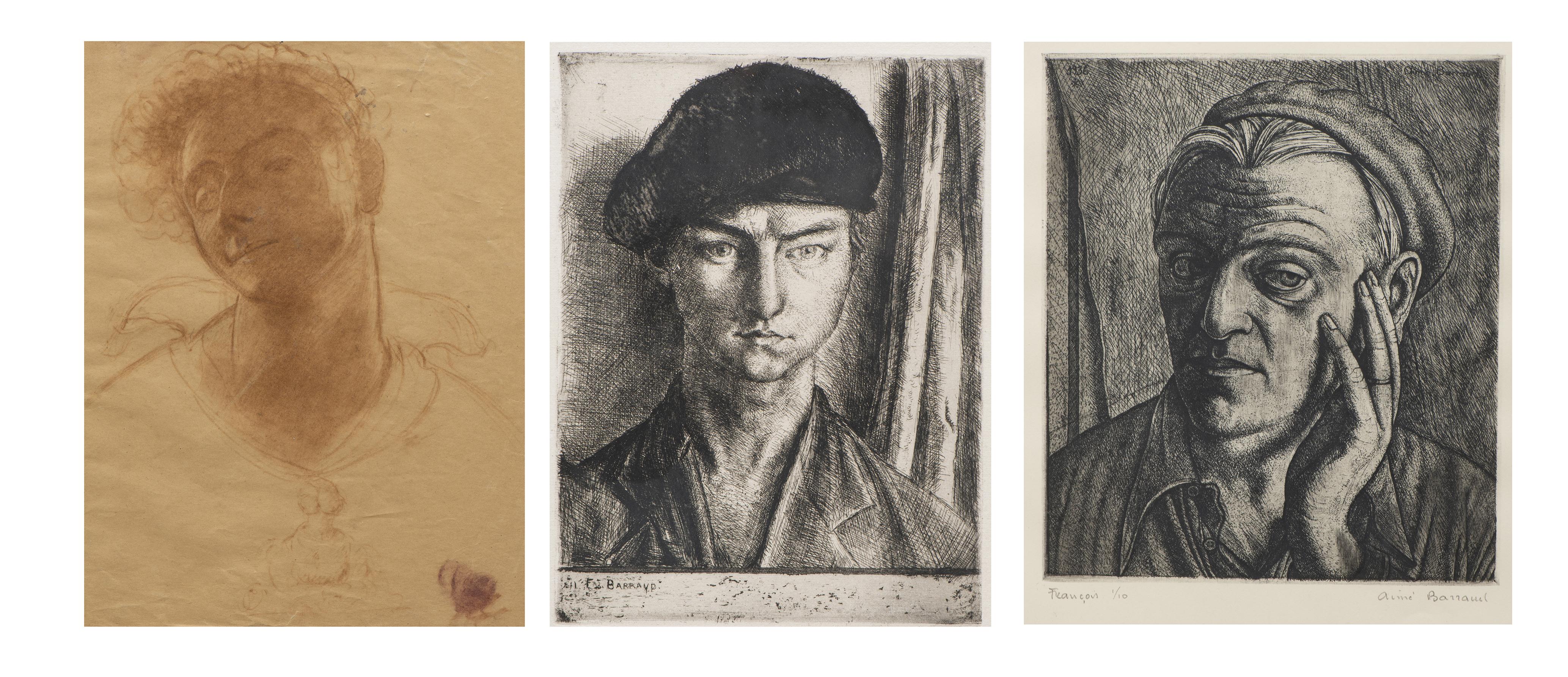
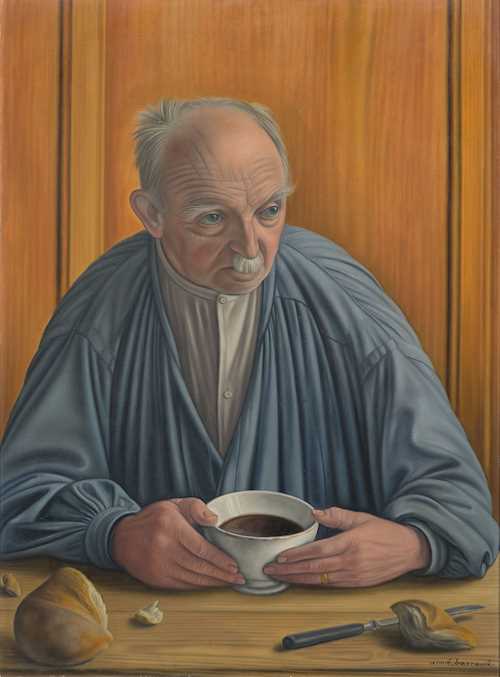
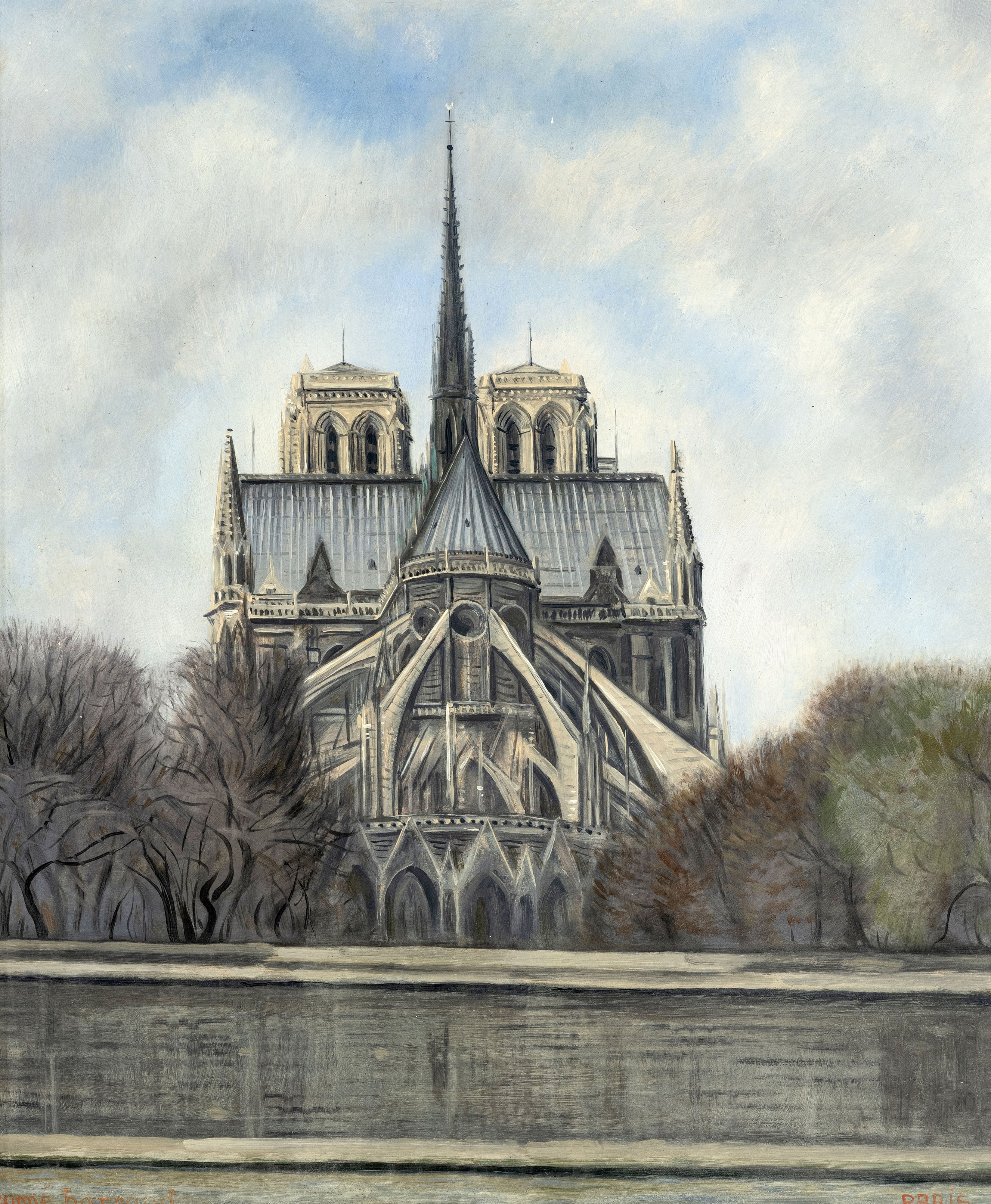
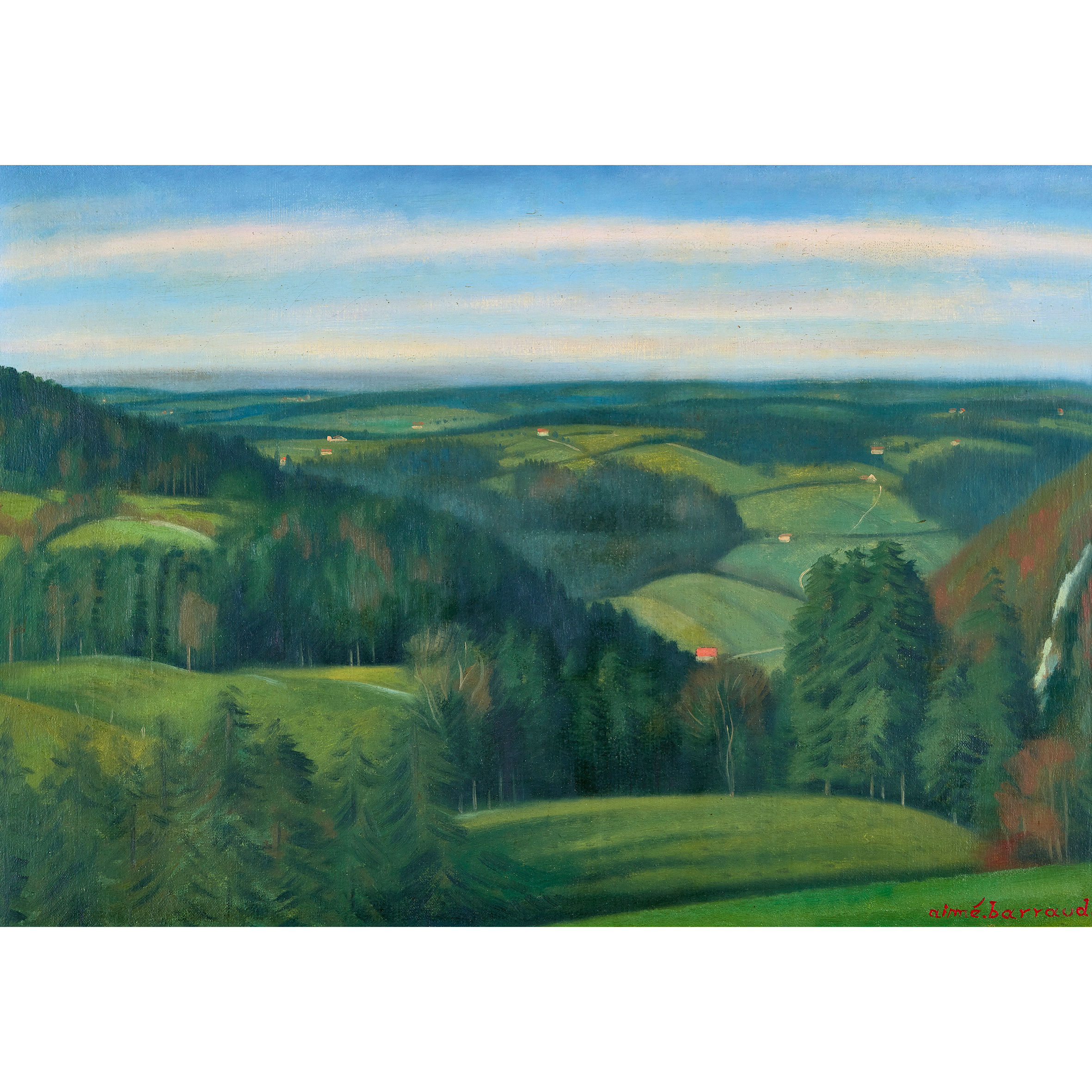
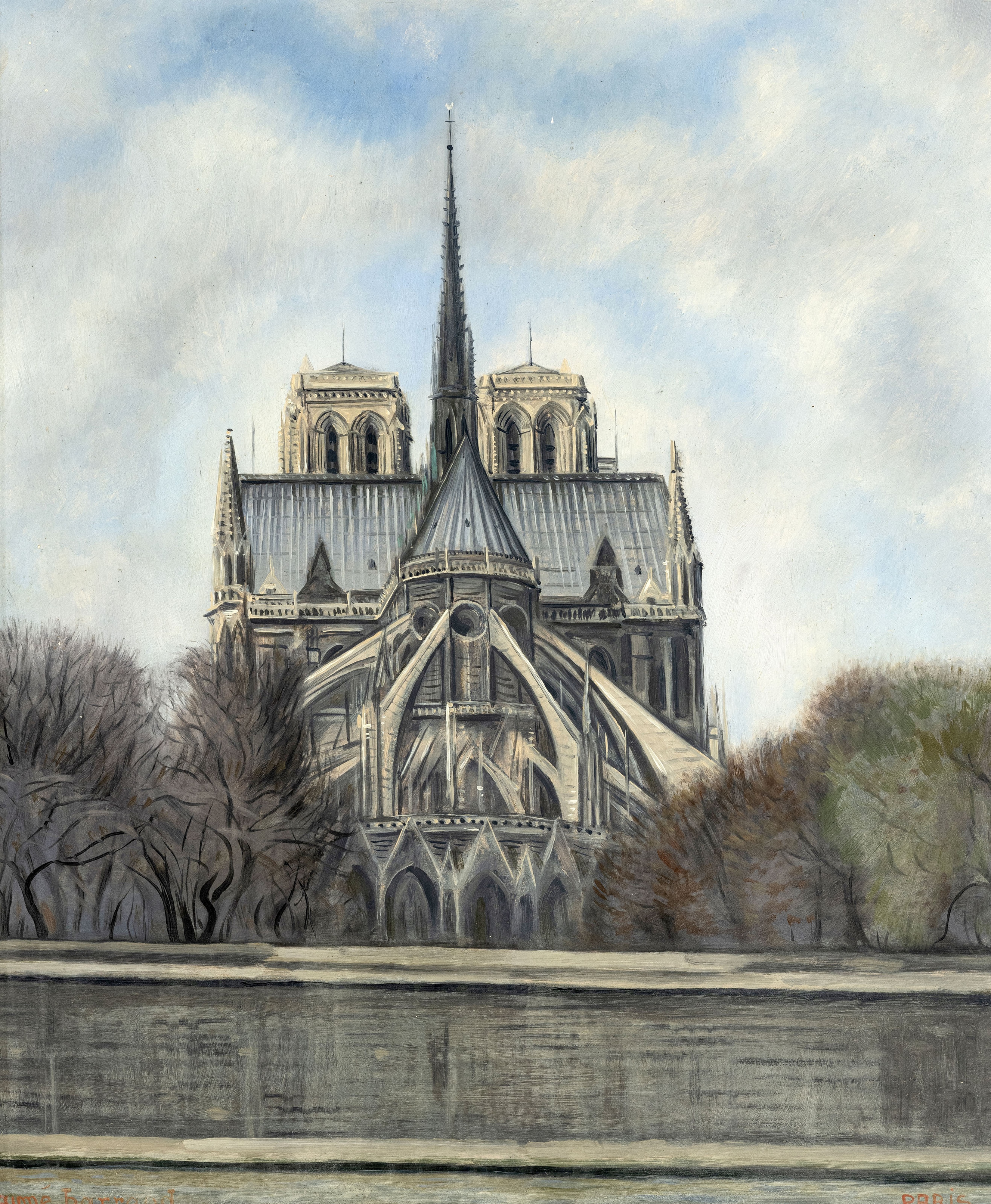
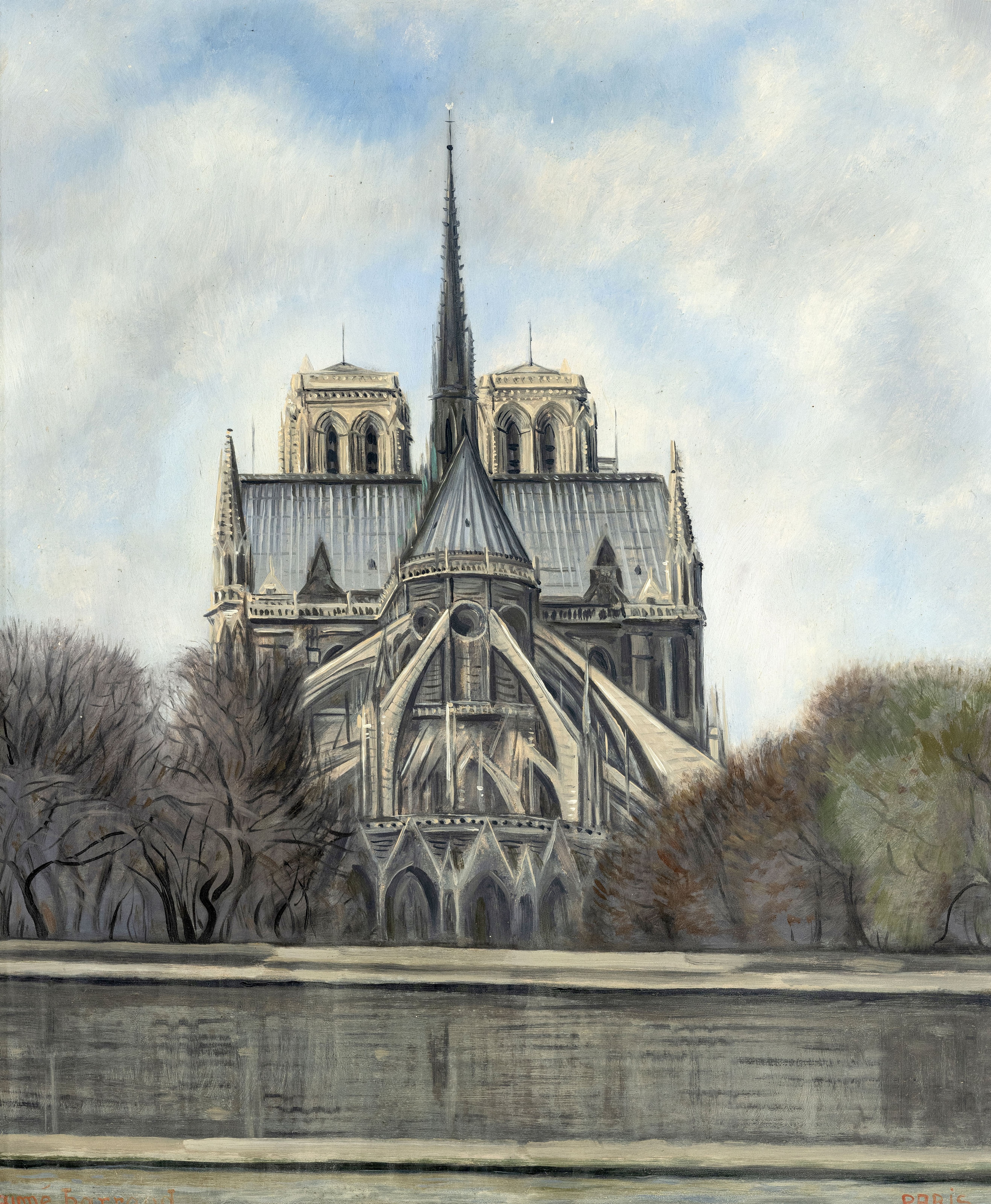
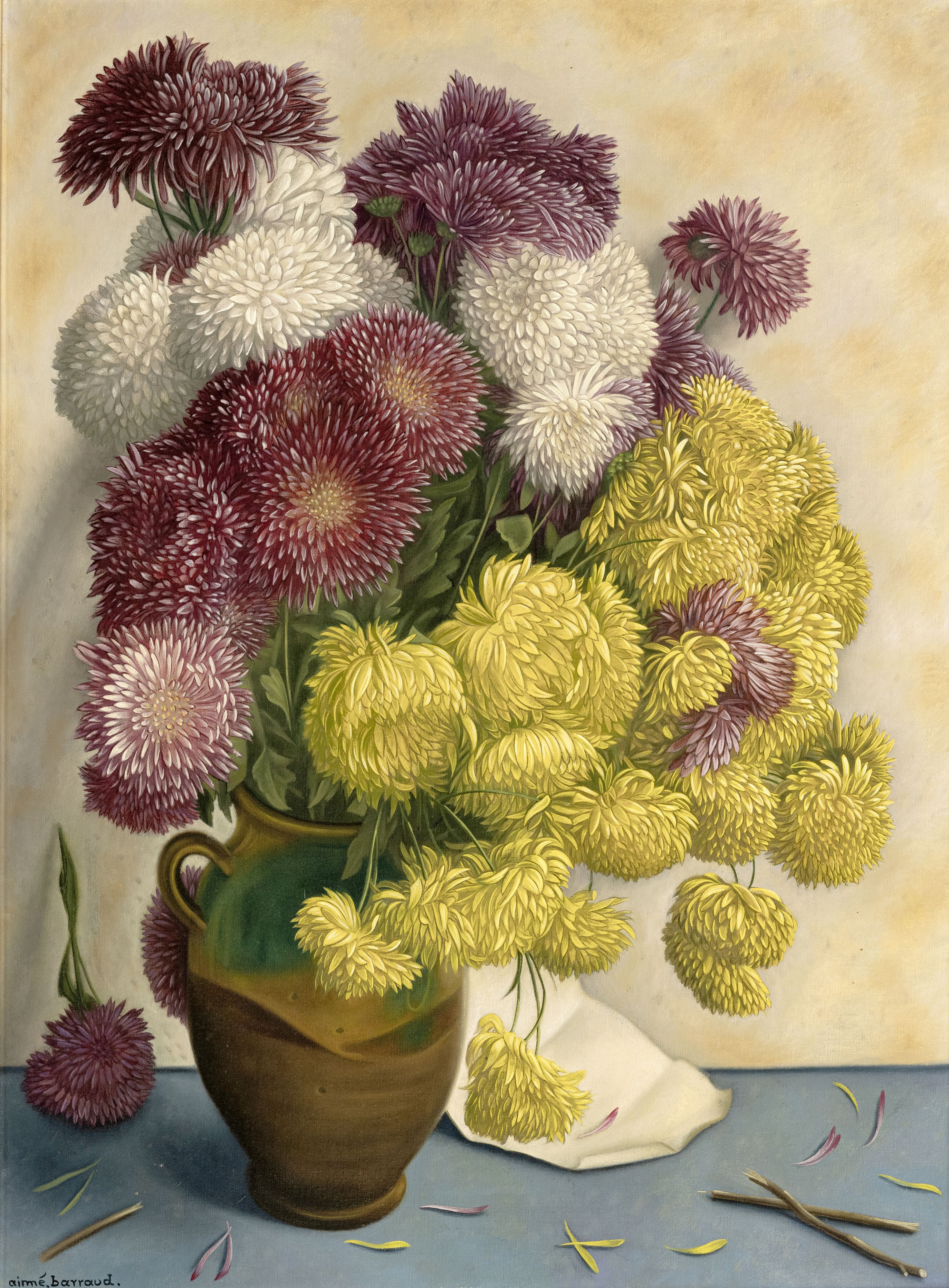
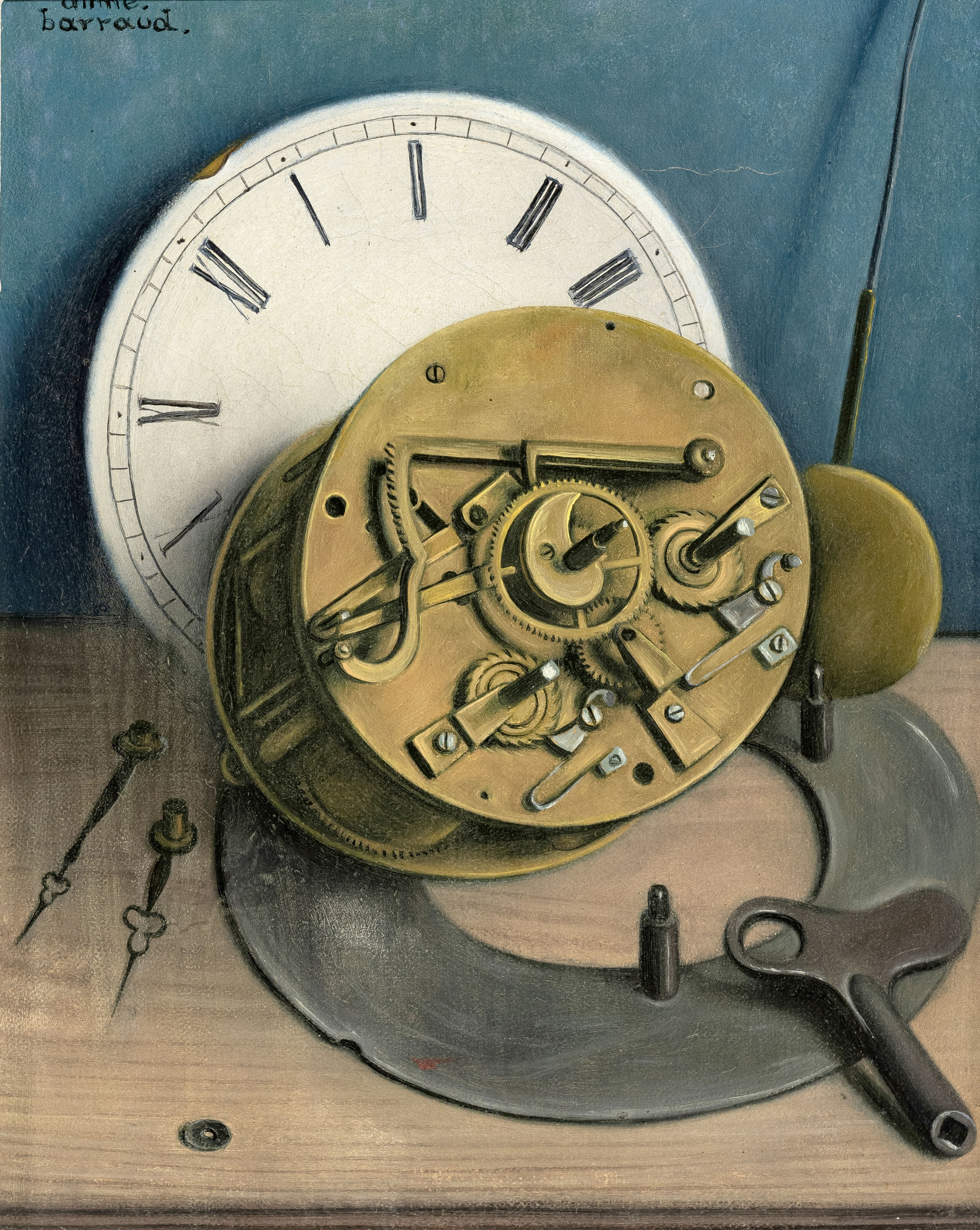
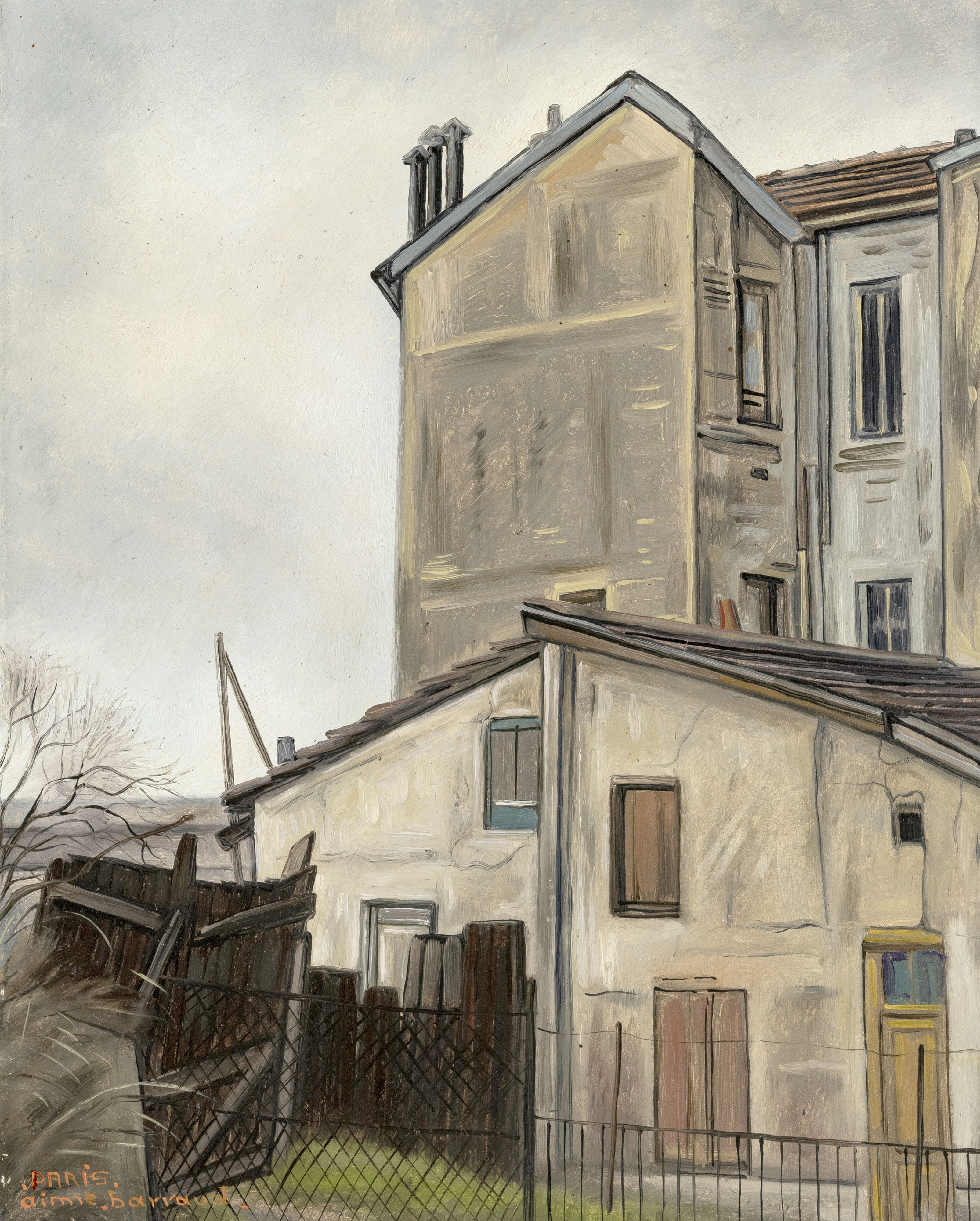
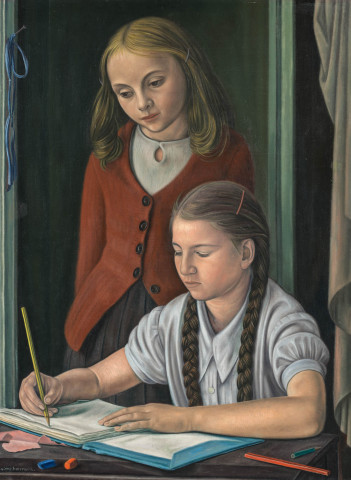
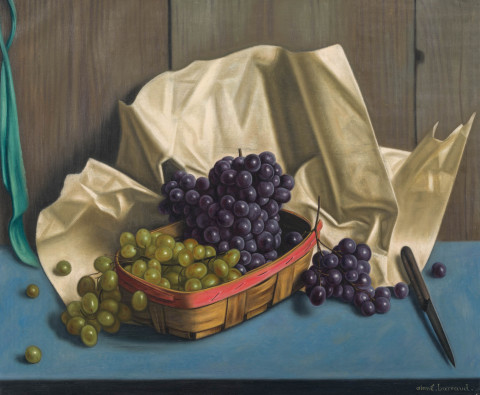
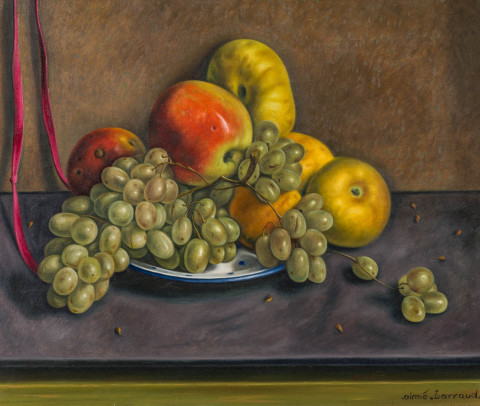
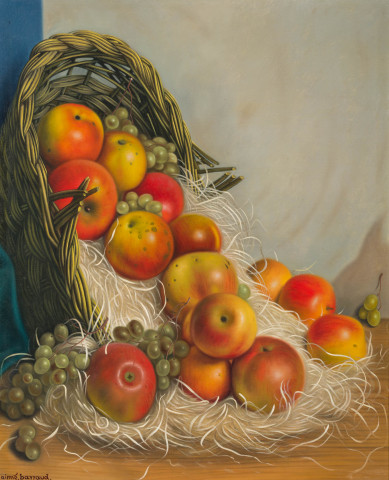
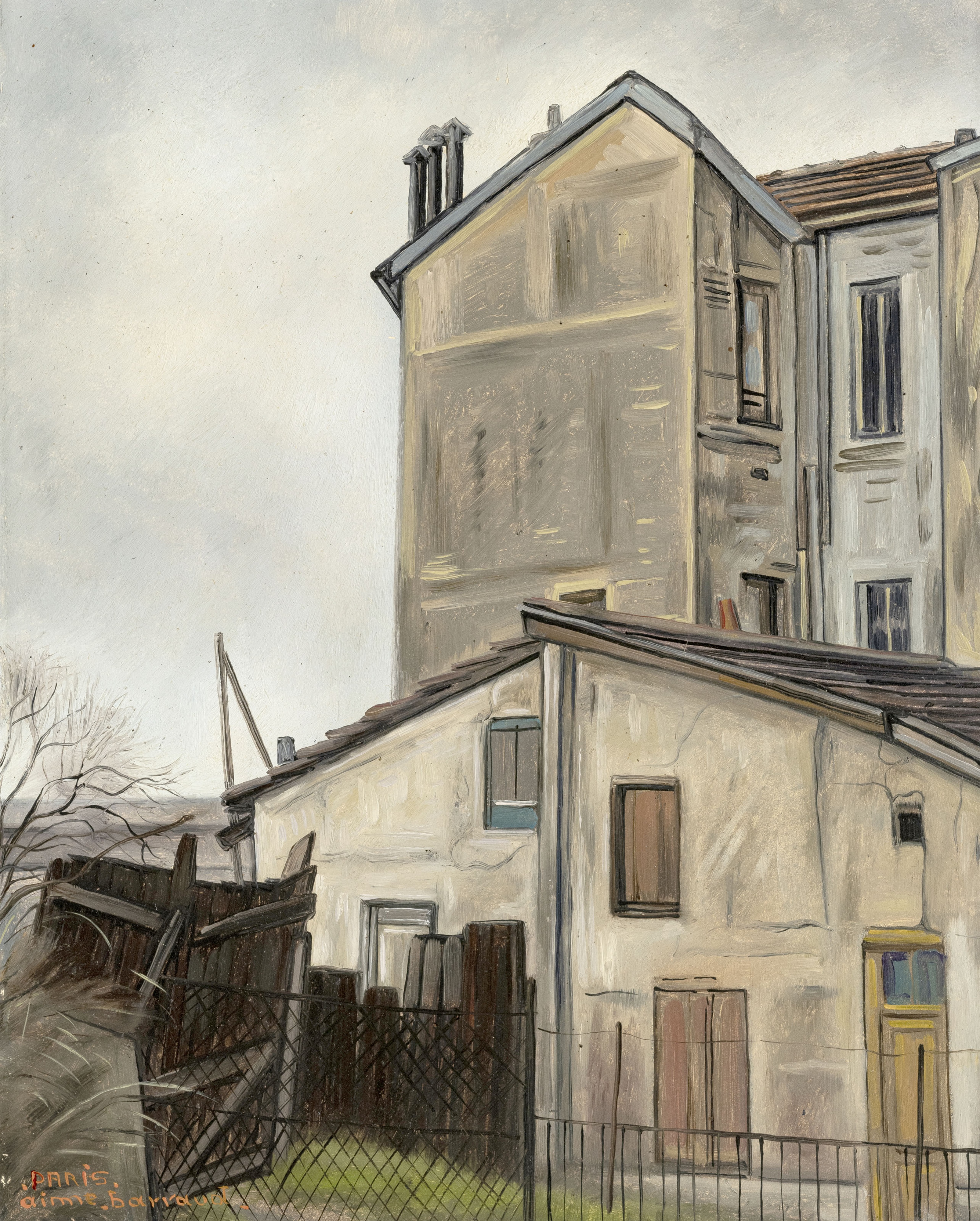
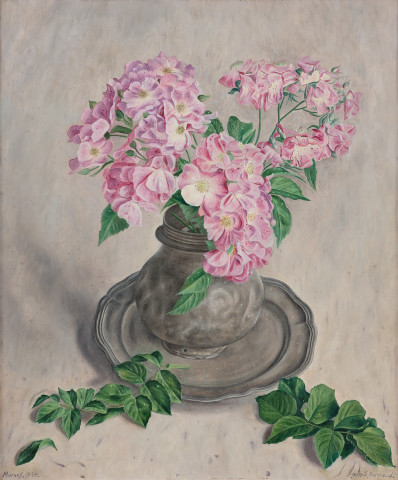
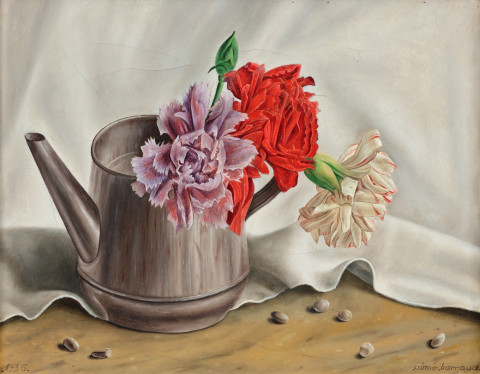
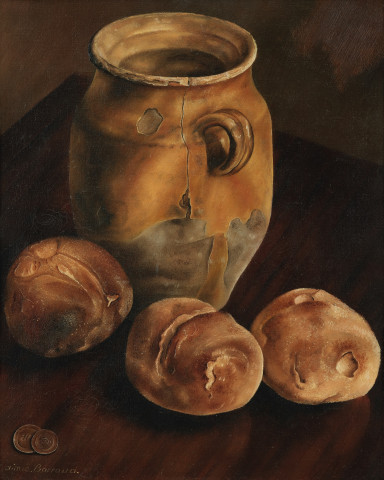
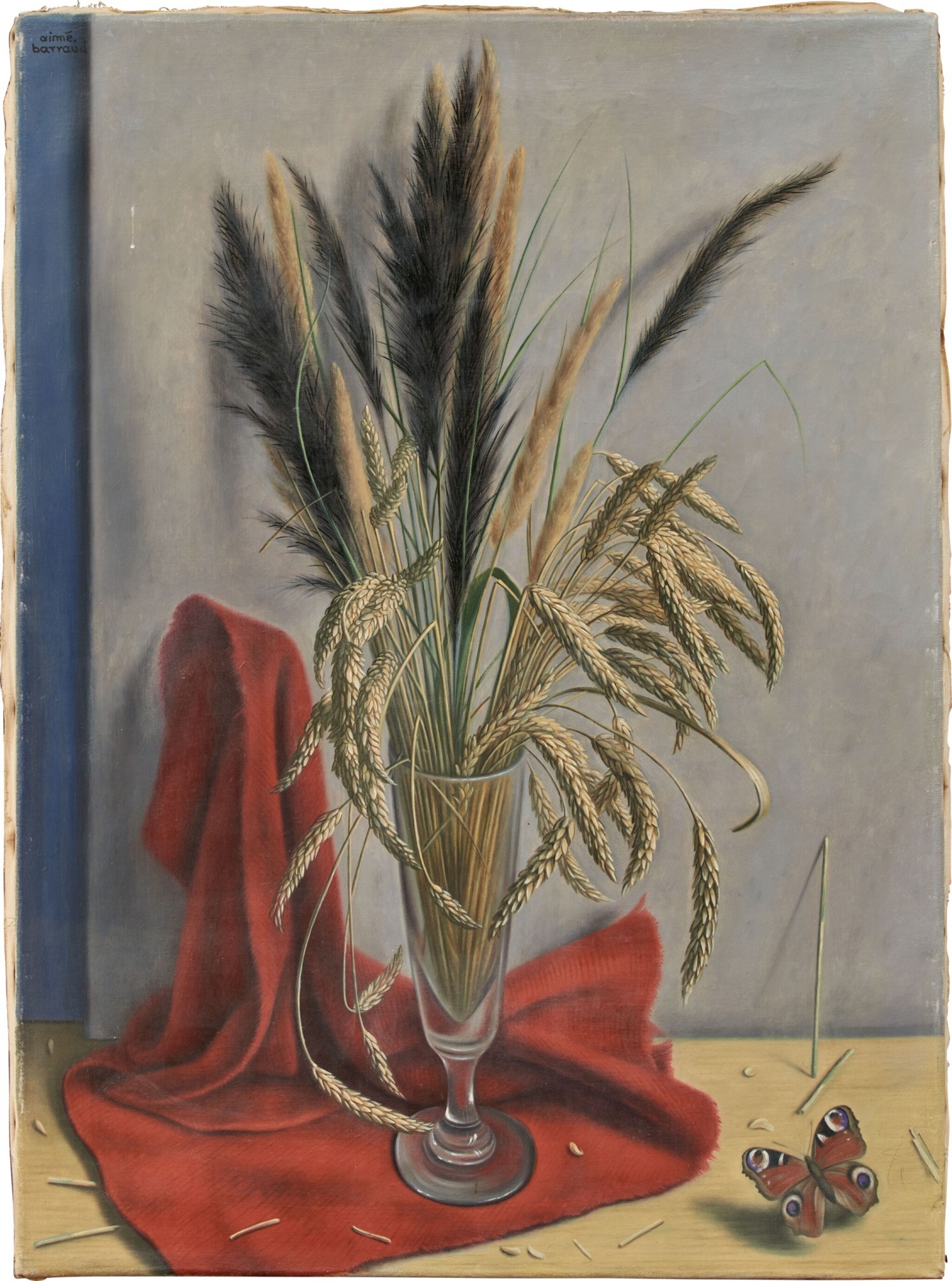
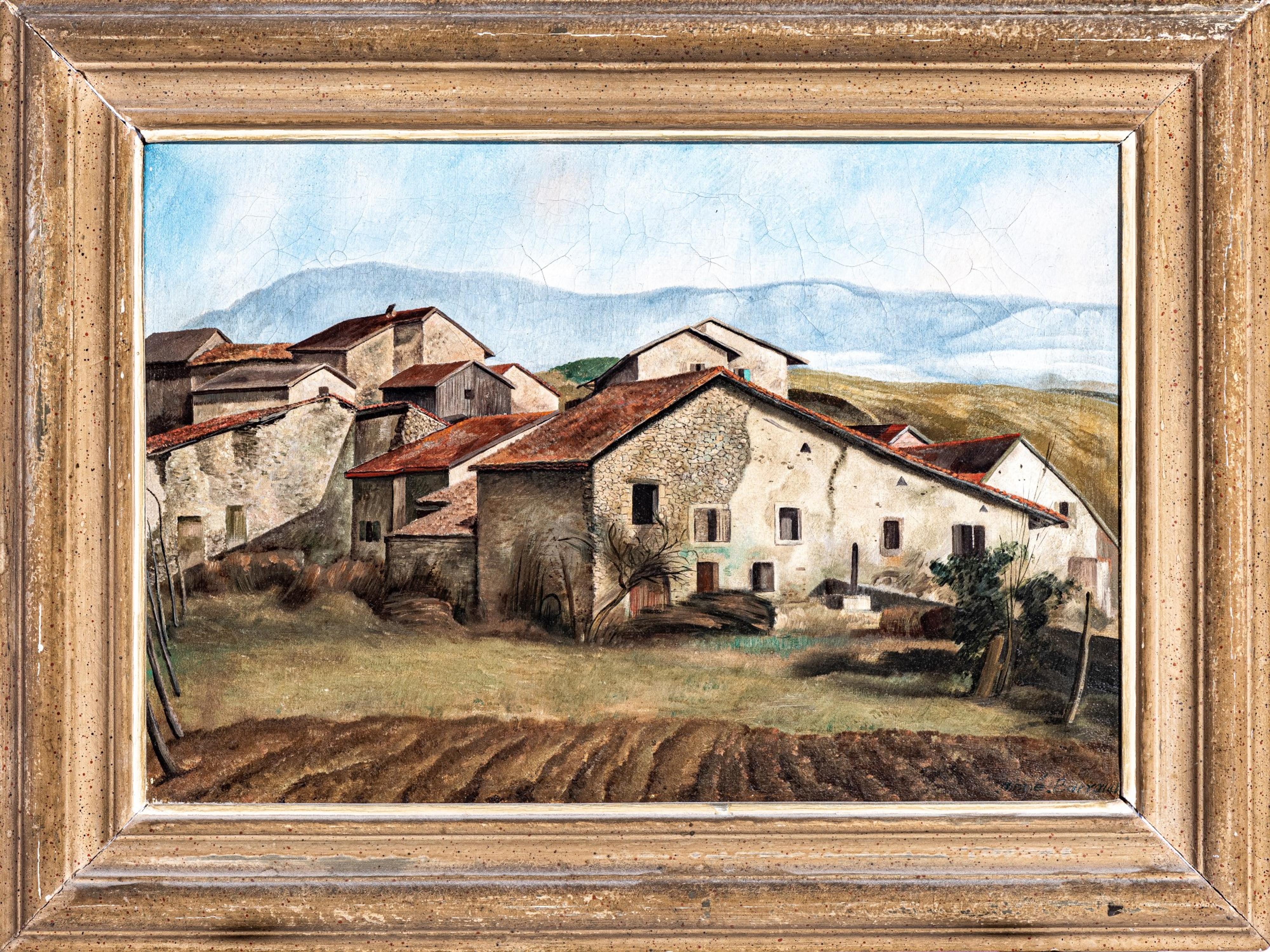
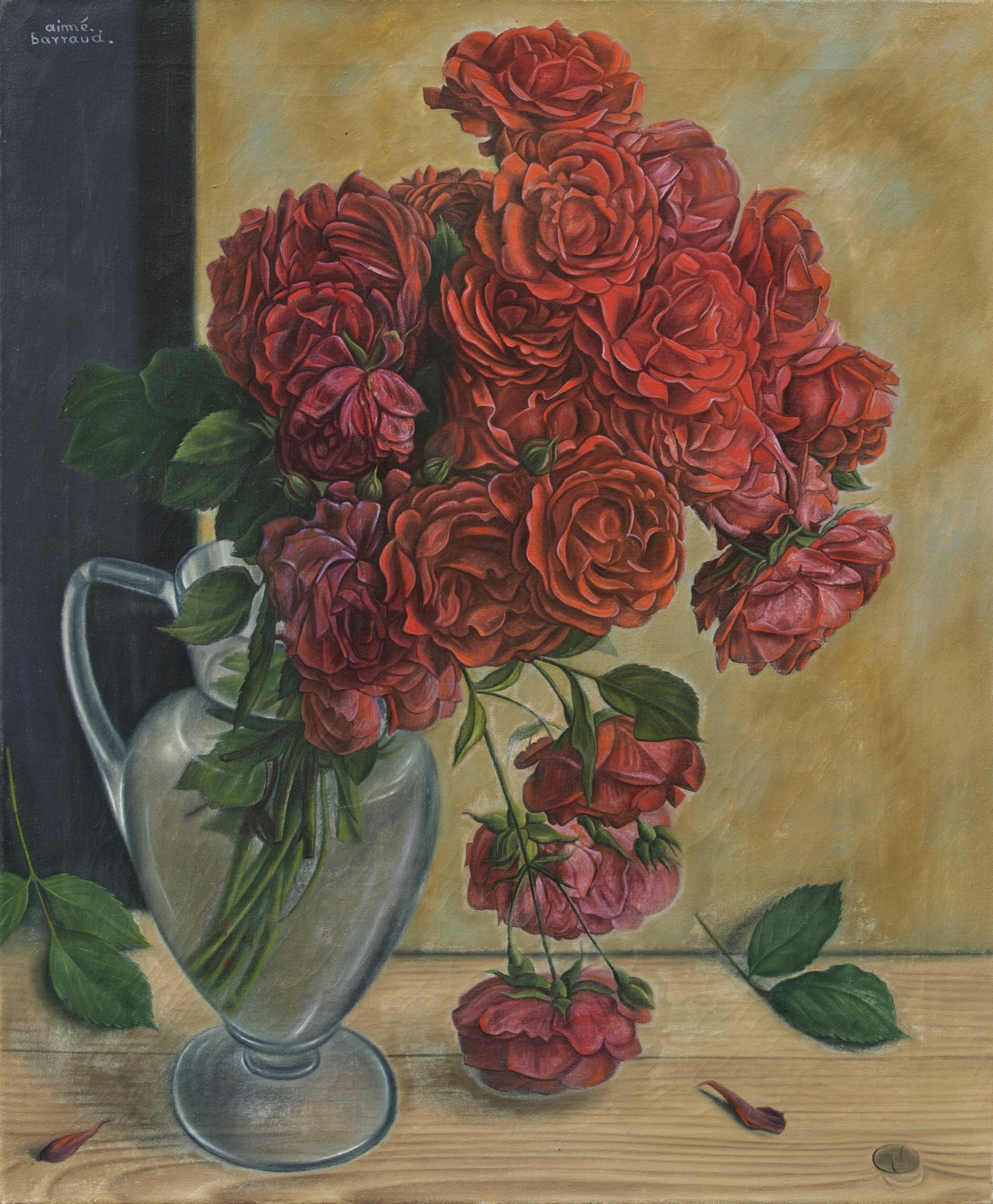
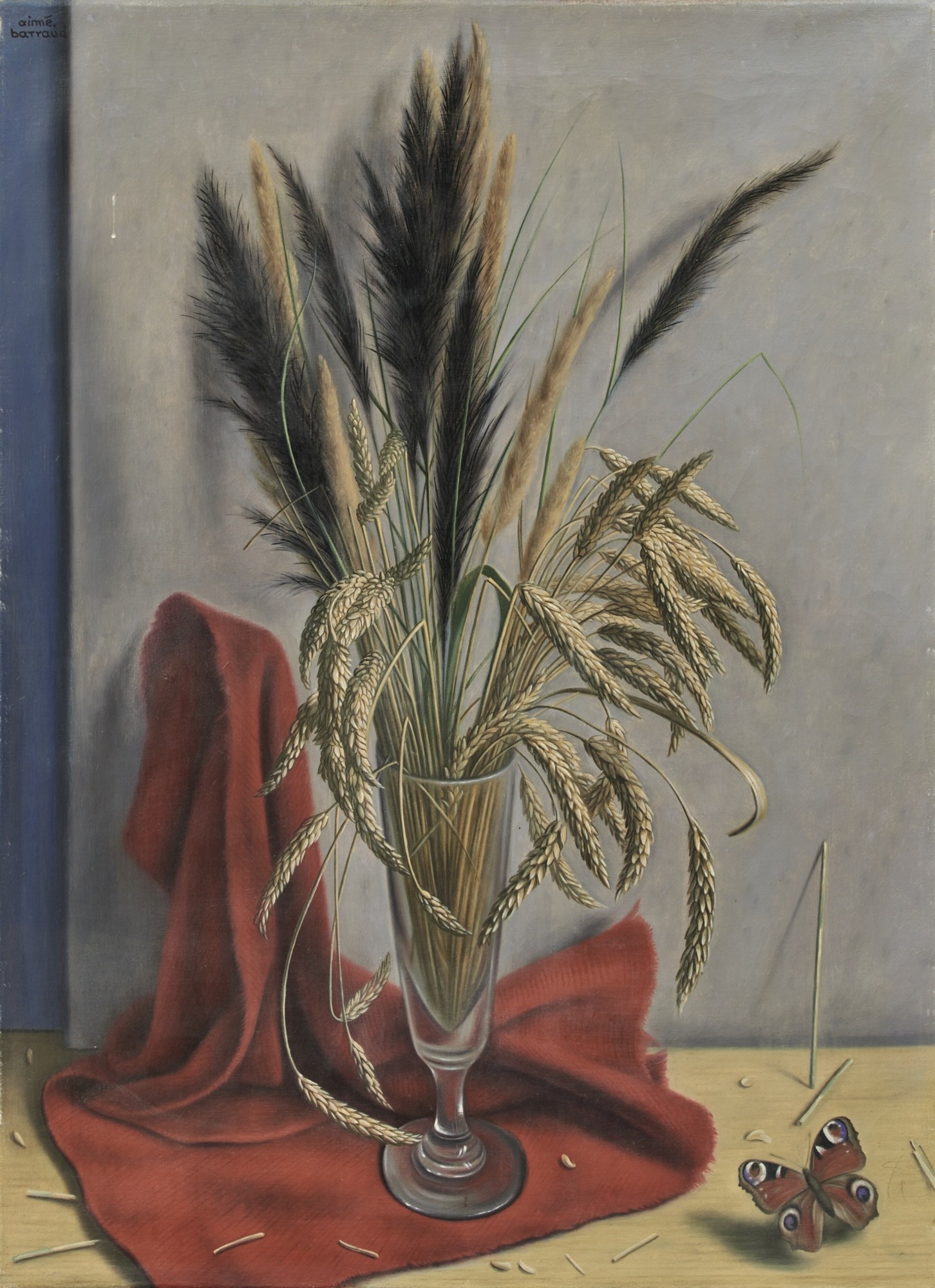
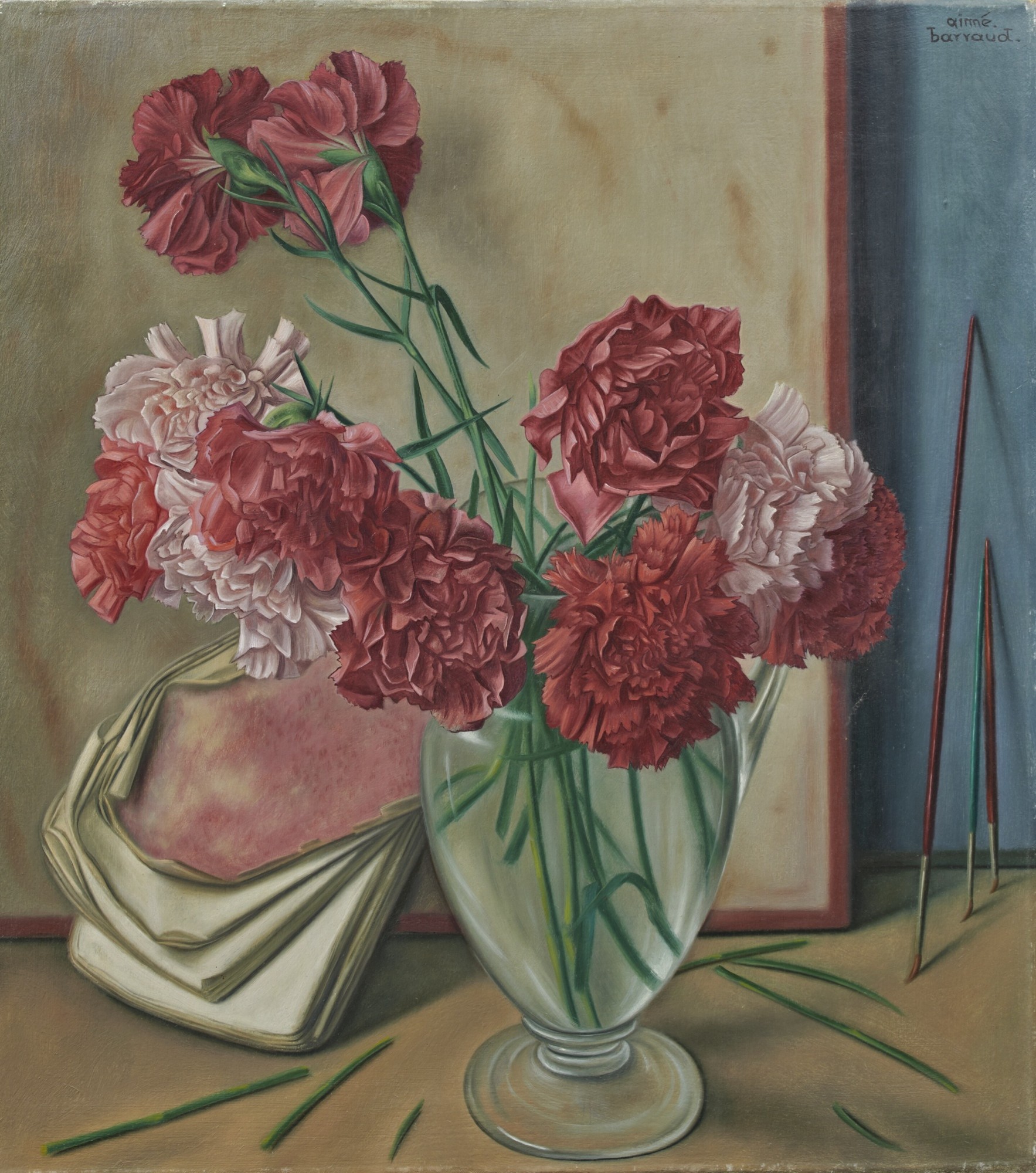
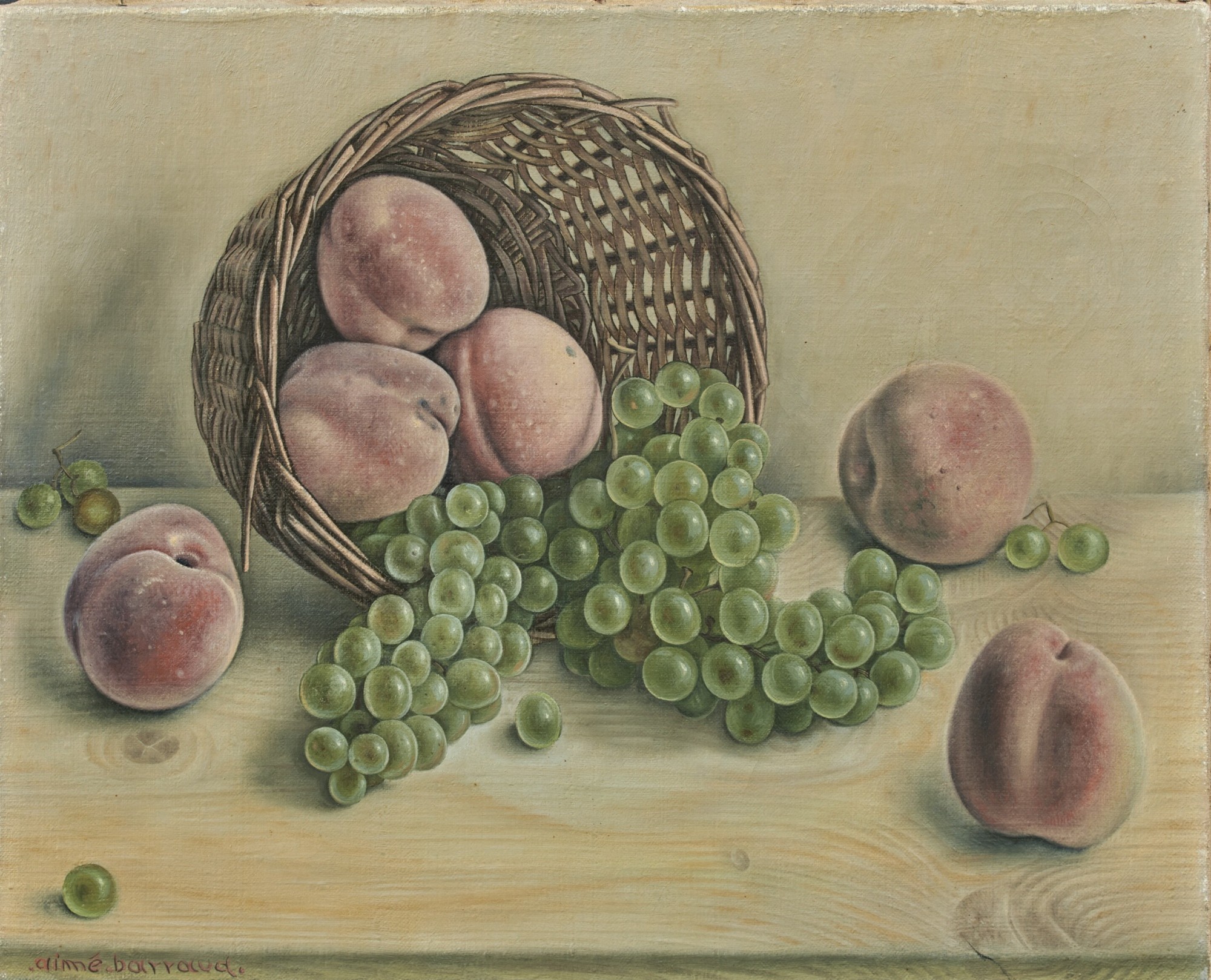
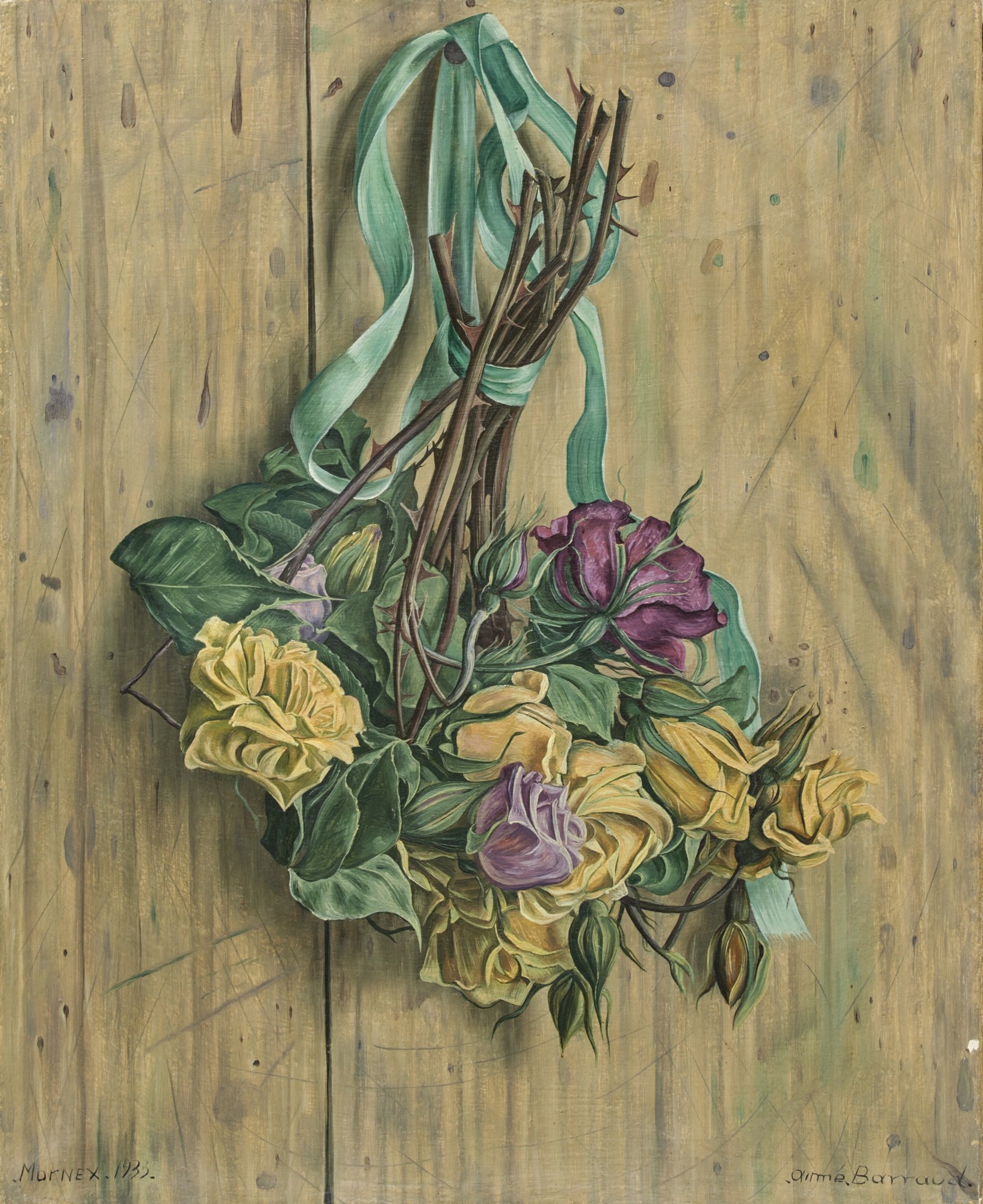
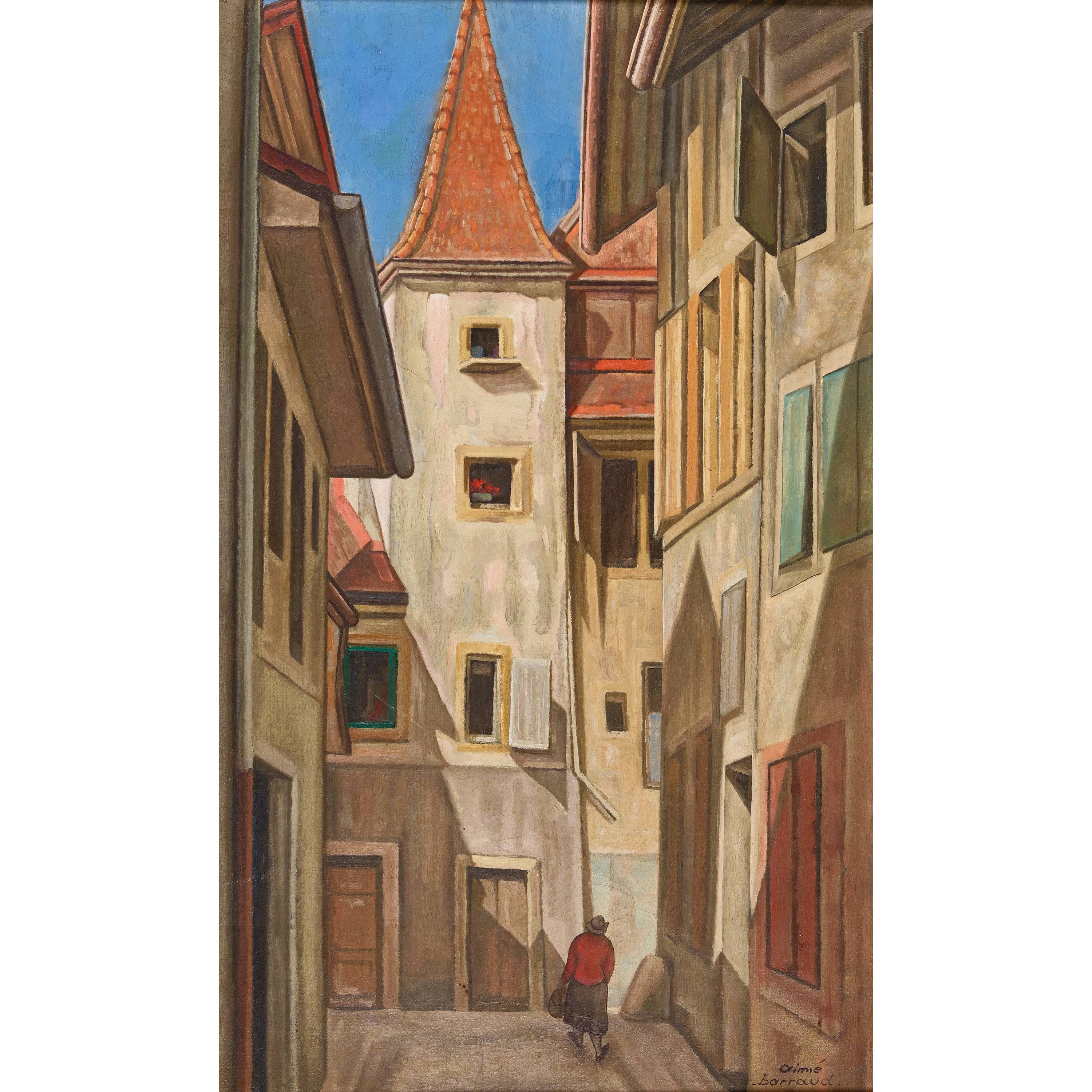
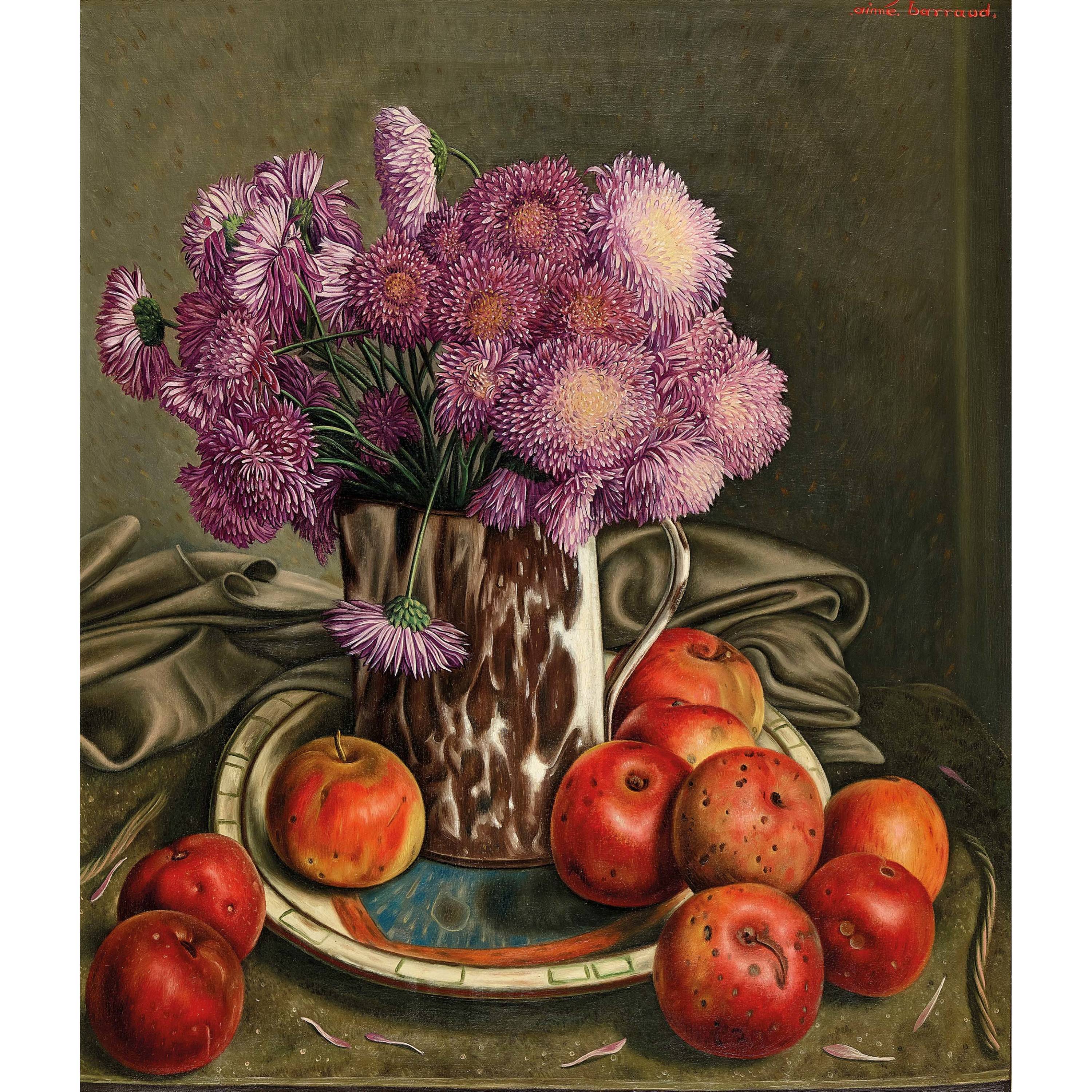
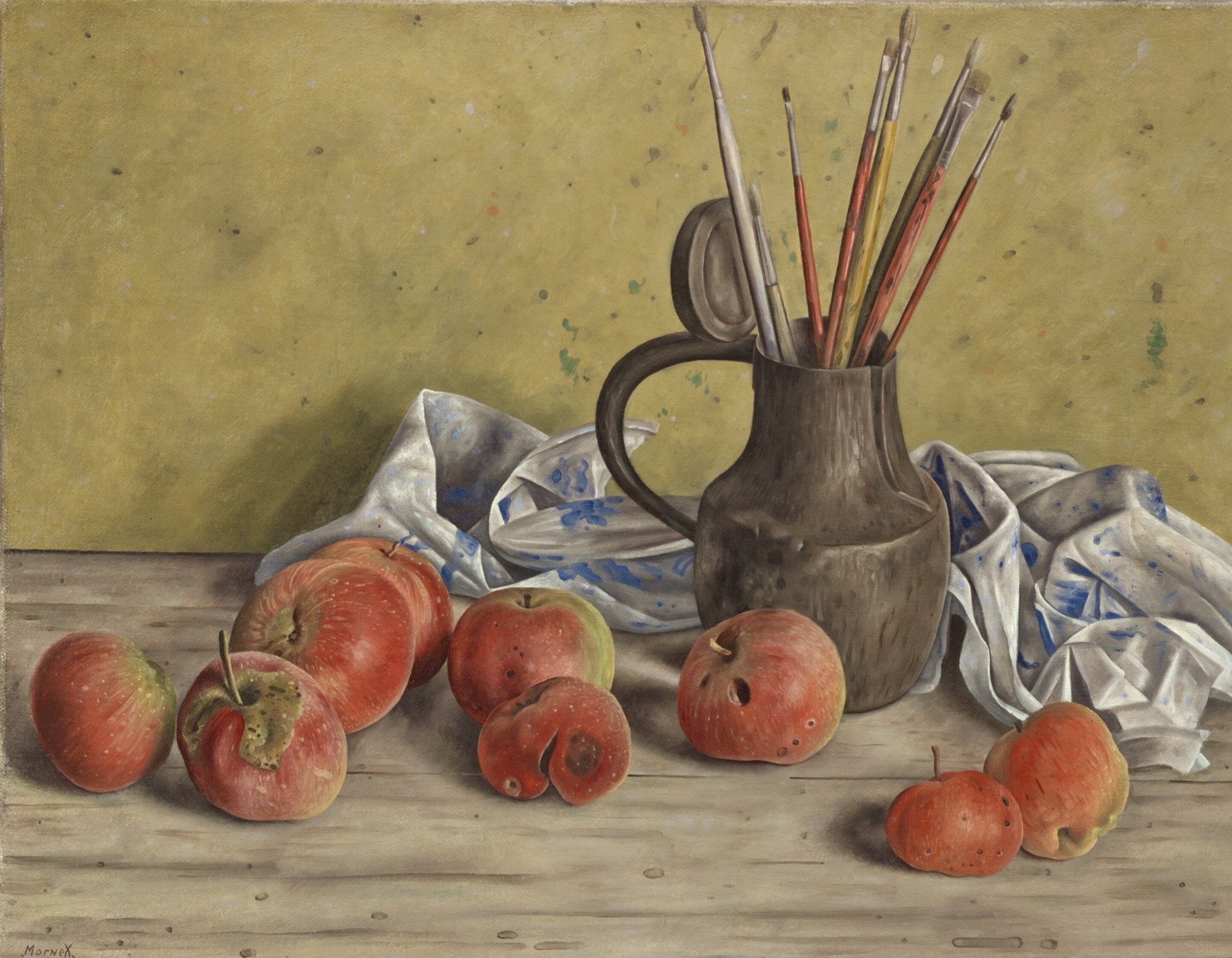
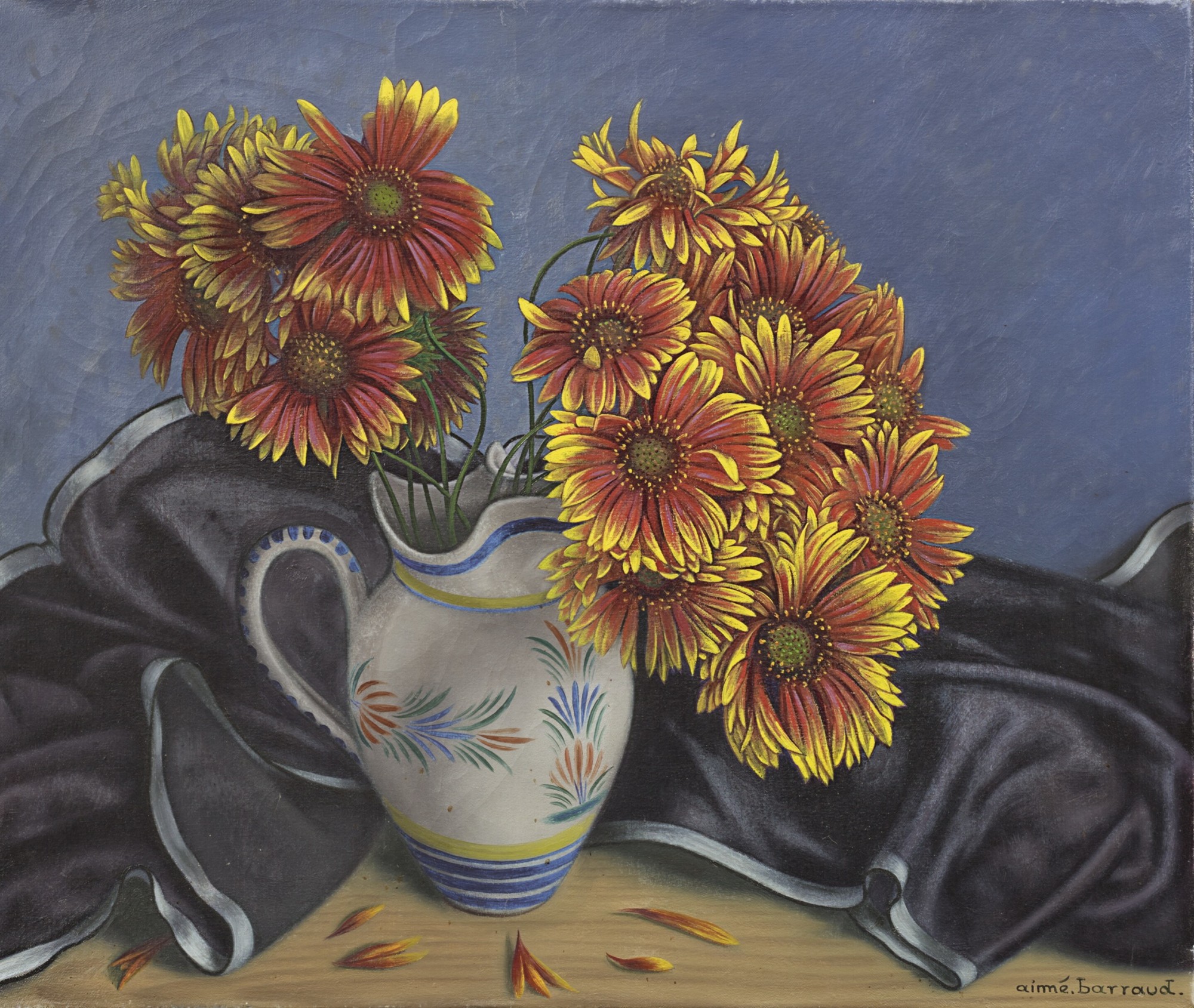
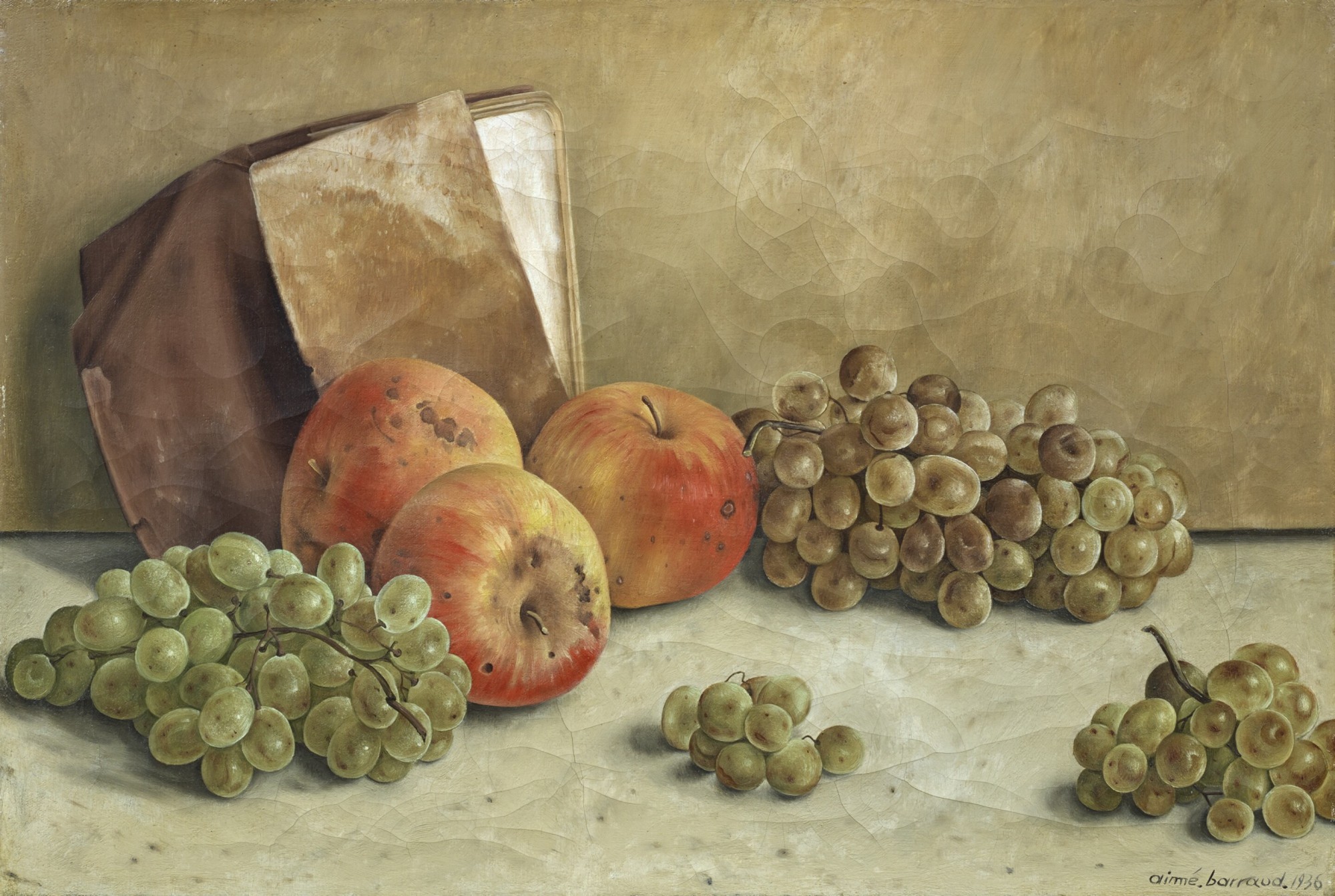
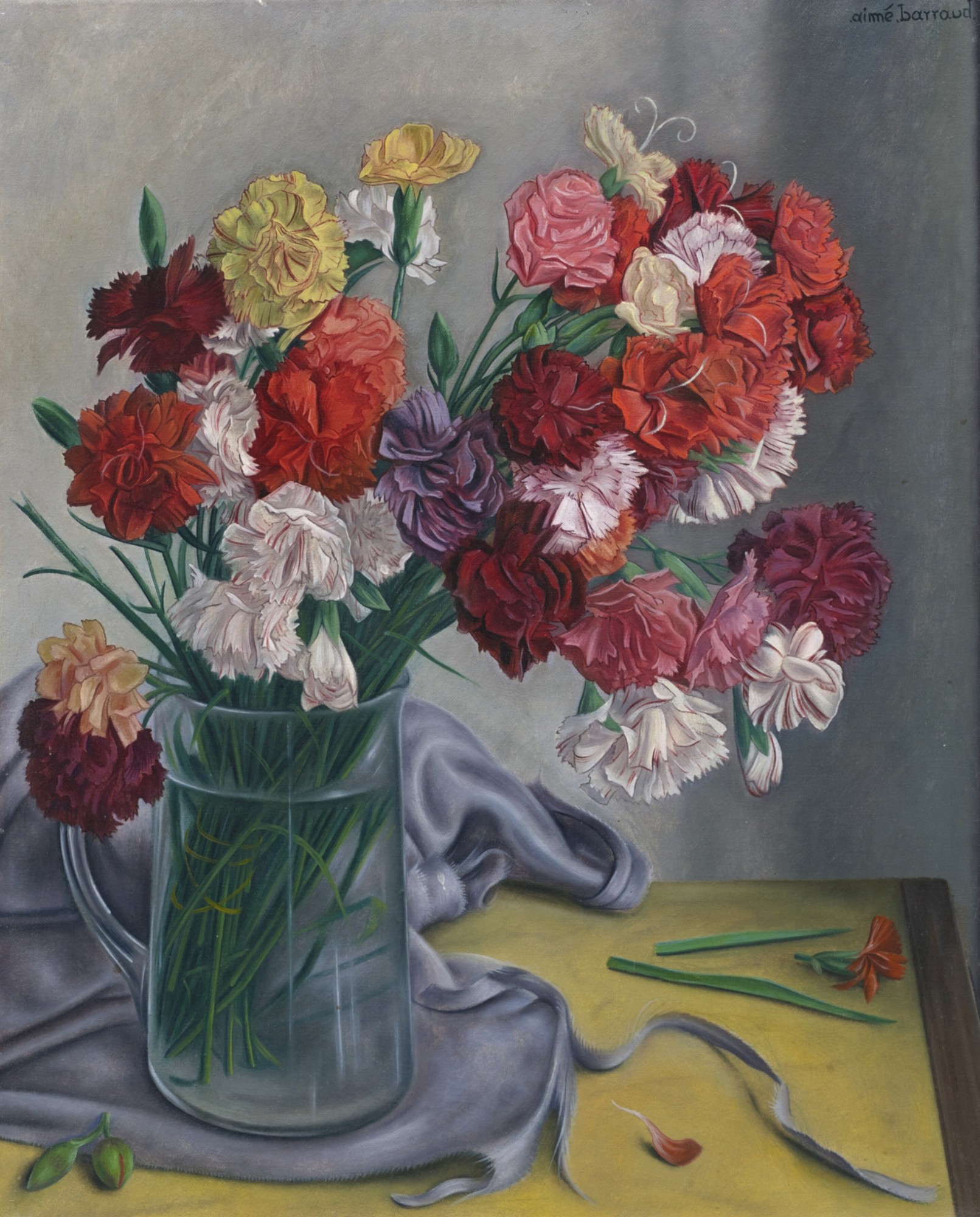
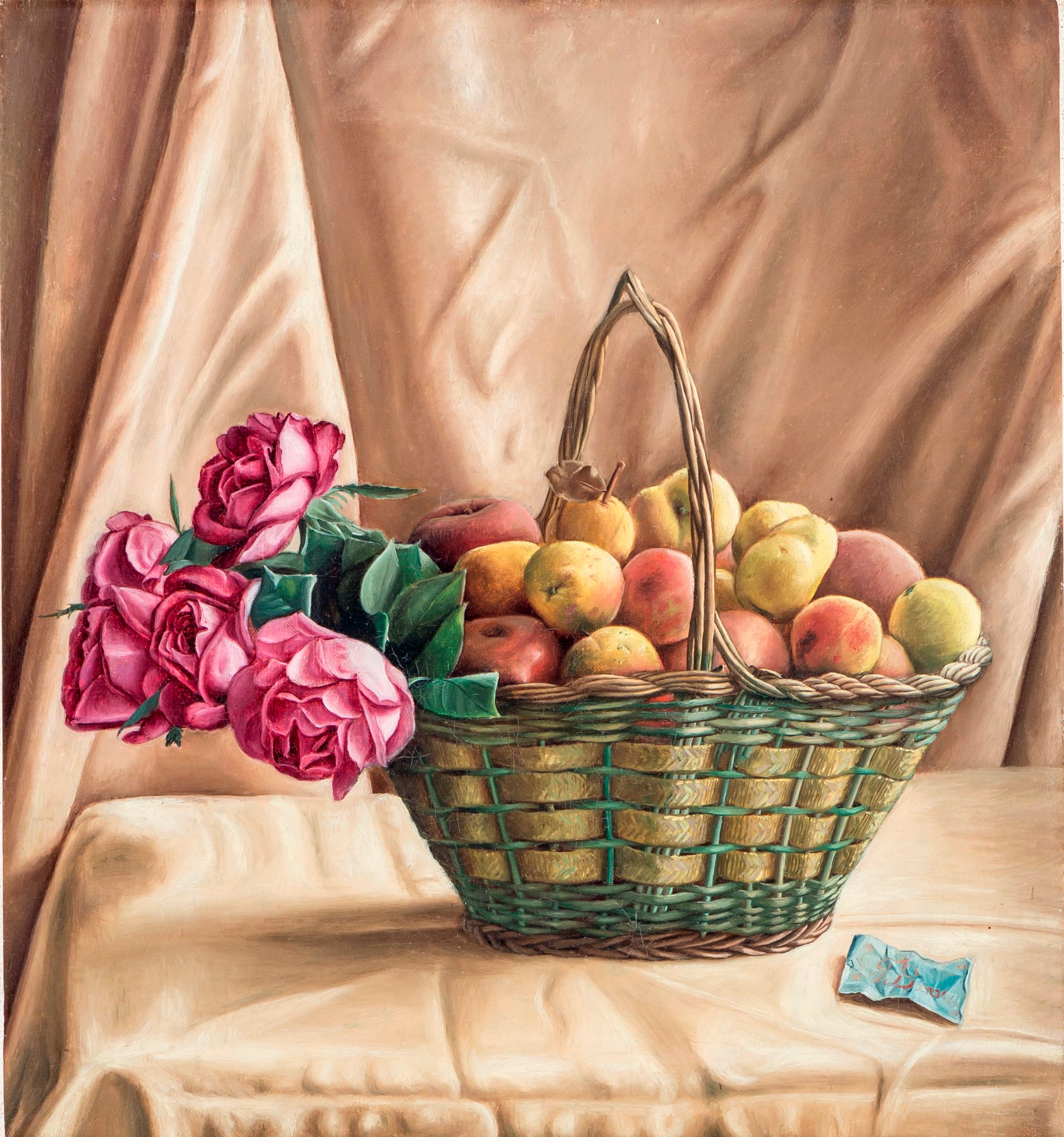
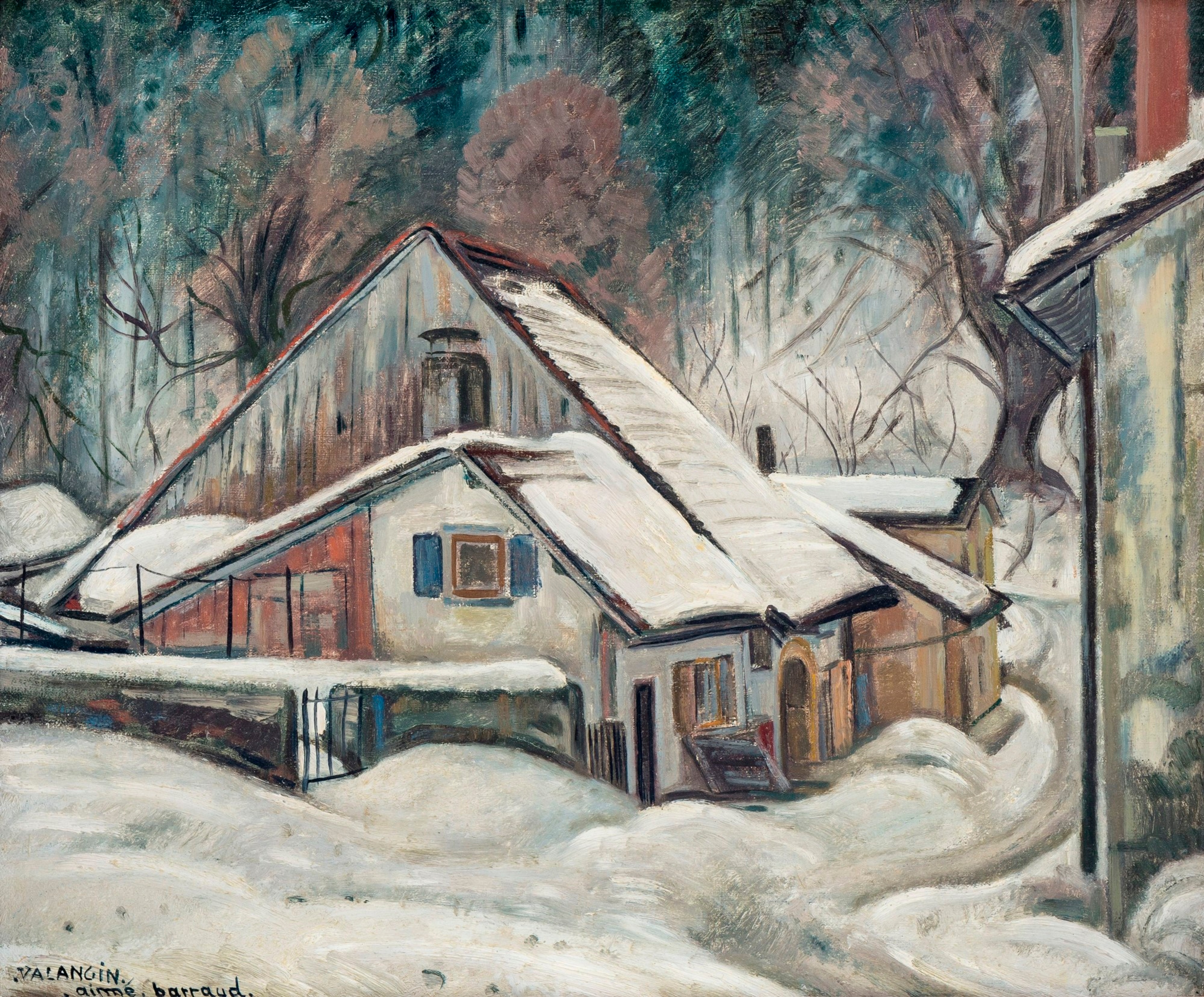
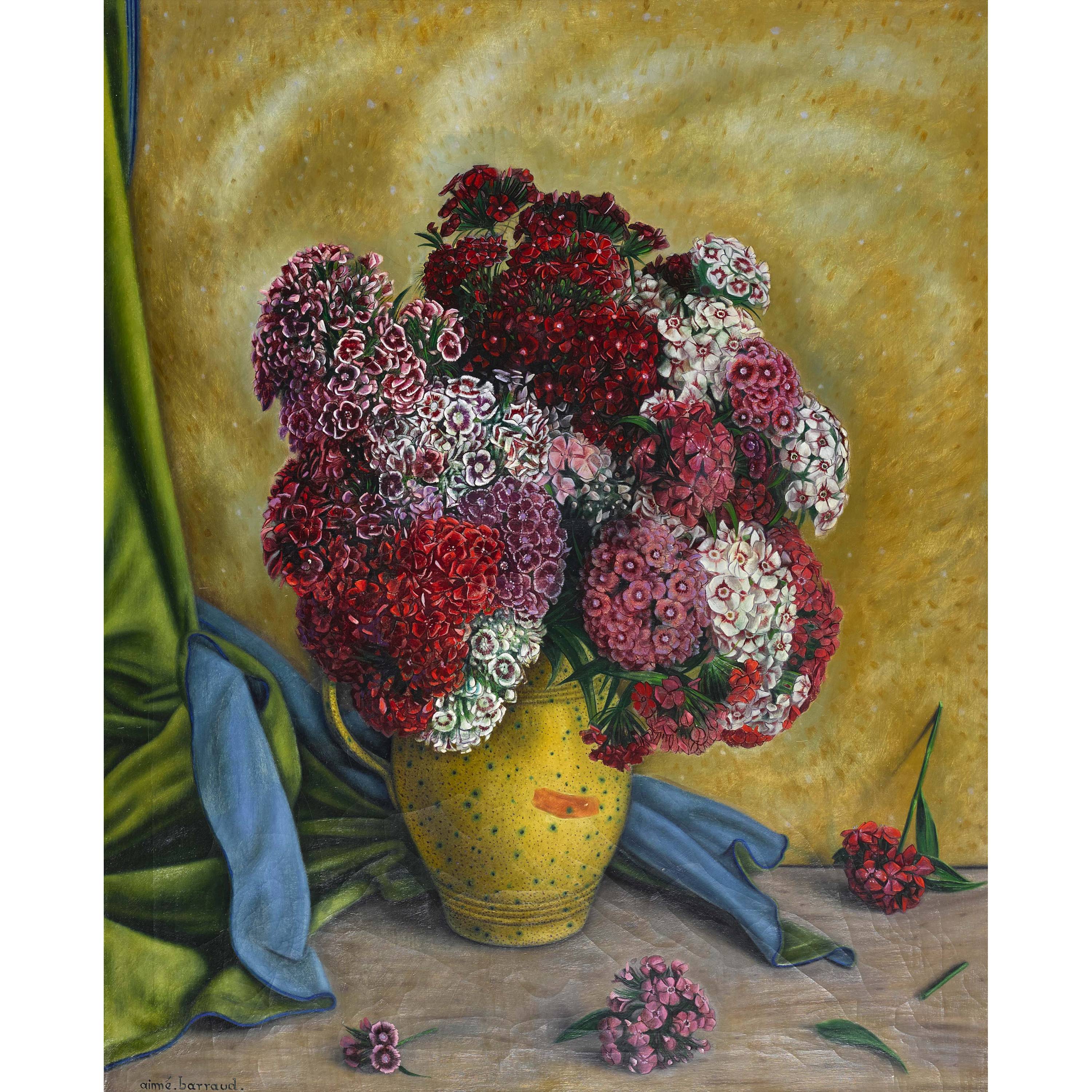
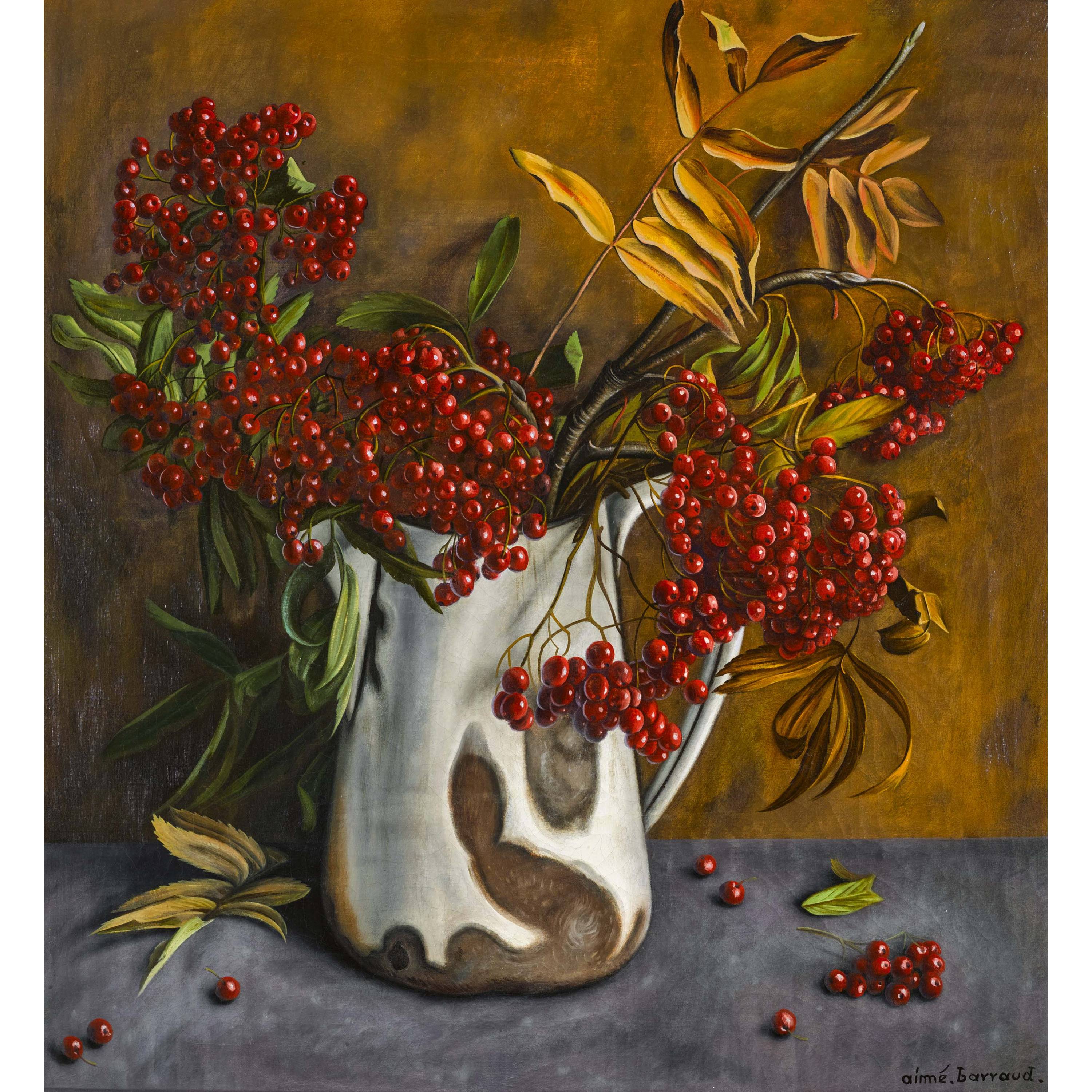
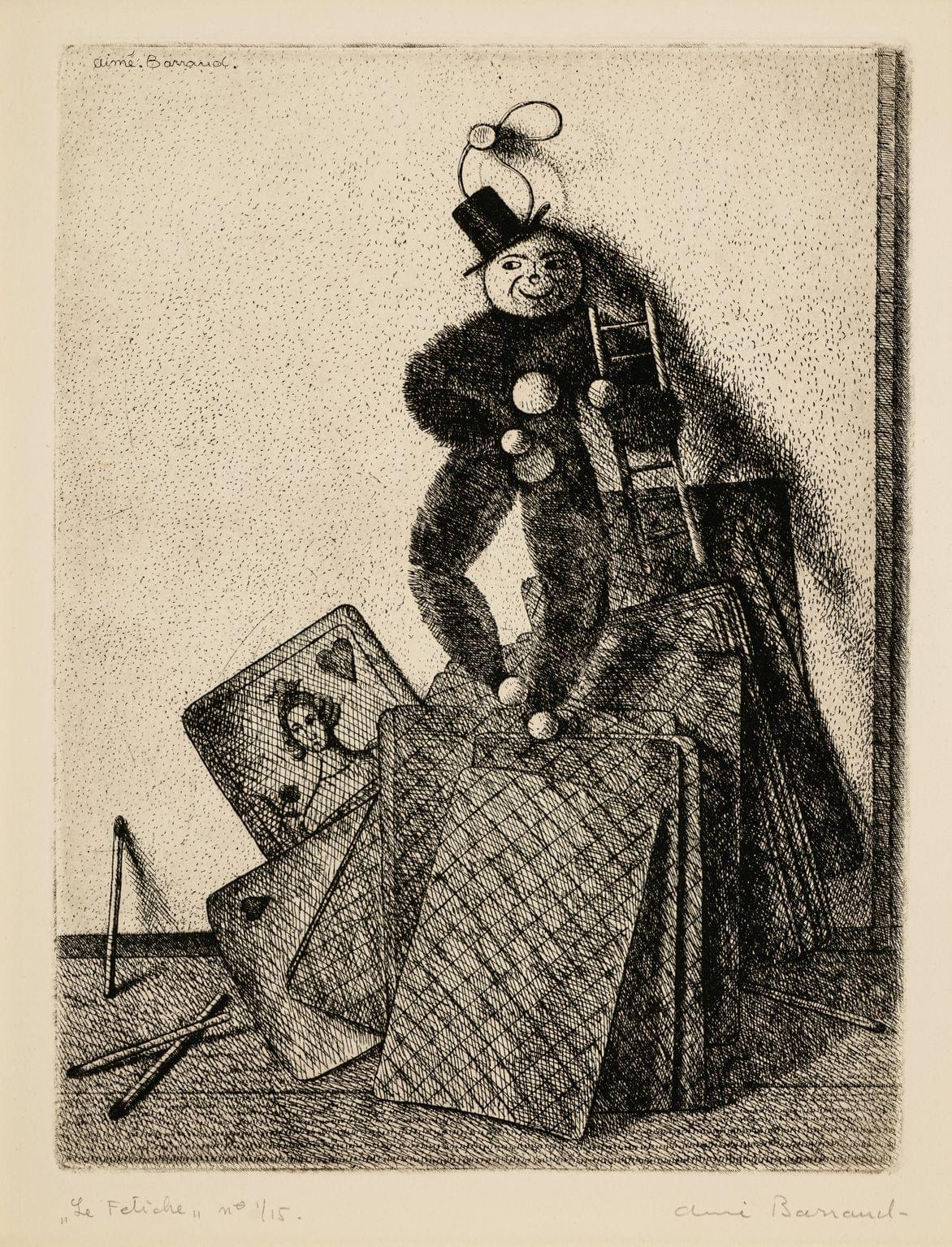
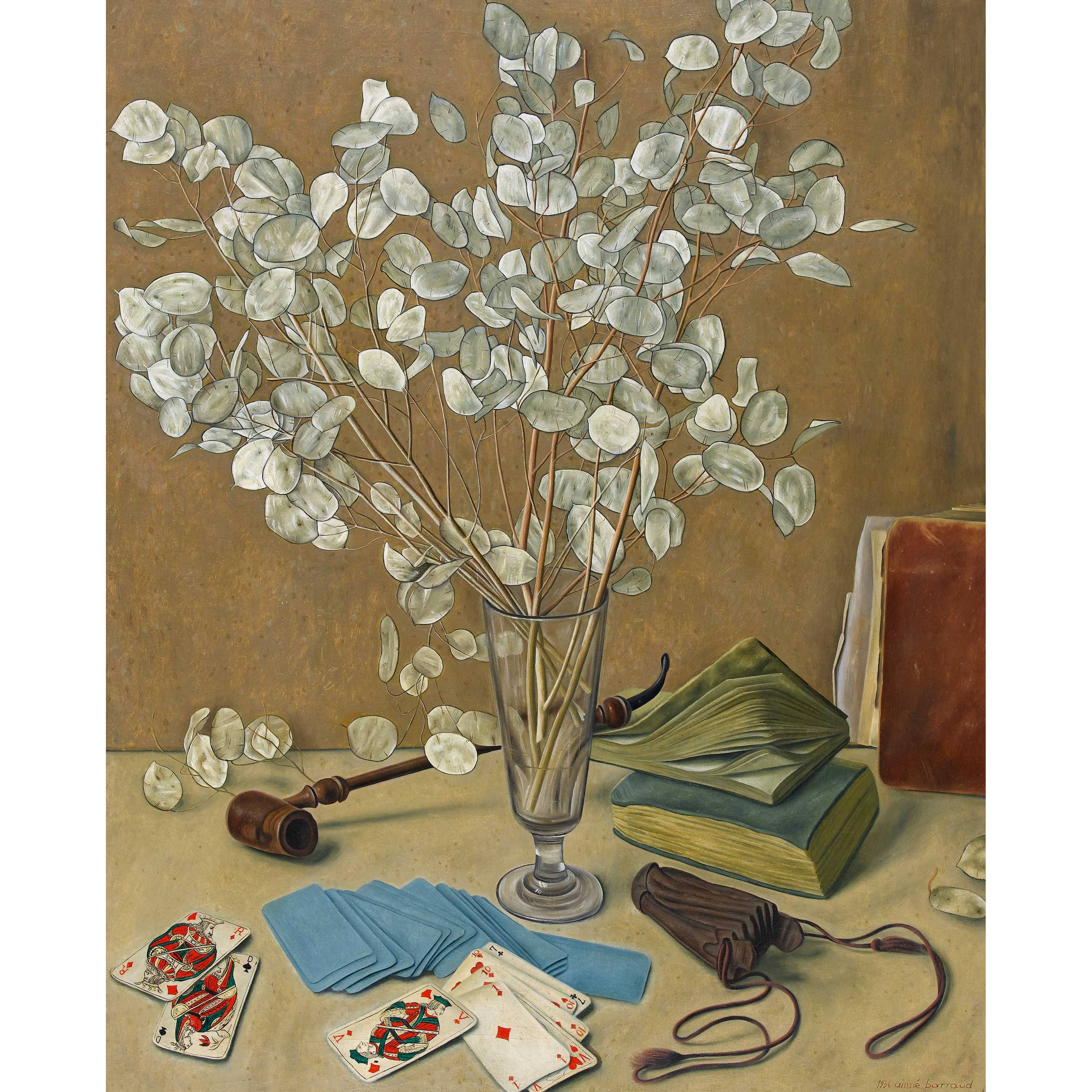
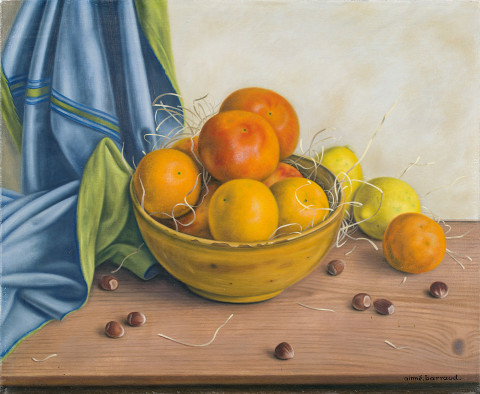
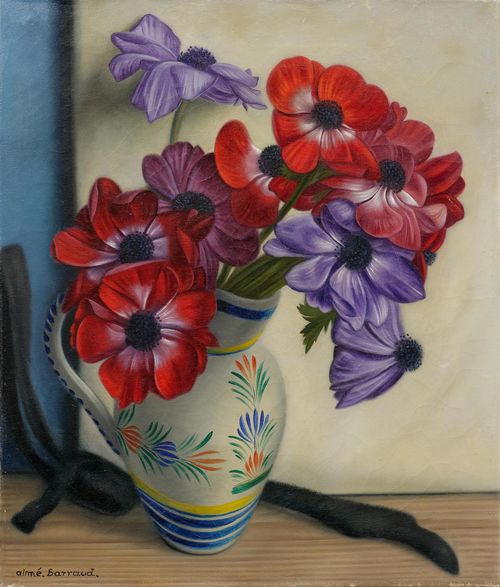
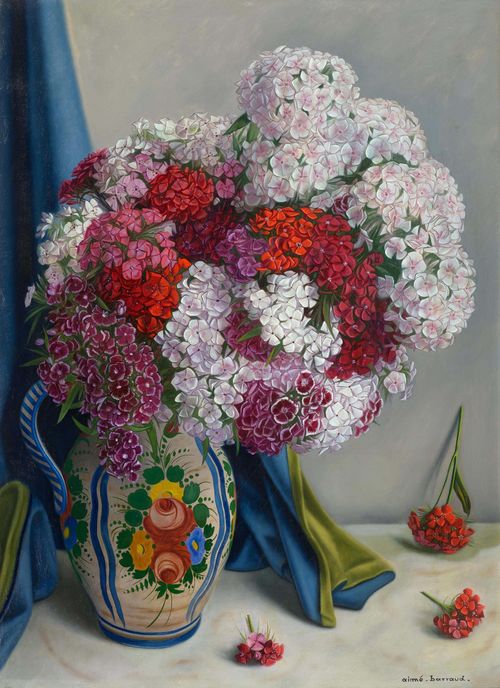
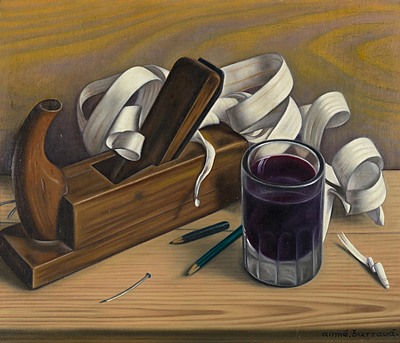
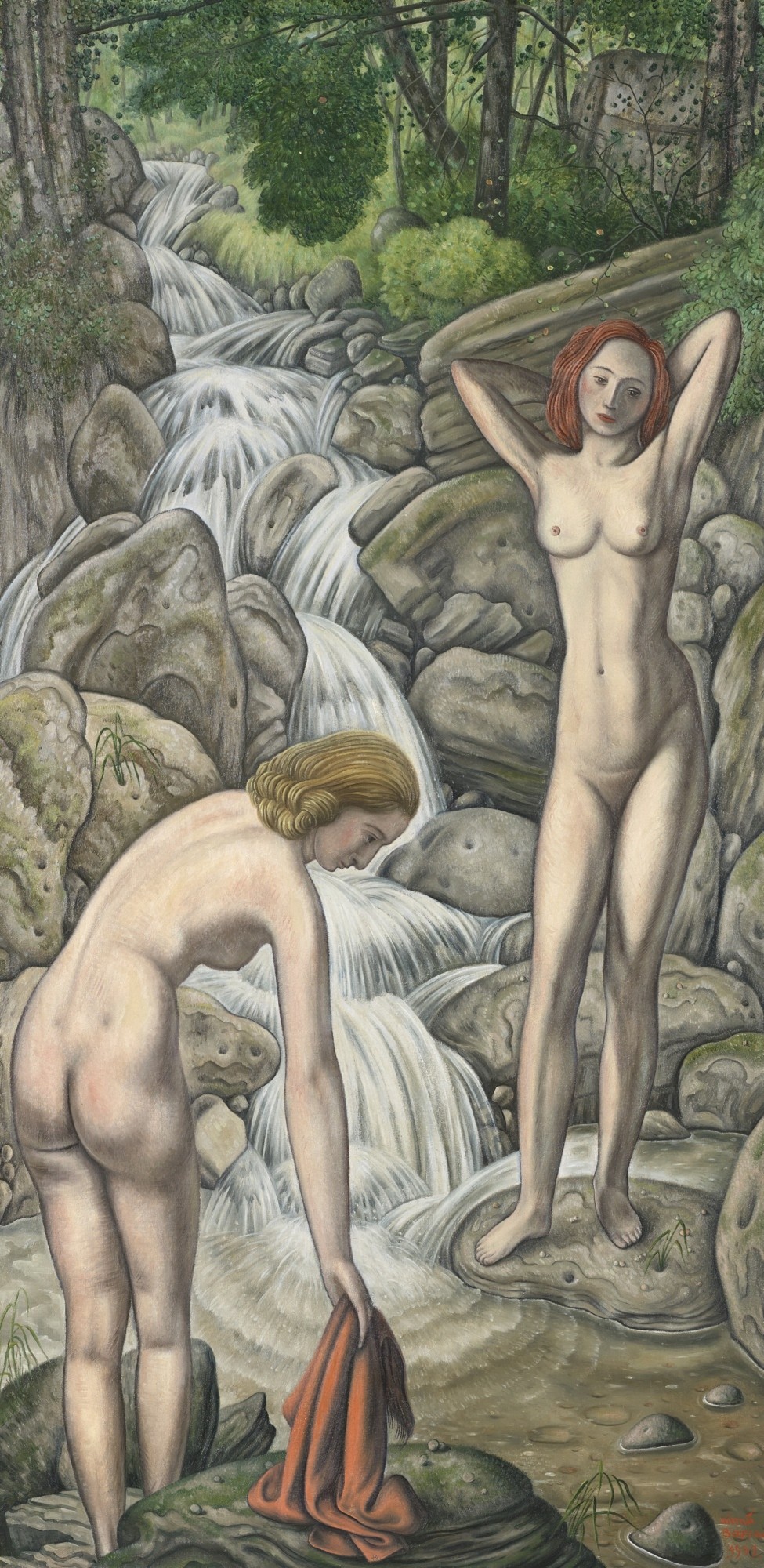
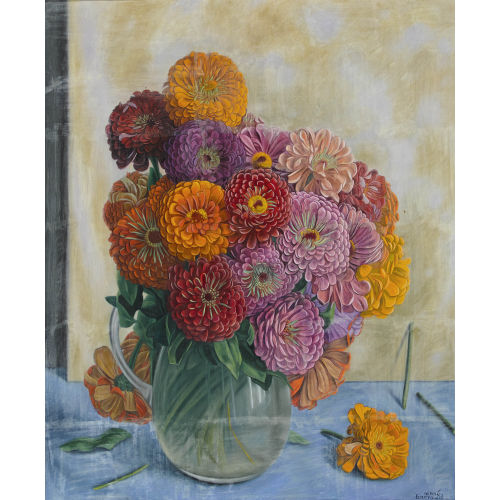
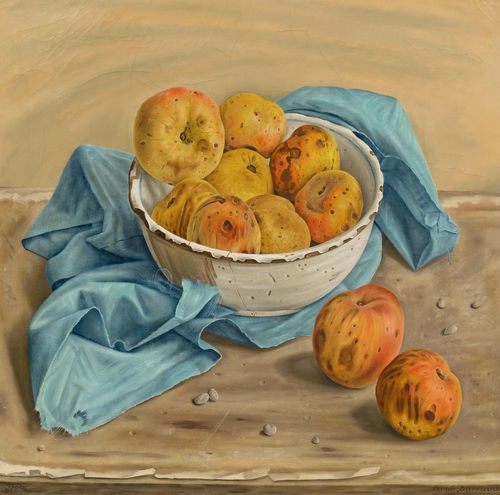
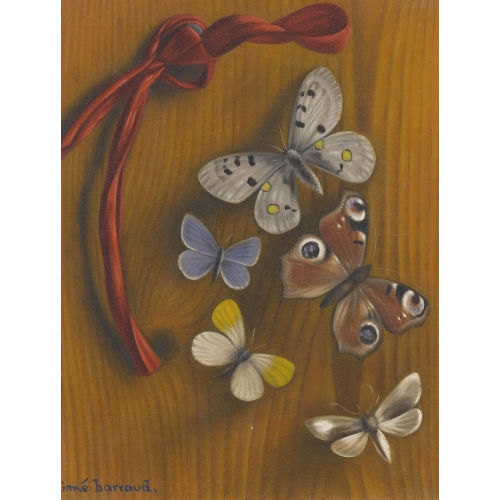
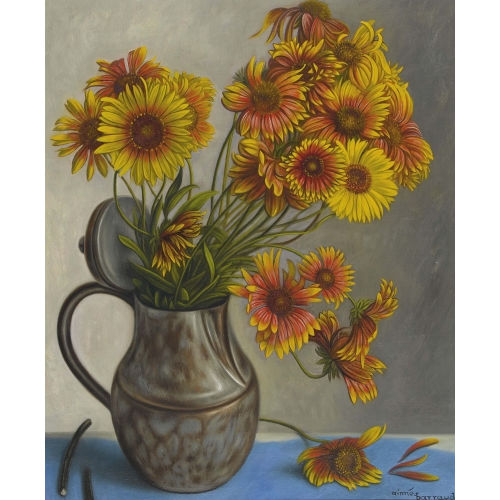
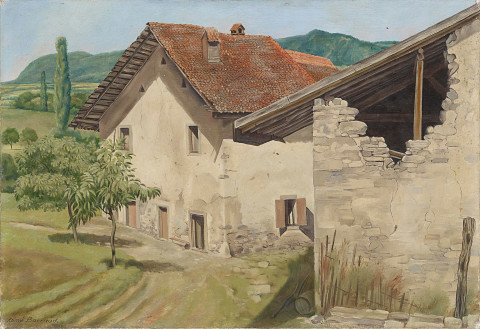
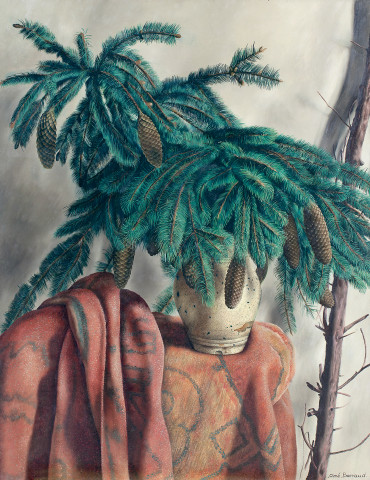
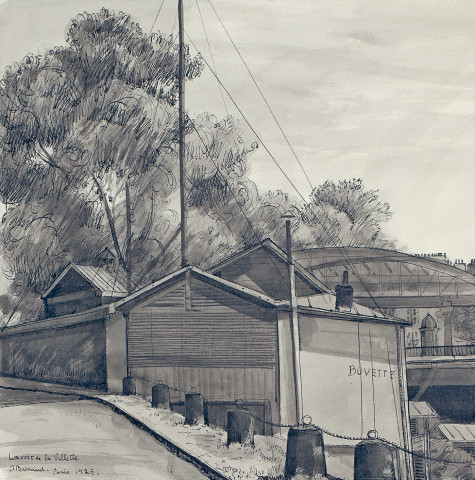
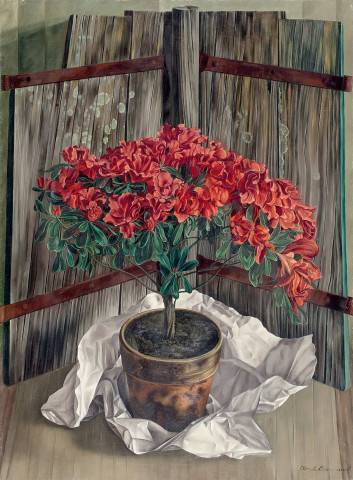
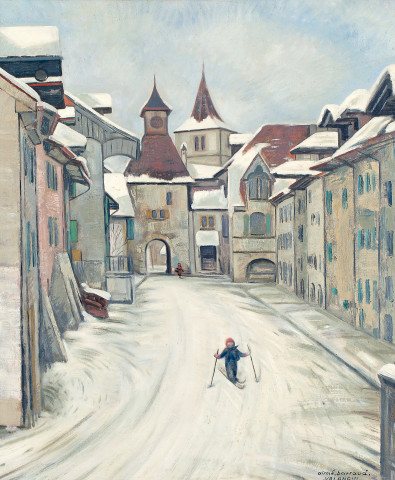
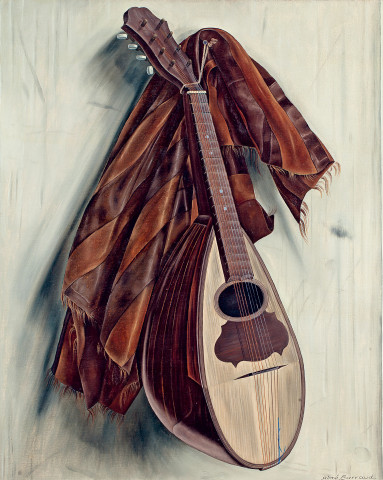
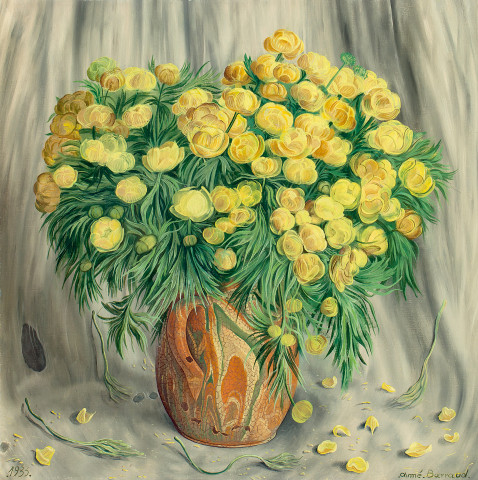
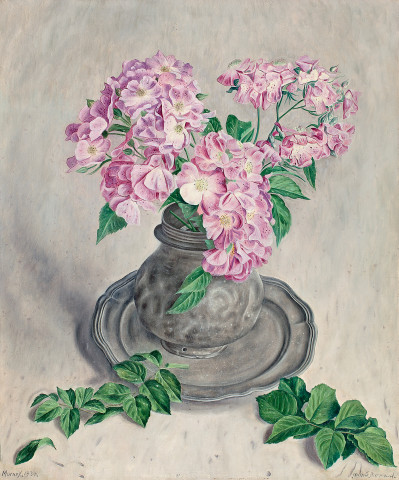
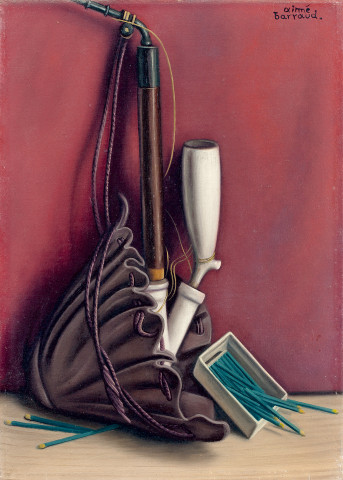
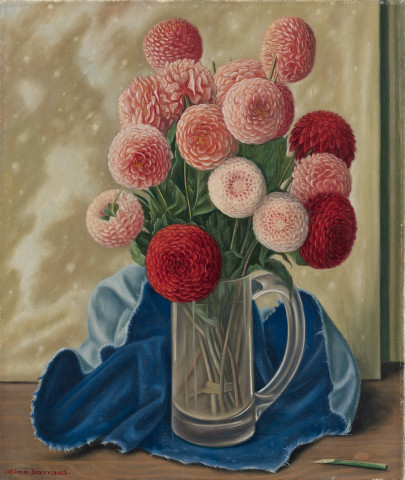
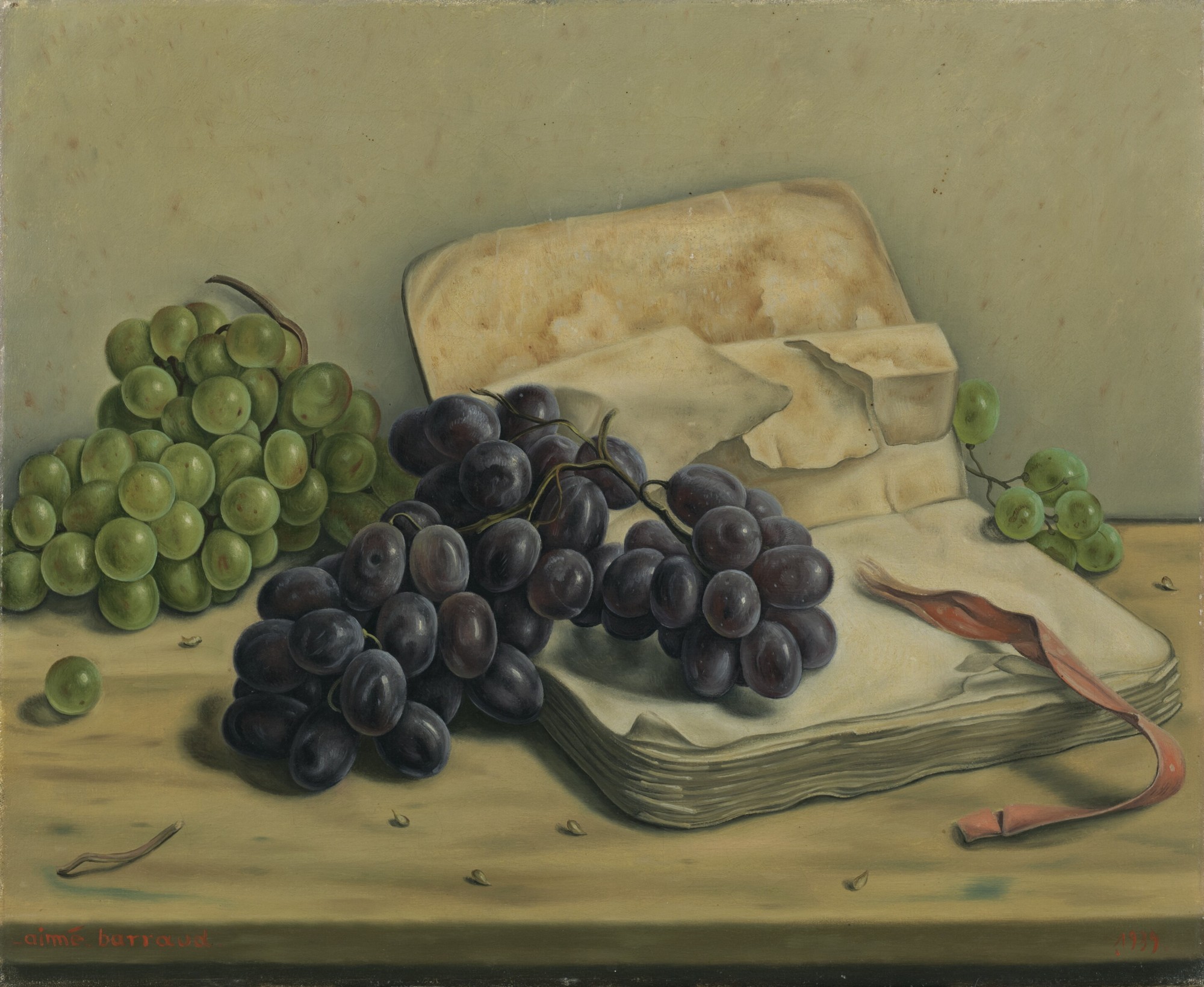
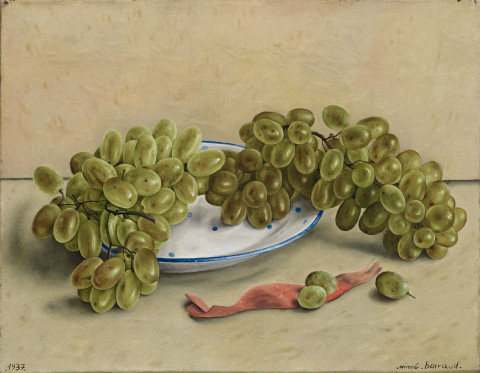
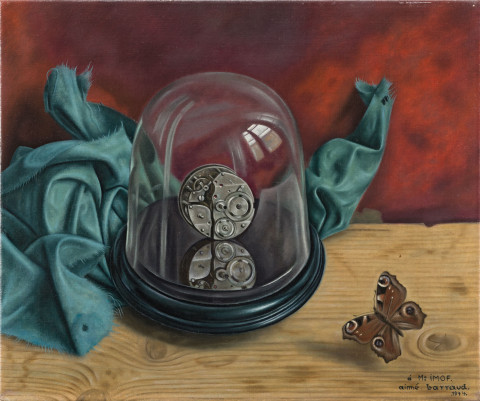
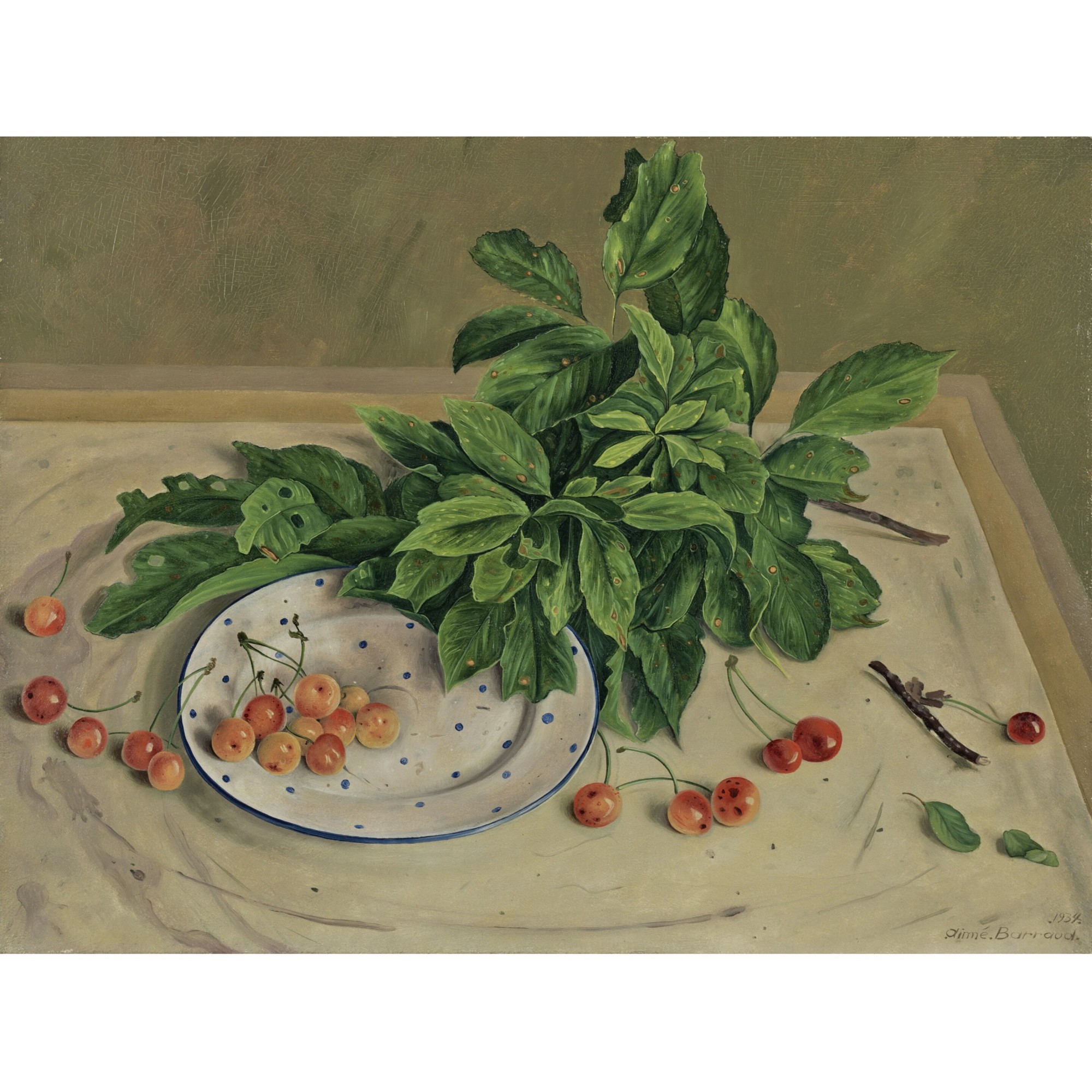
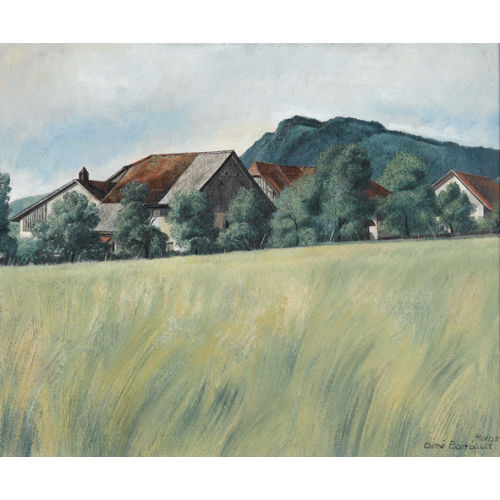
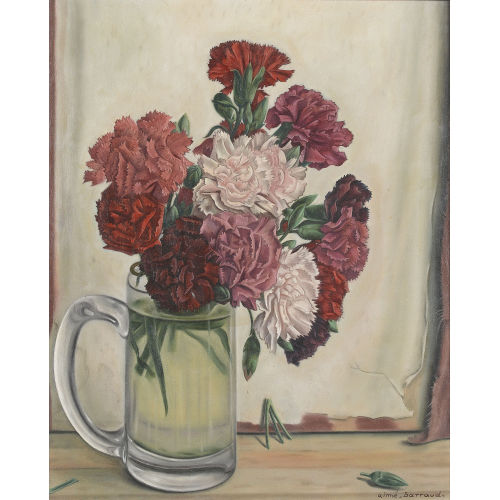
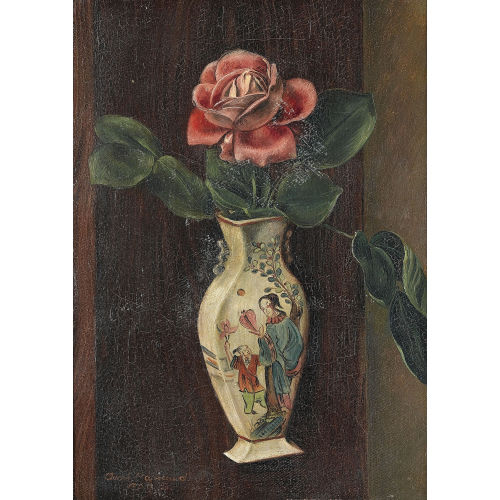
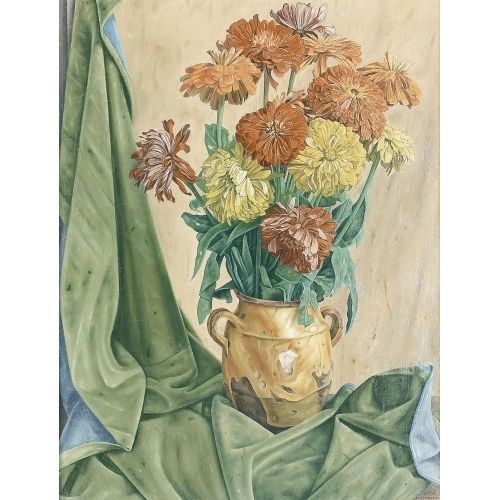
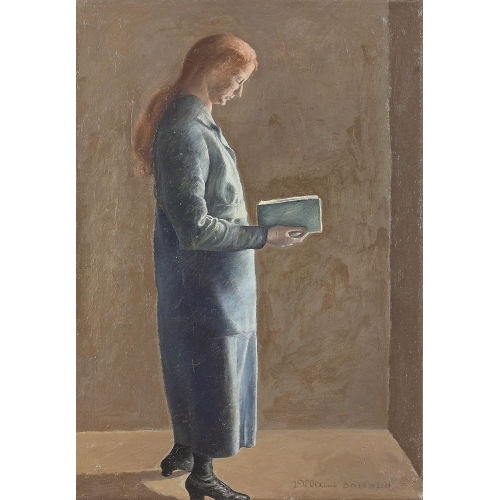
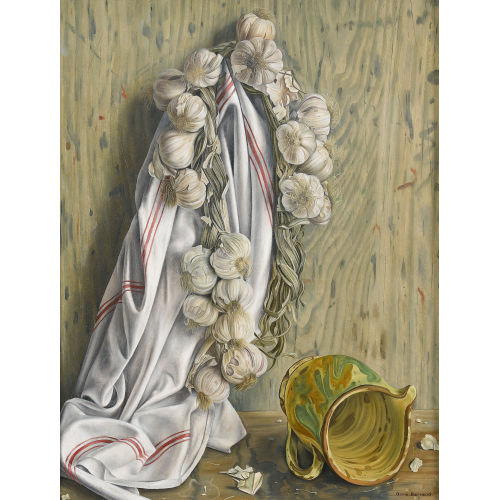
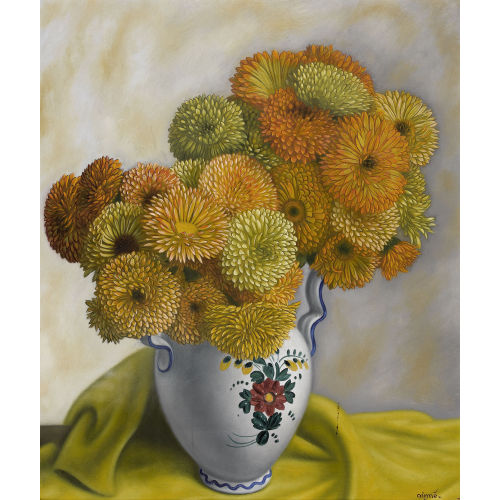
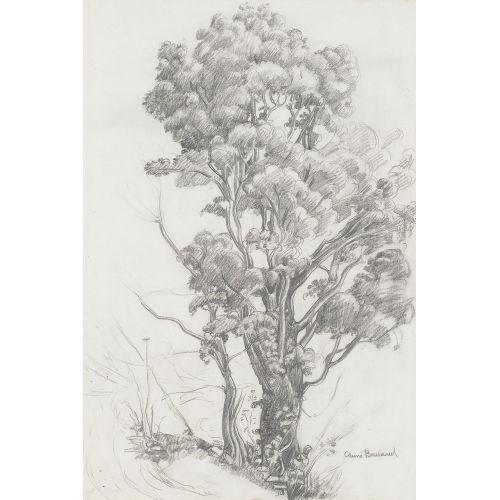
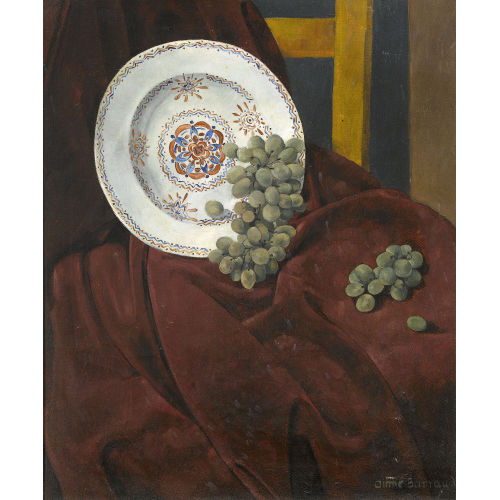
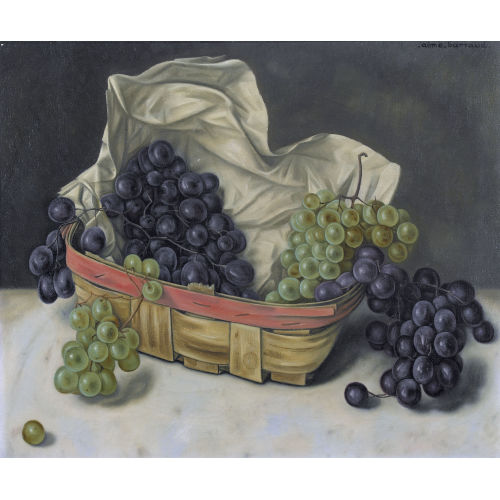
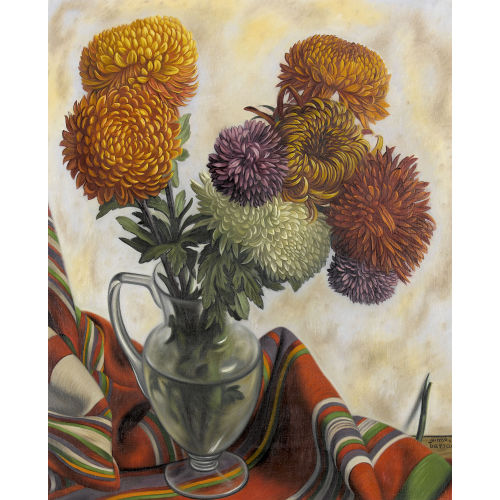
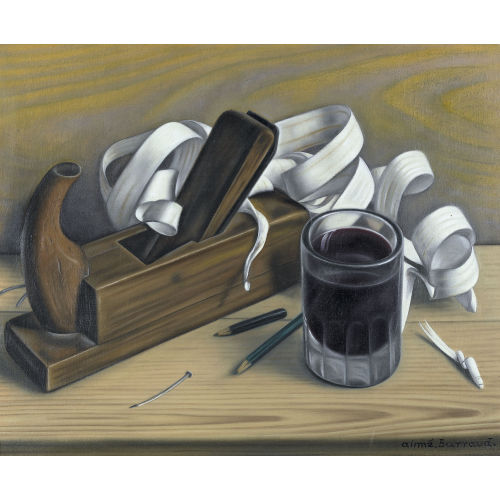
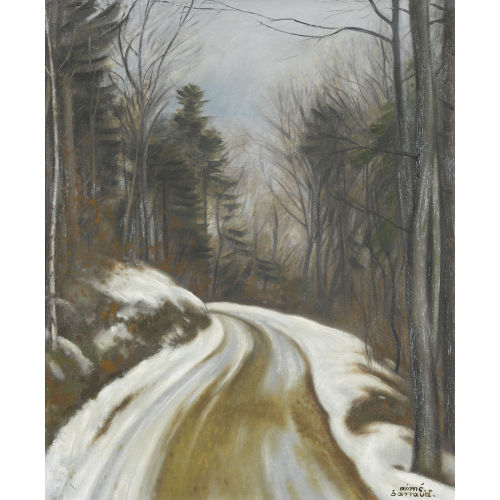
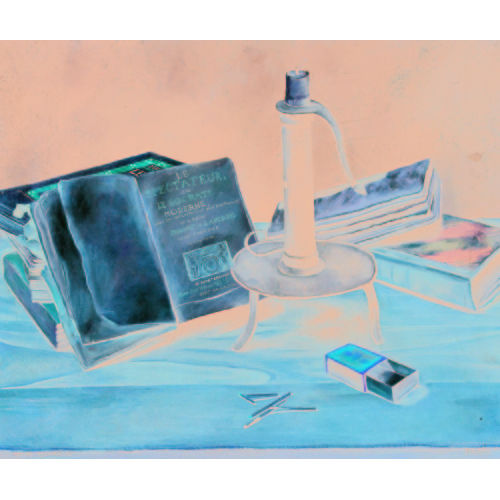
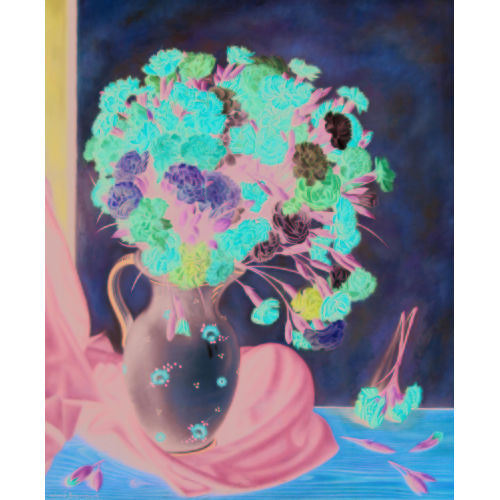
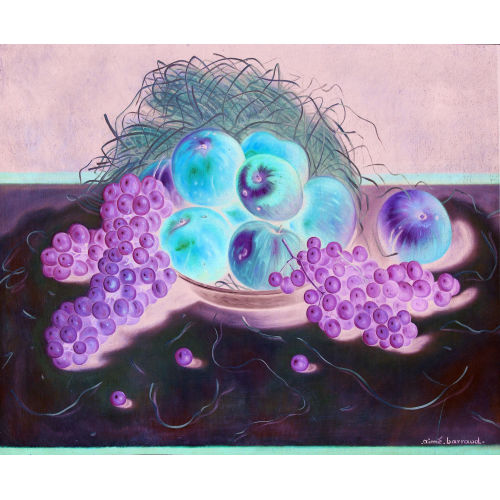
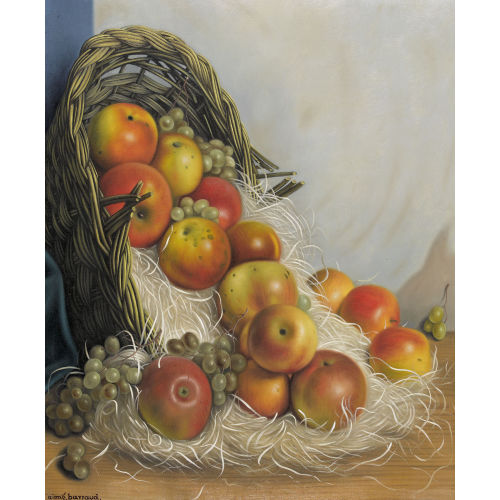
In the work of Aimé Barraud (1902–1954), attention to ordinary things becomes a form of intensity. Born in La Chaux-de-Fonds and deceased in Neuchâtel, the painter came from a family of painters: his brothers Charles, François and Aurèle also practised this art. The rigour of line and the patience of the gaze run through their works, associated with the New Objectivity as it developed in the Neuchâtel region.
This familial proximity does not efface Aimé’s distinctive voice: the precision of his images never closes off the possibility of a discreet emotion.
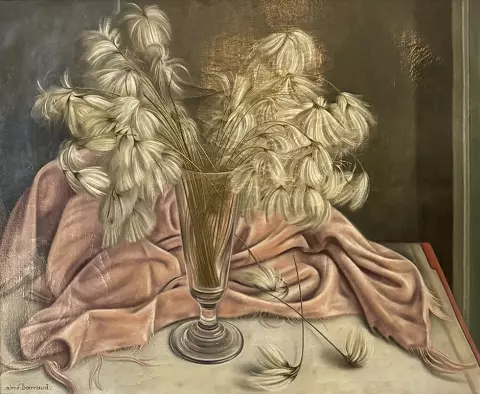
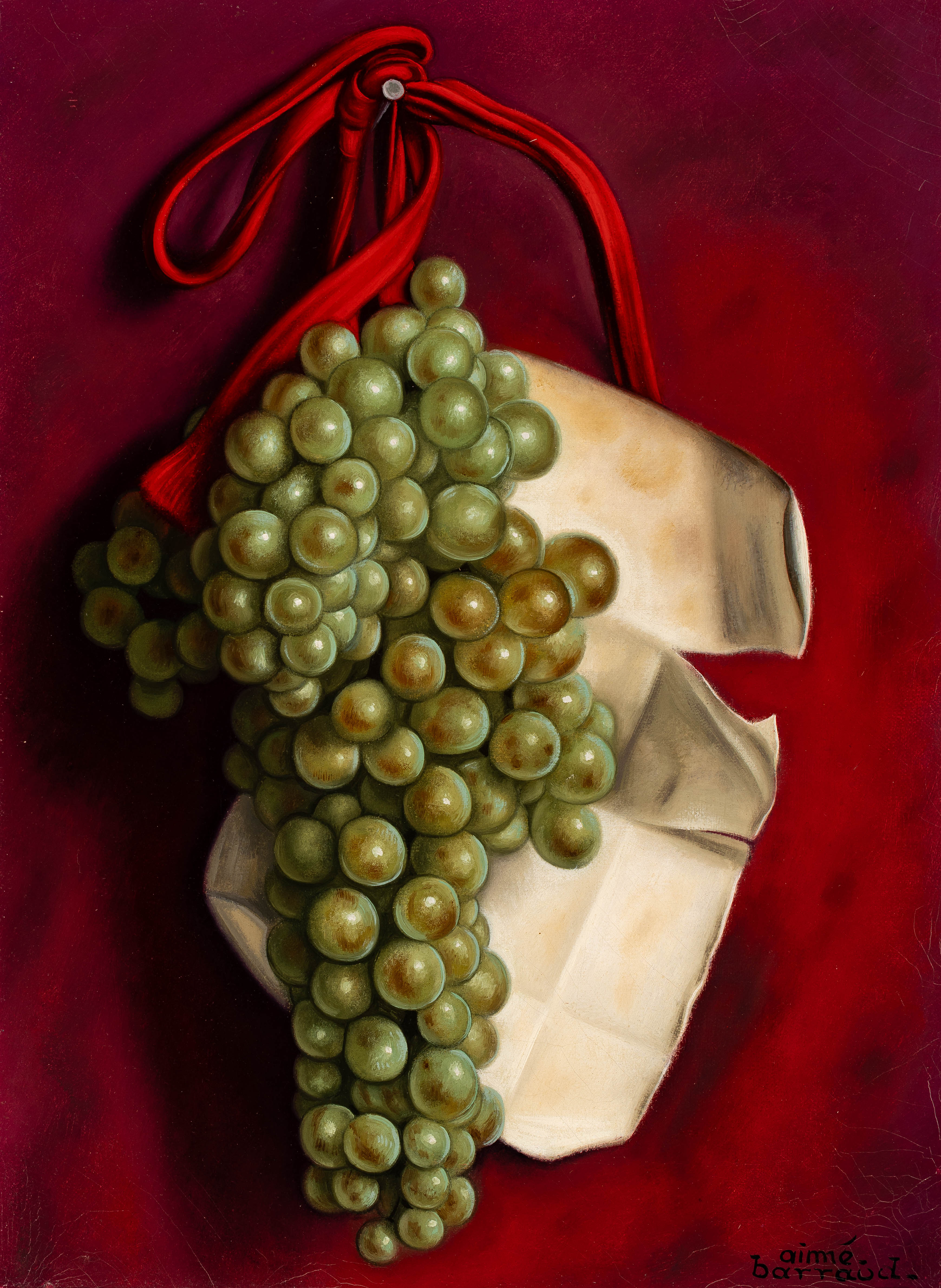
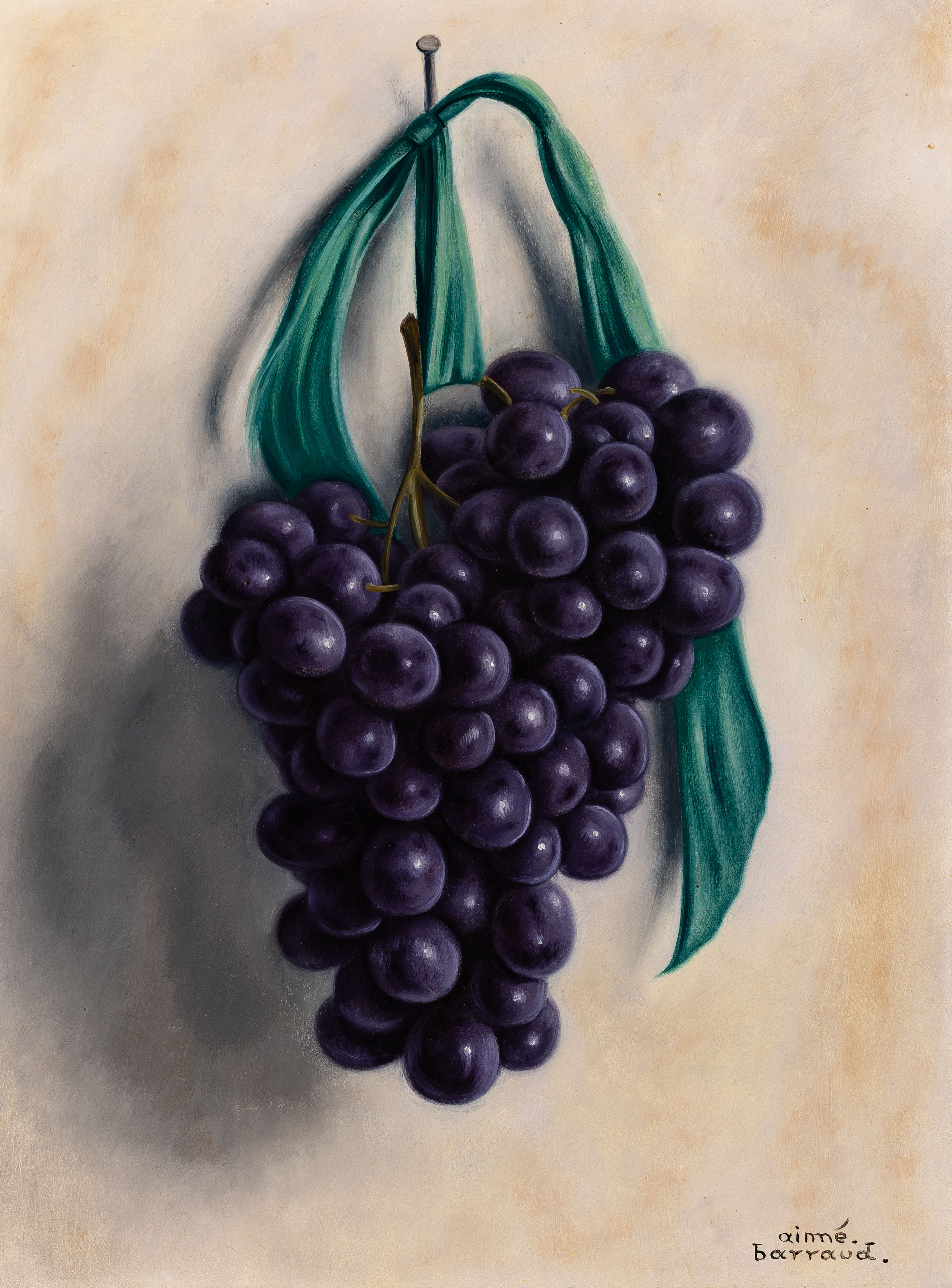
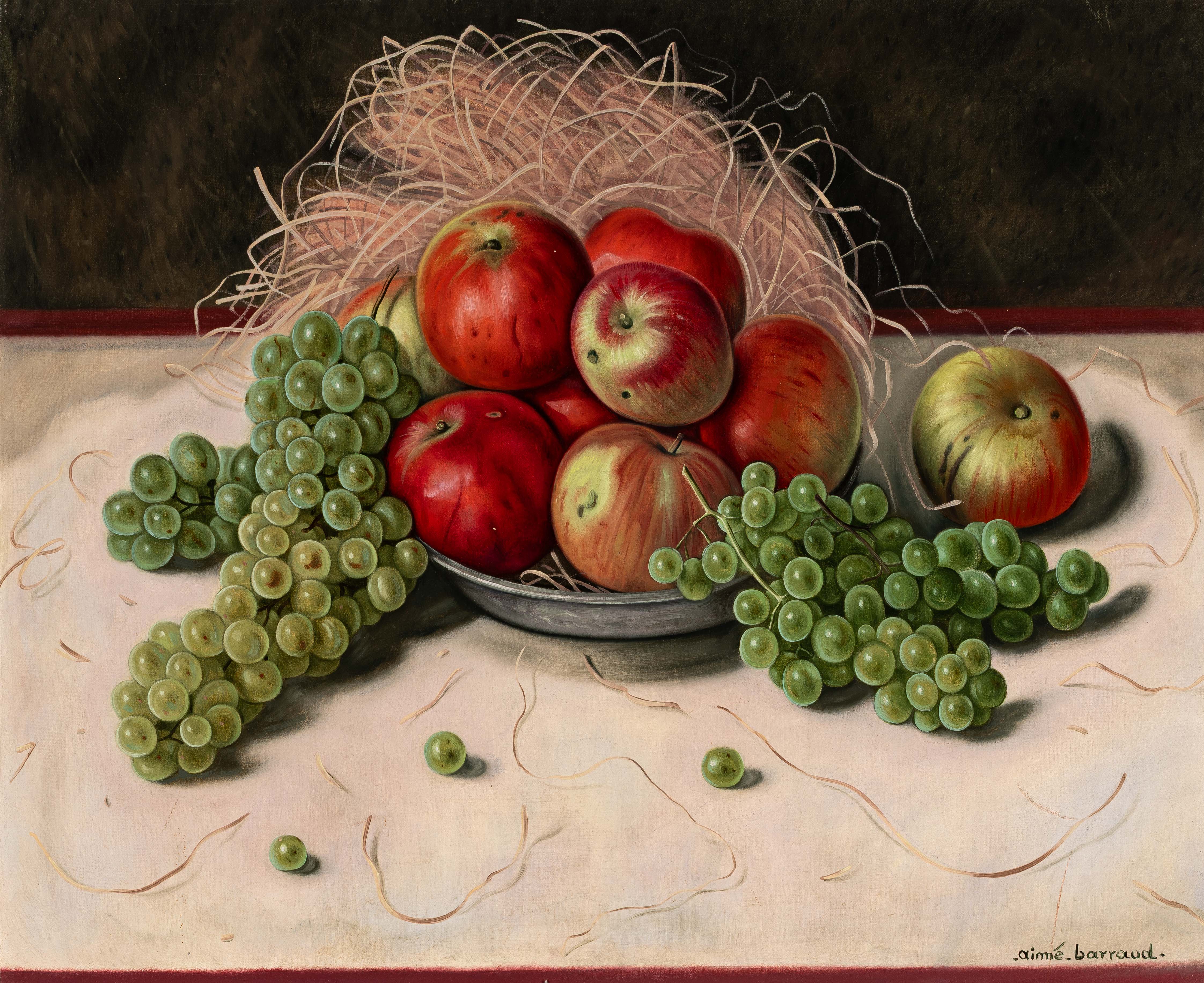
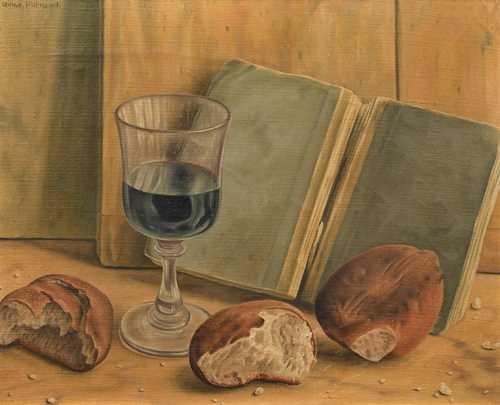
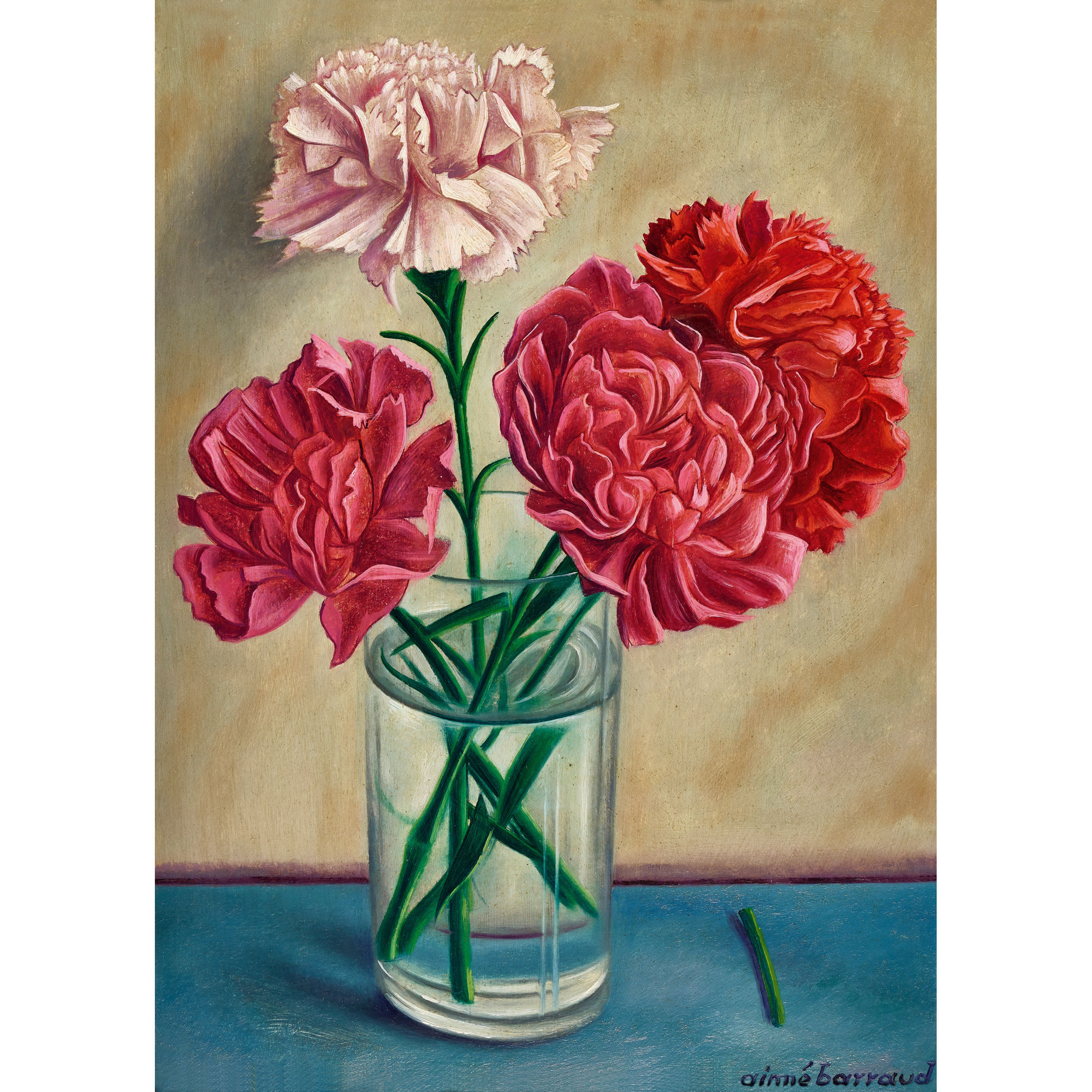
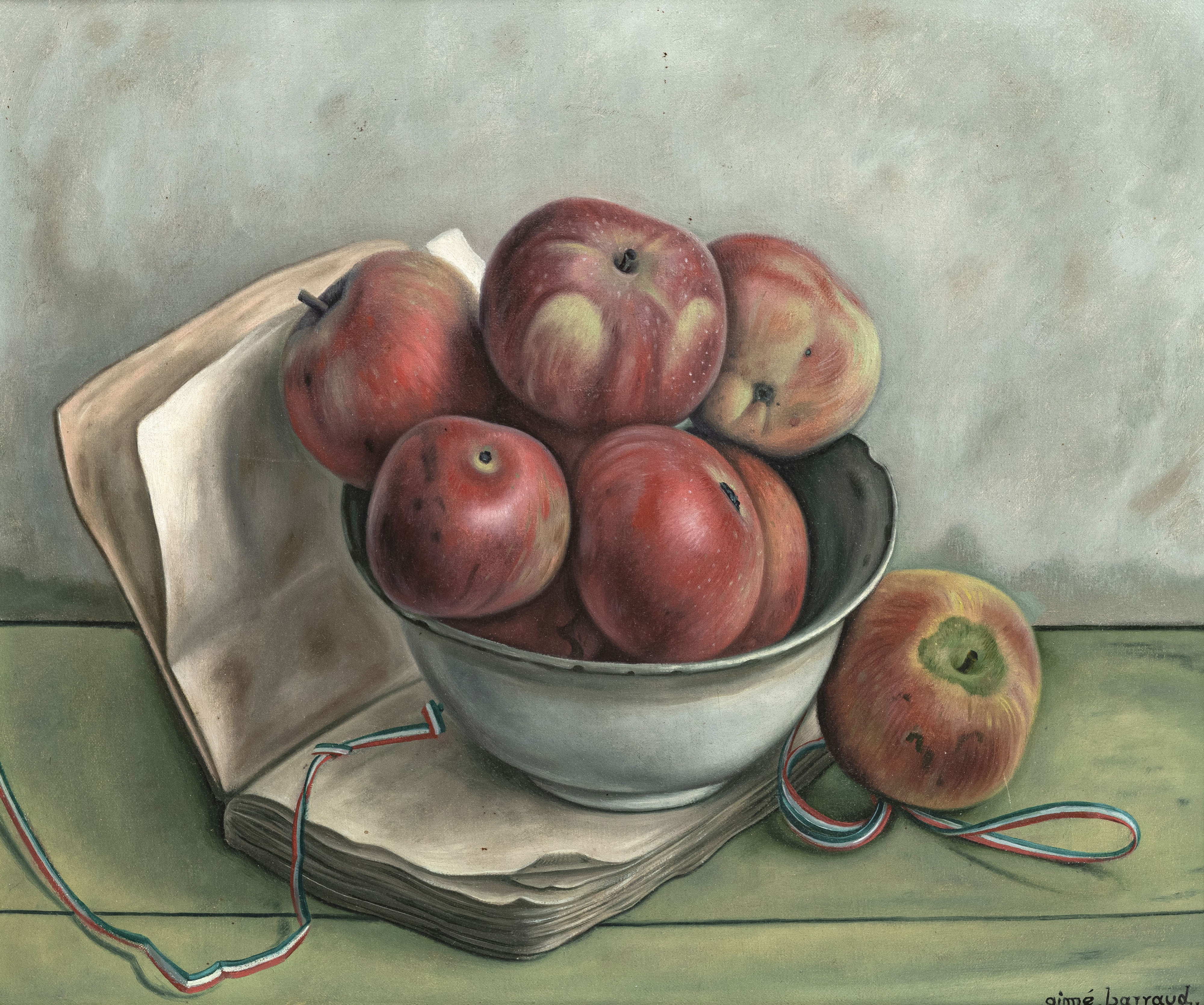
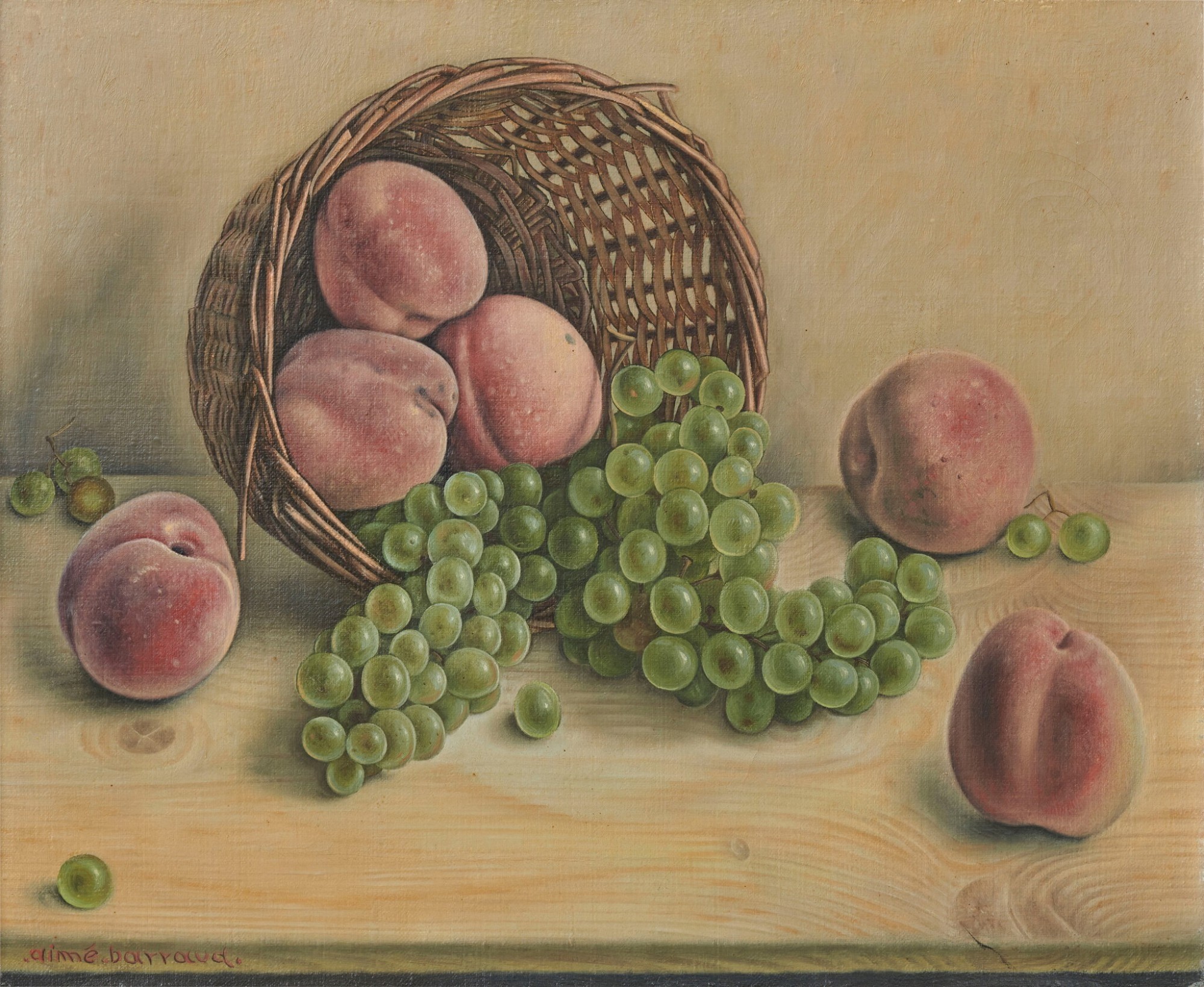
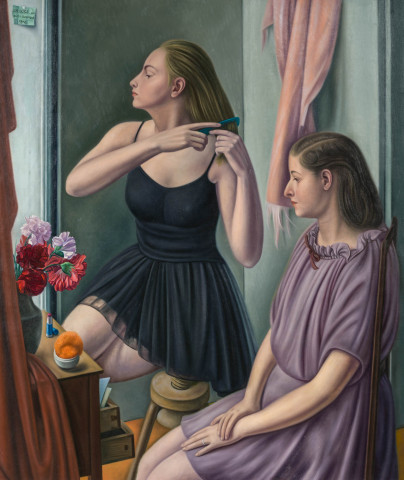
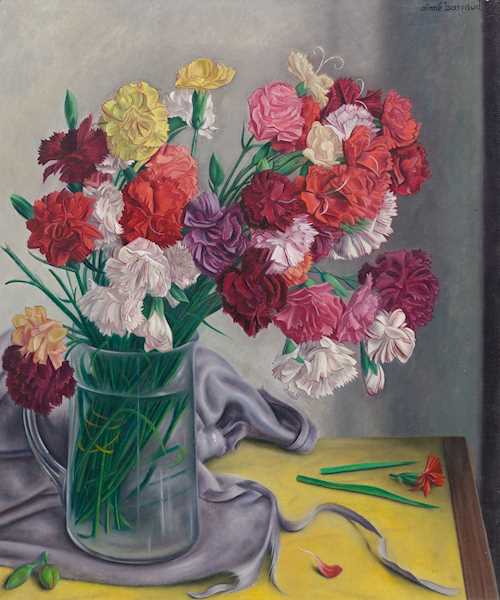
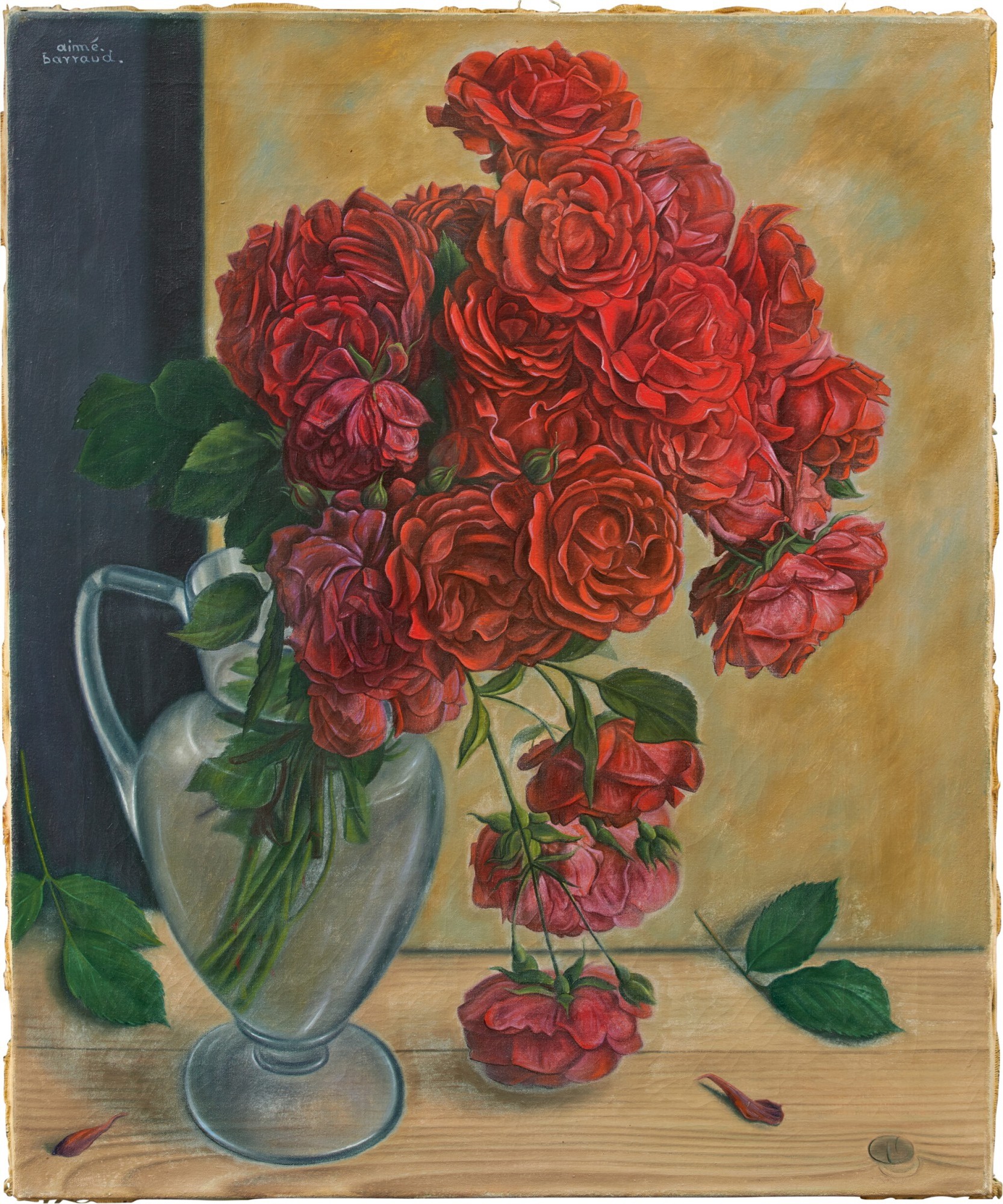
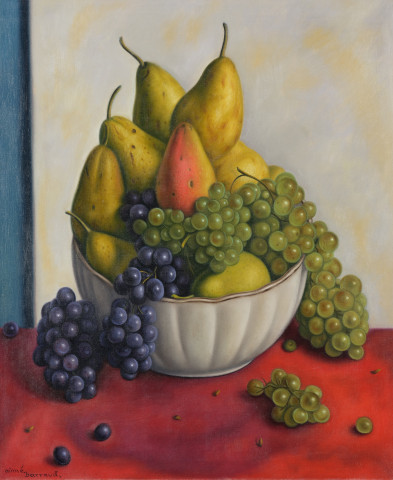
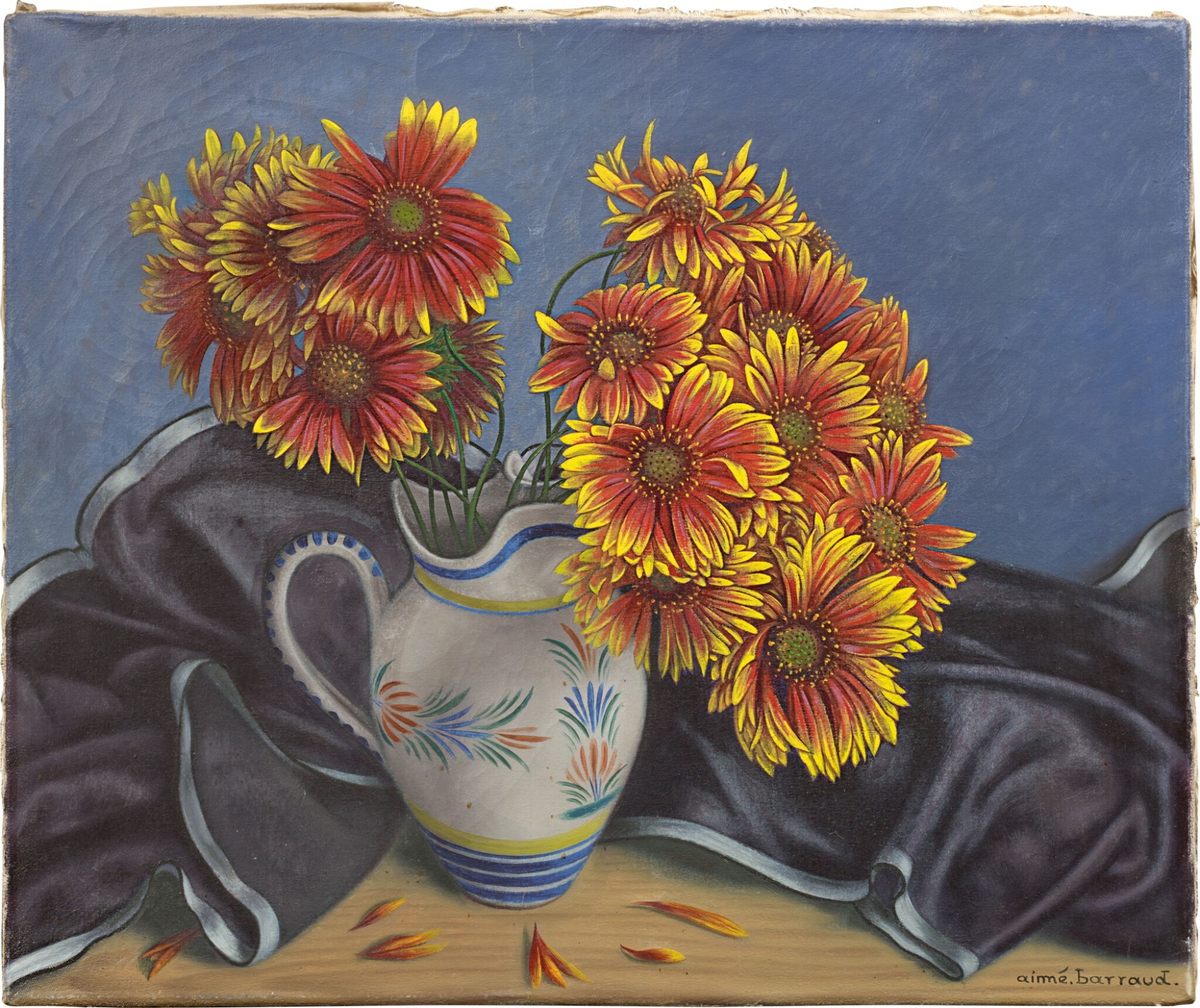
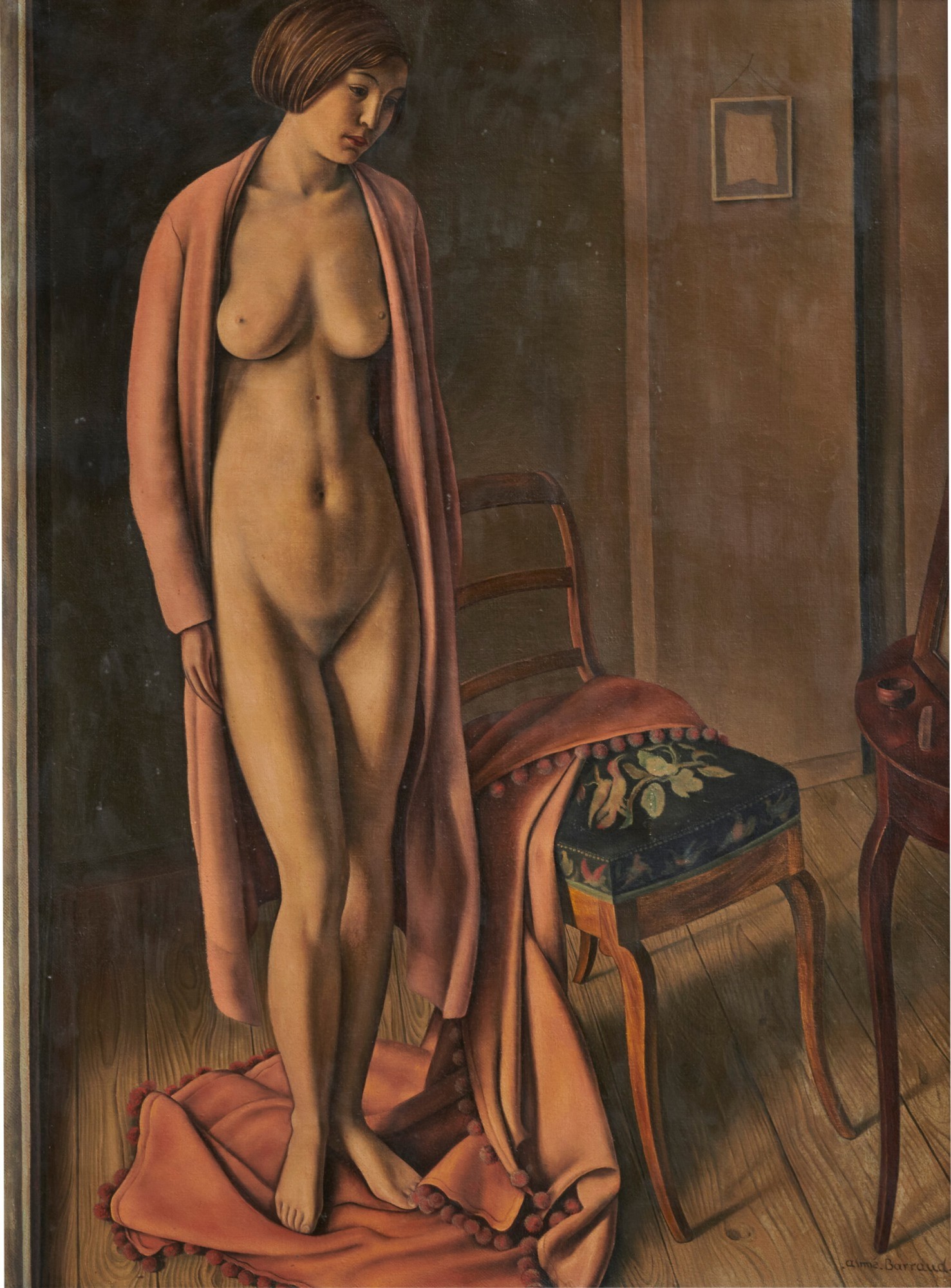
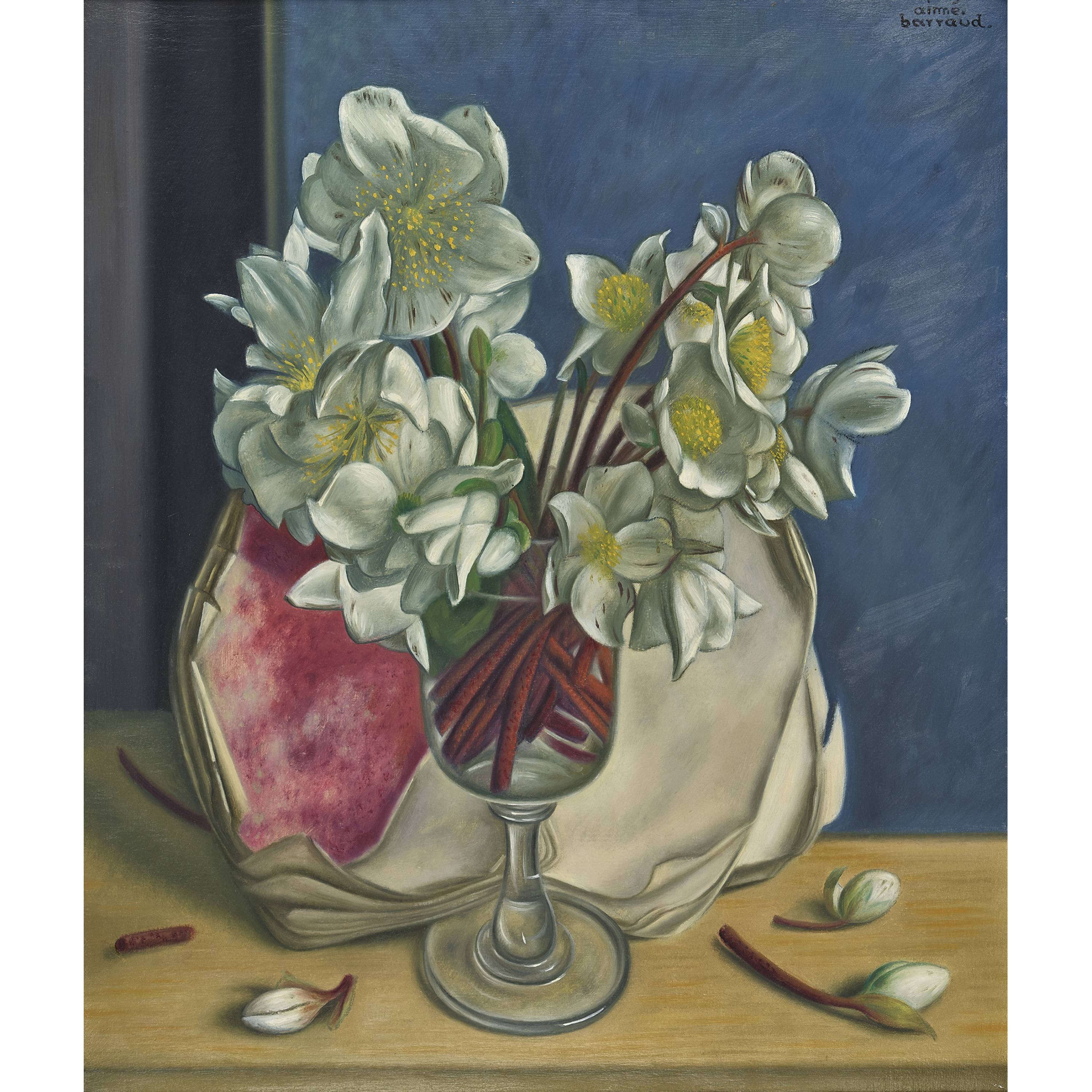
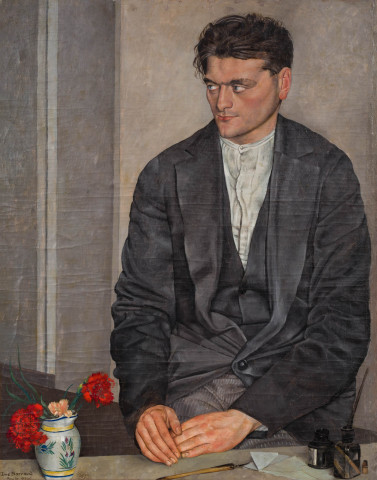
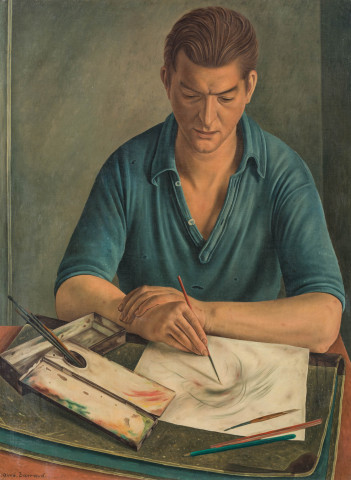
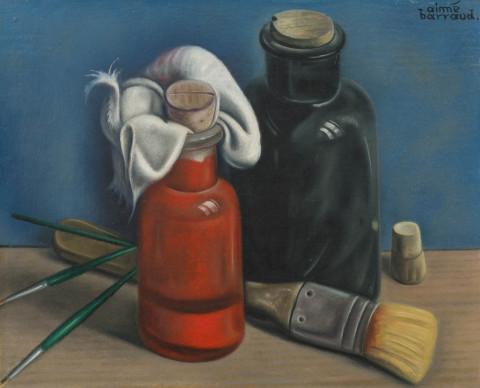
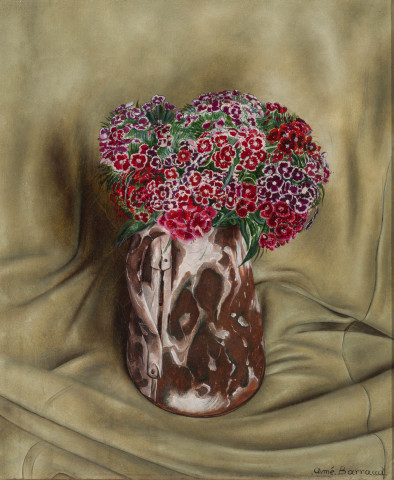
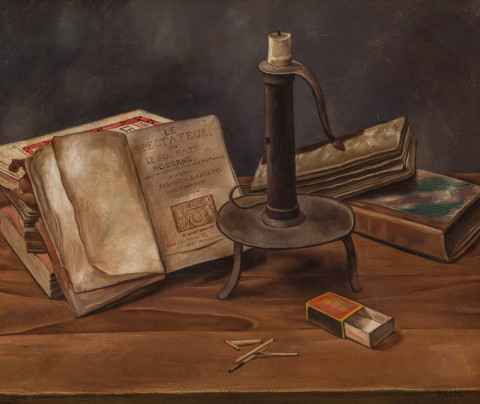
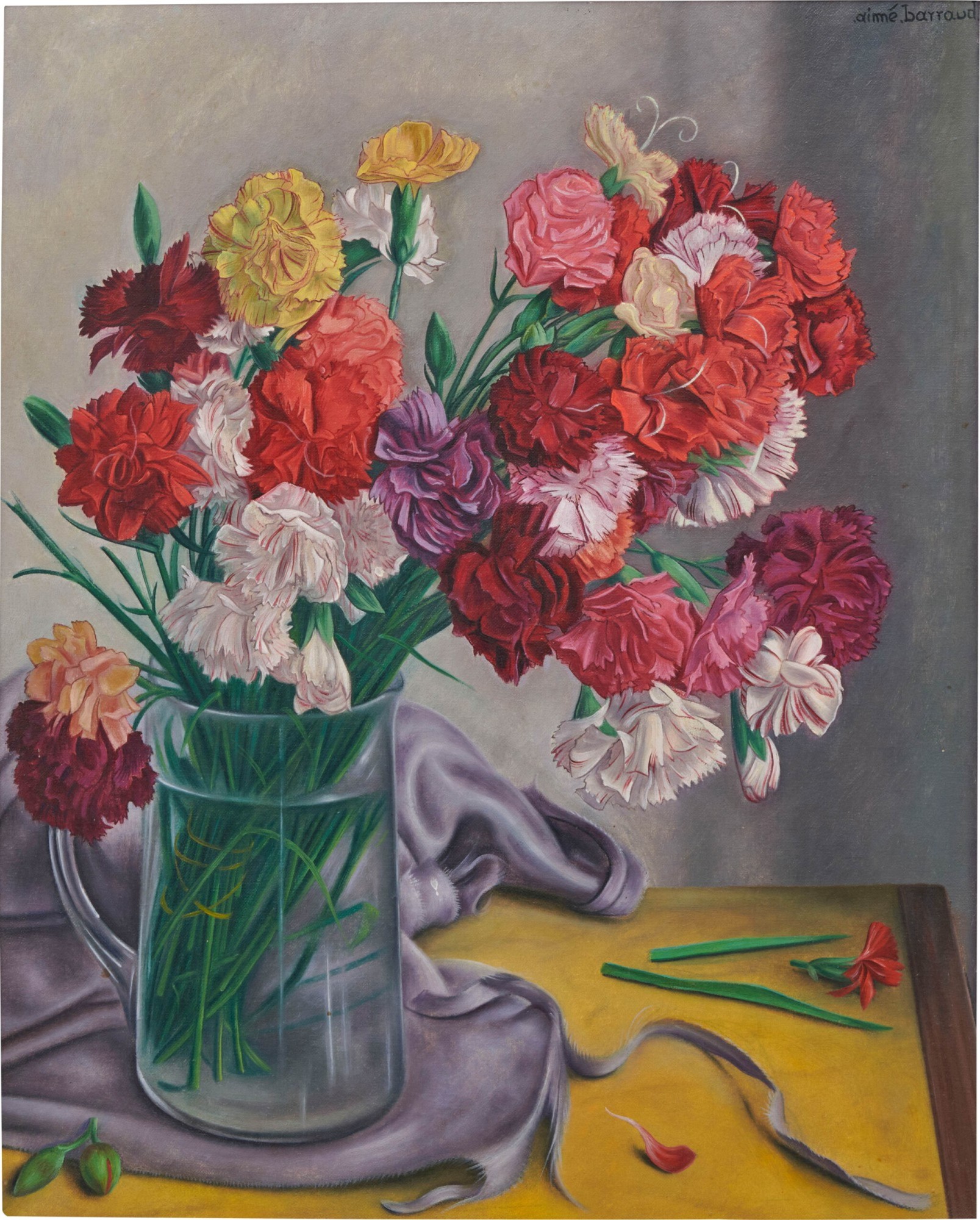
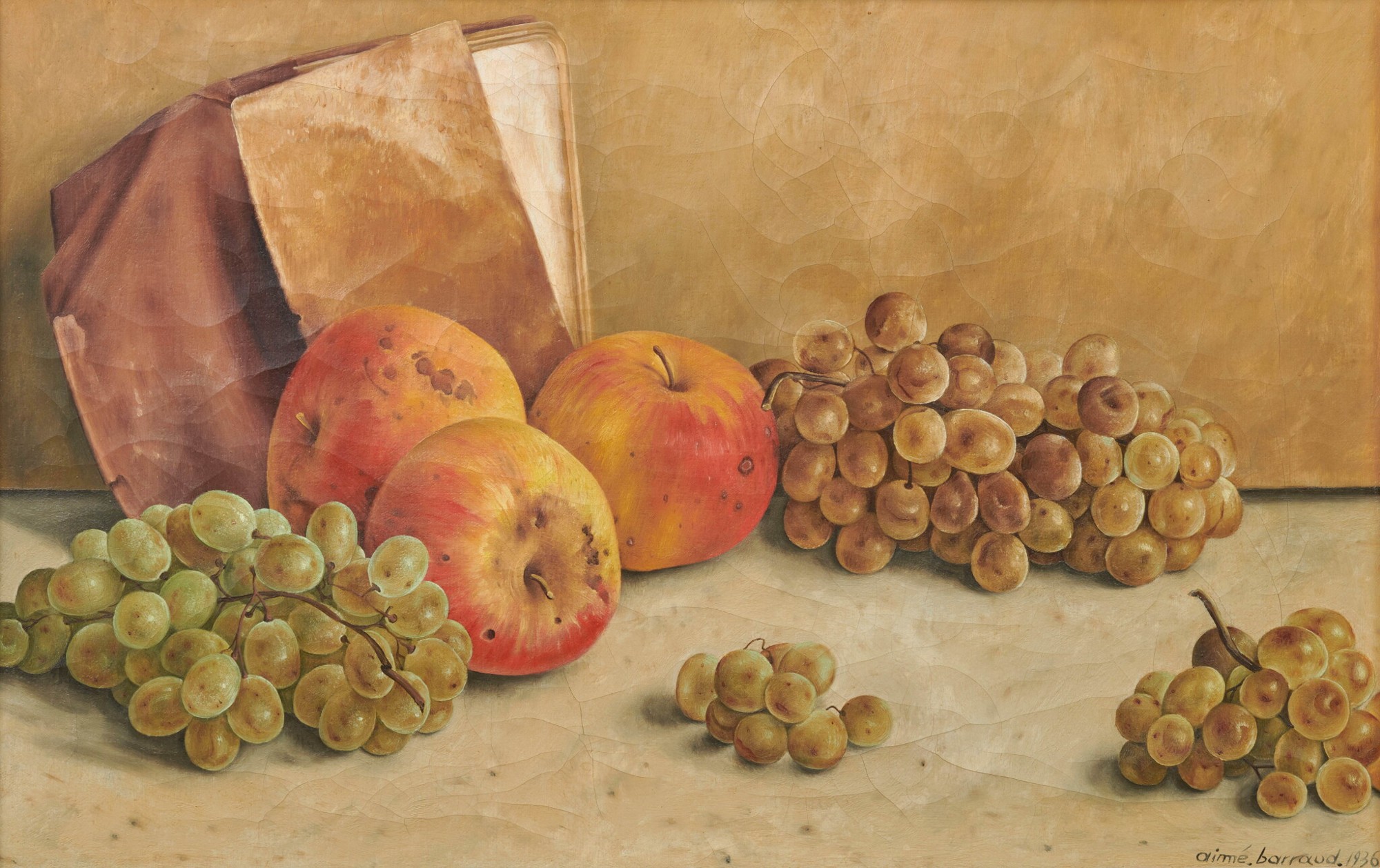
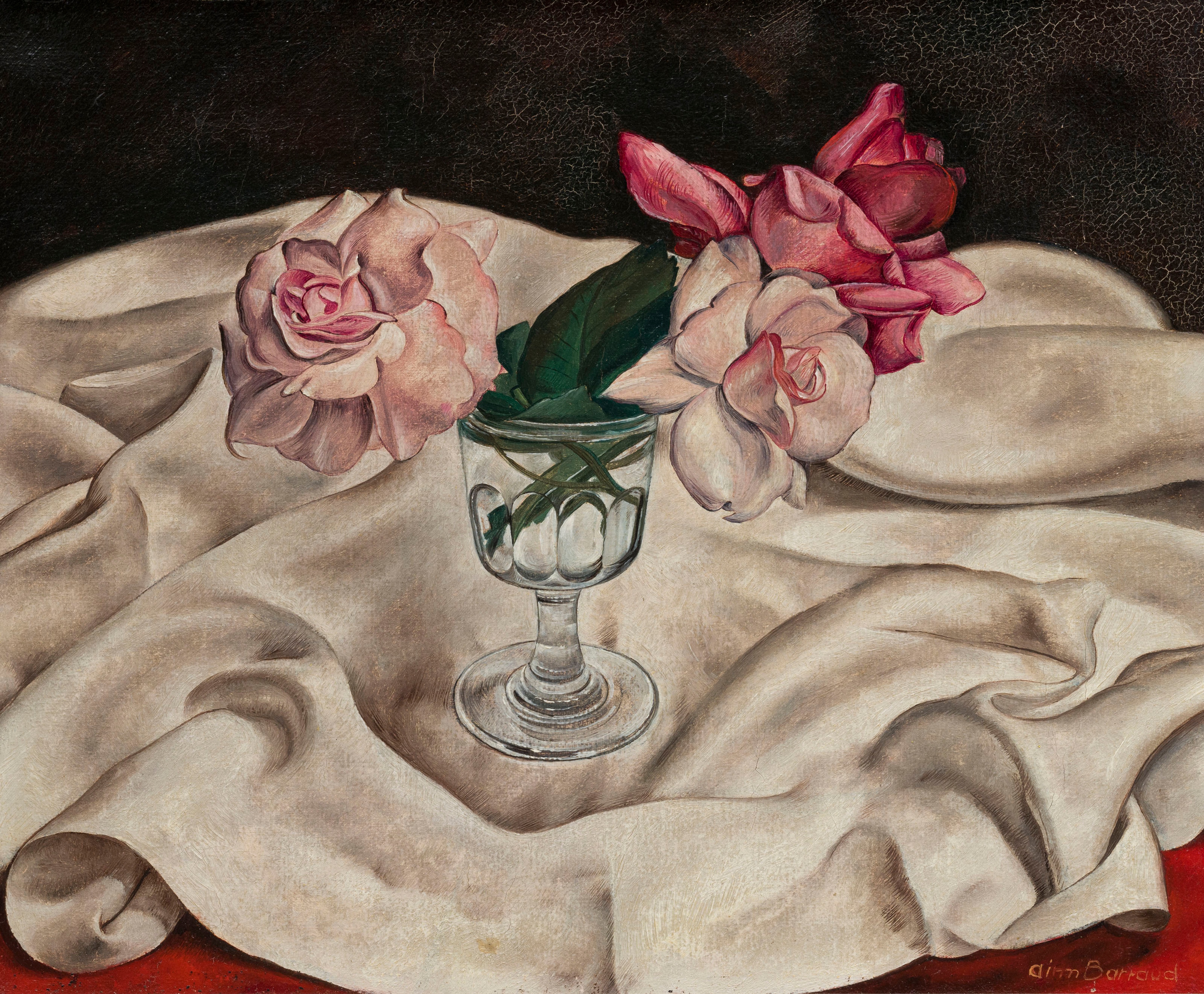
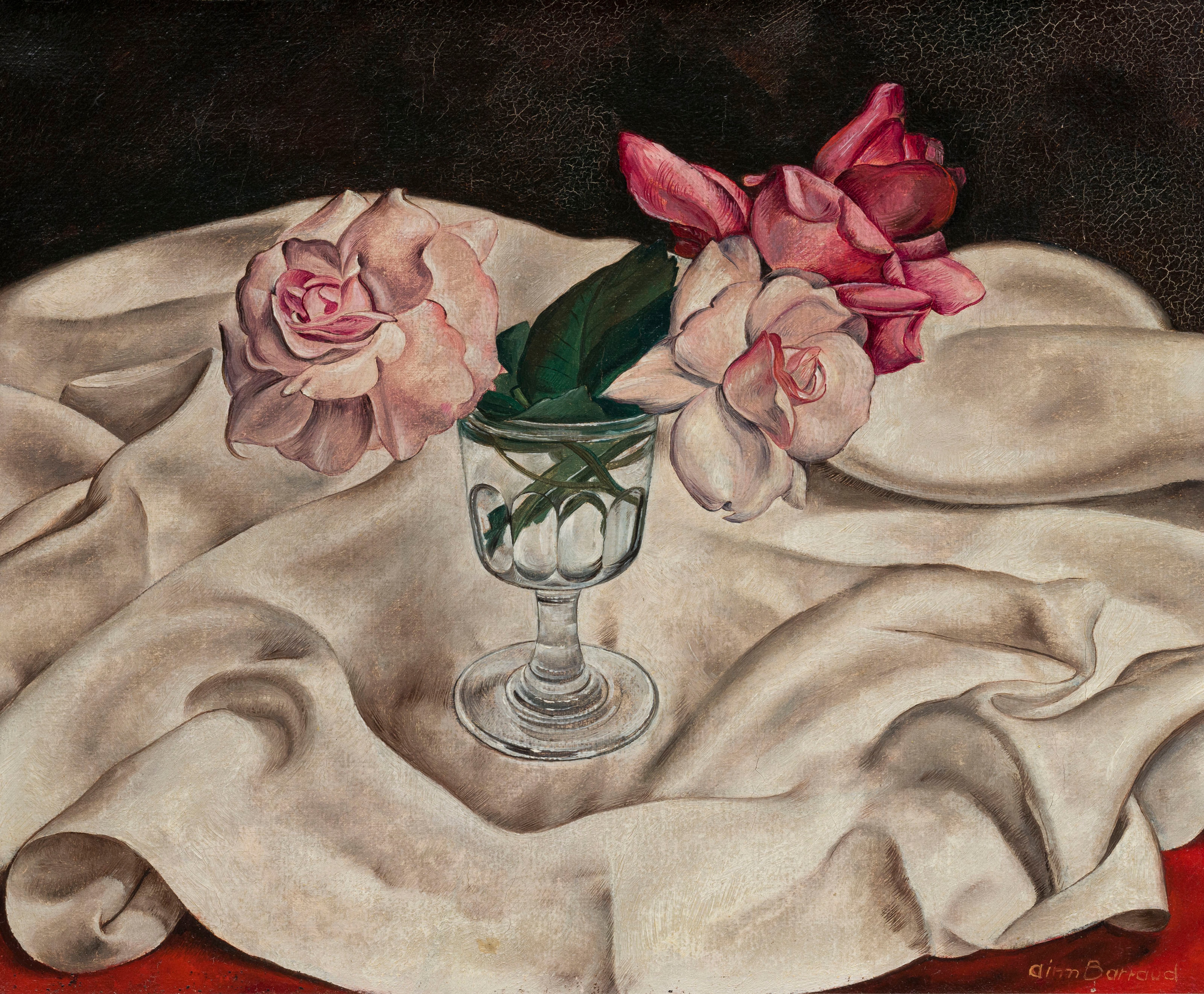
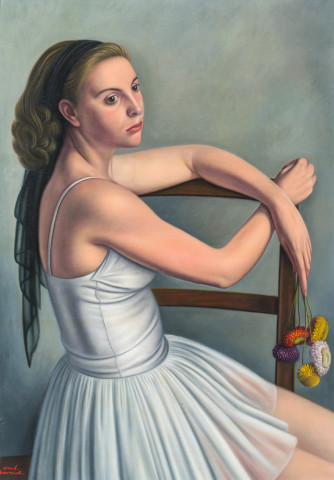
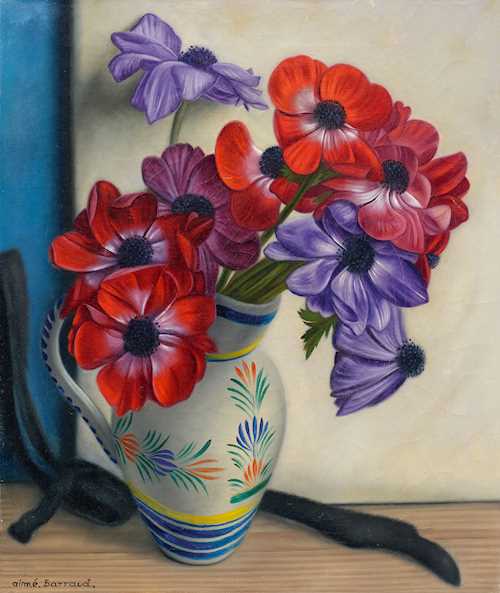
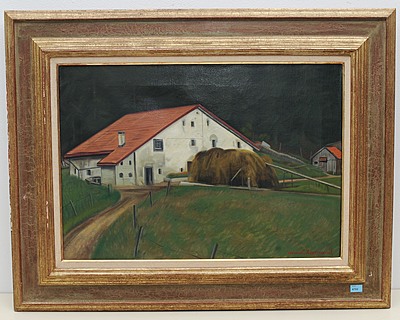
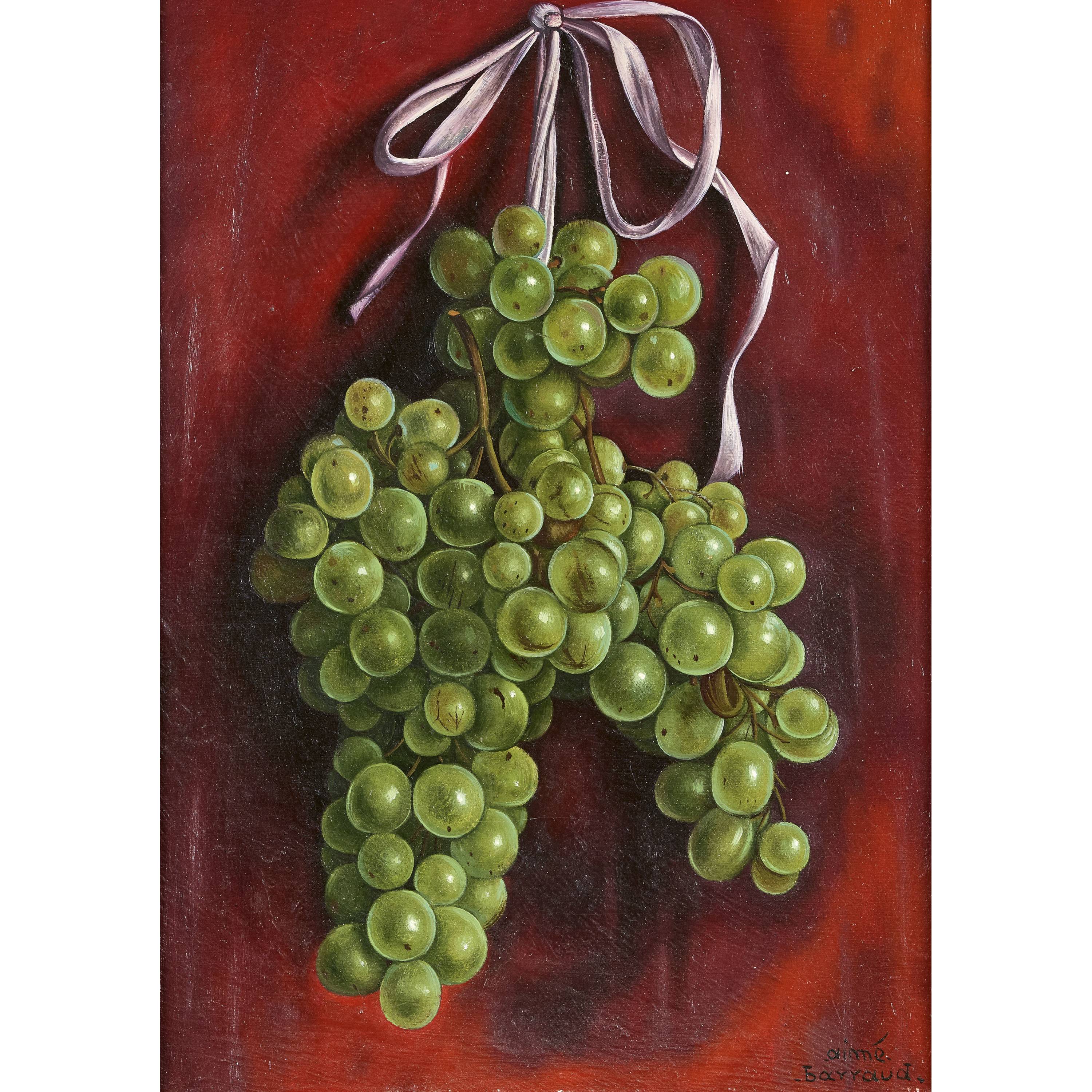
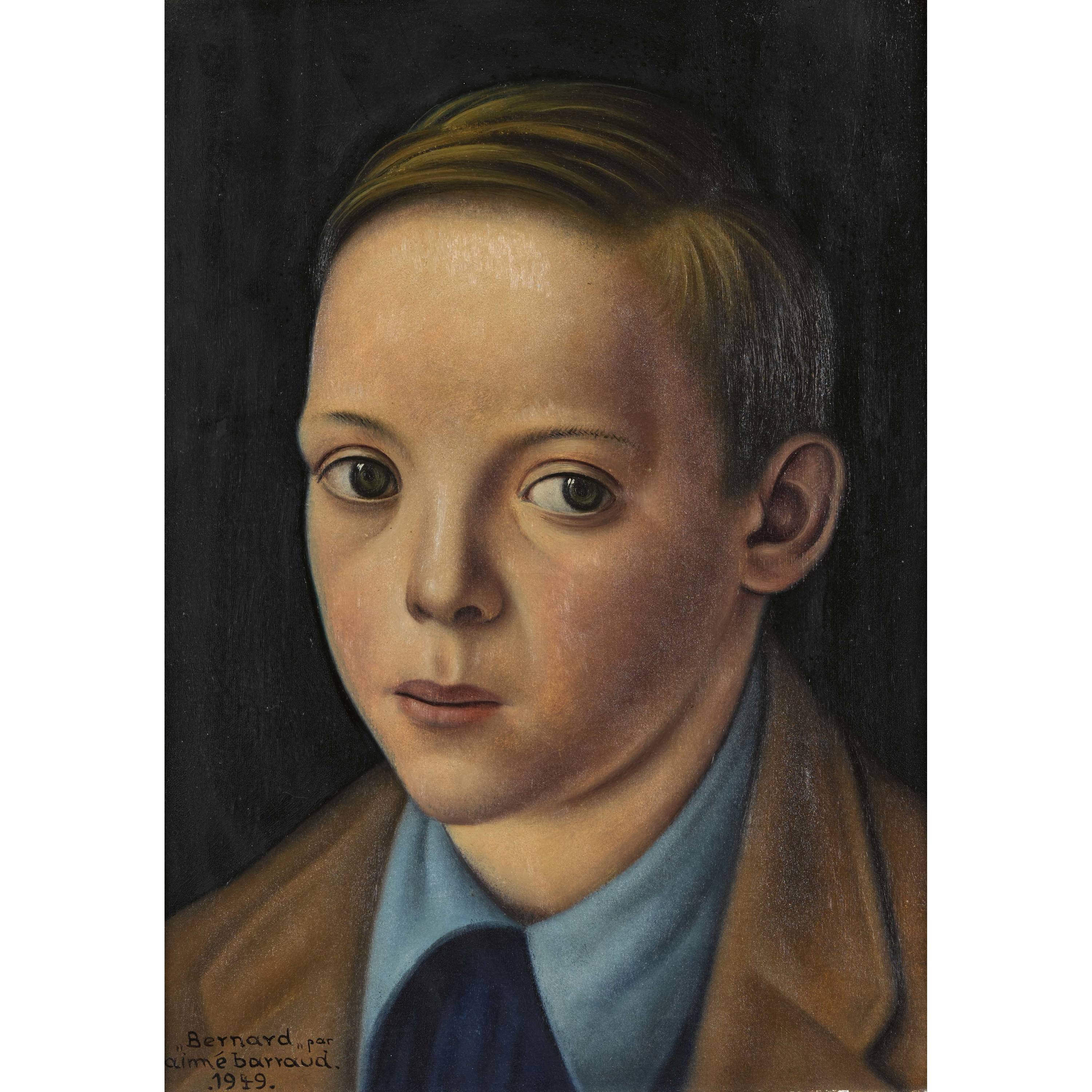
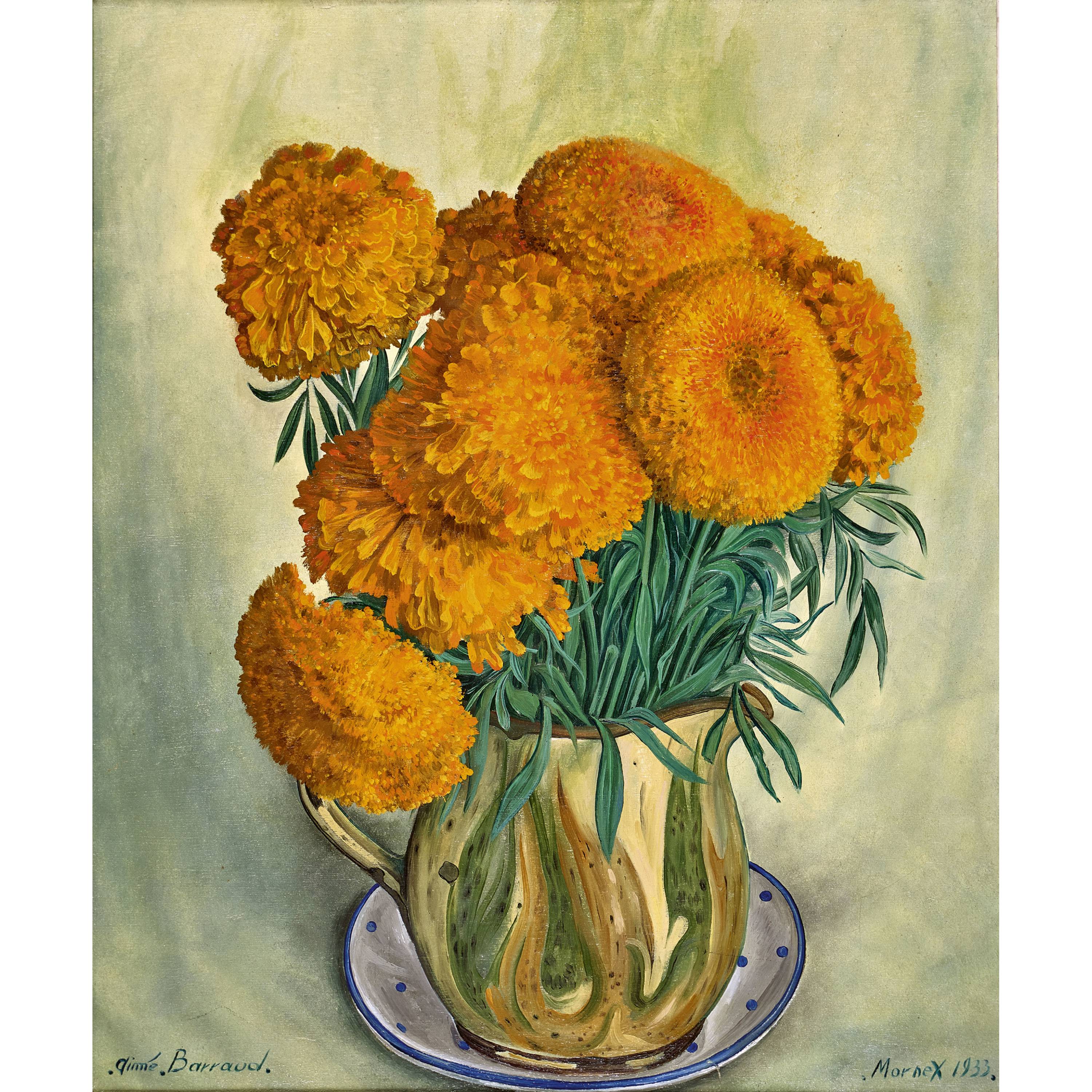
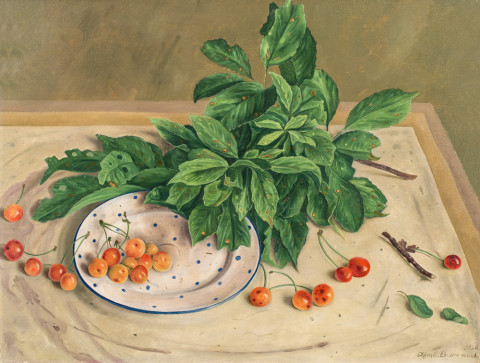
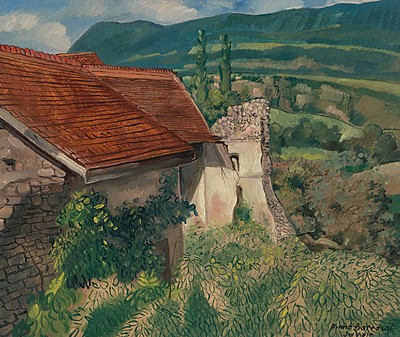
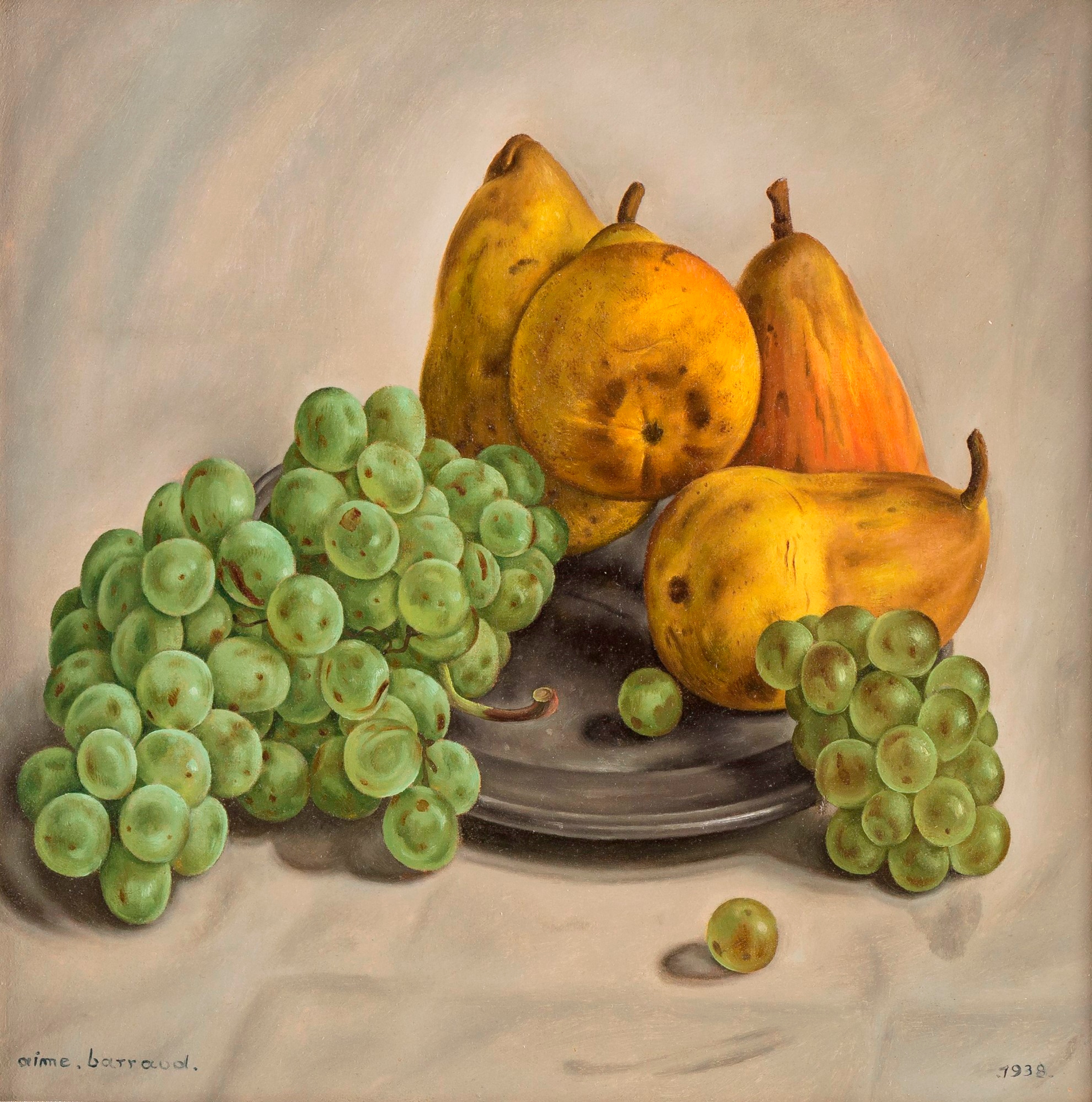
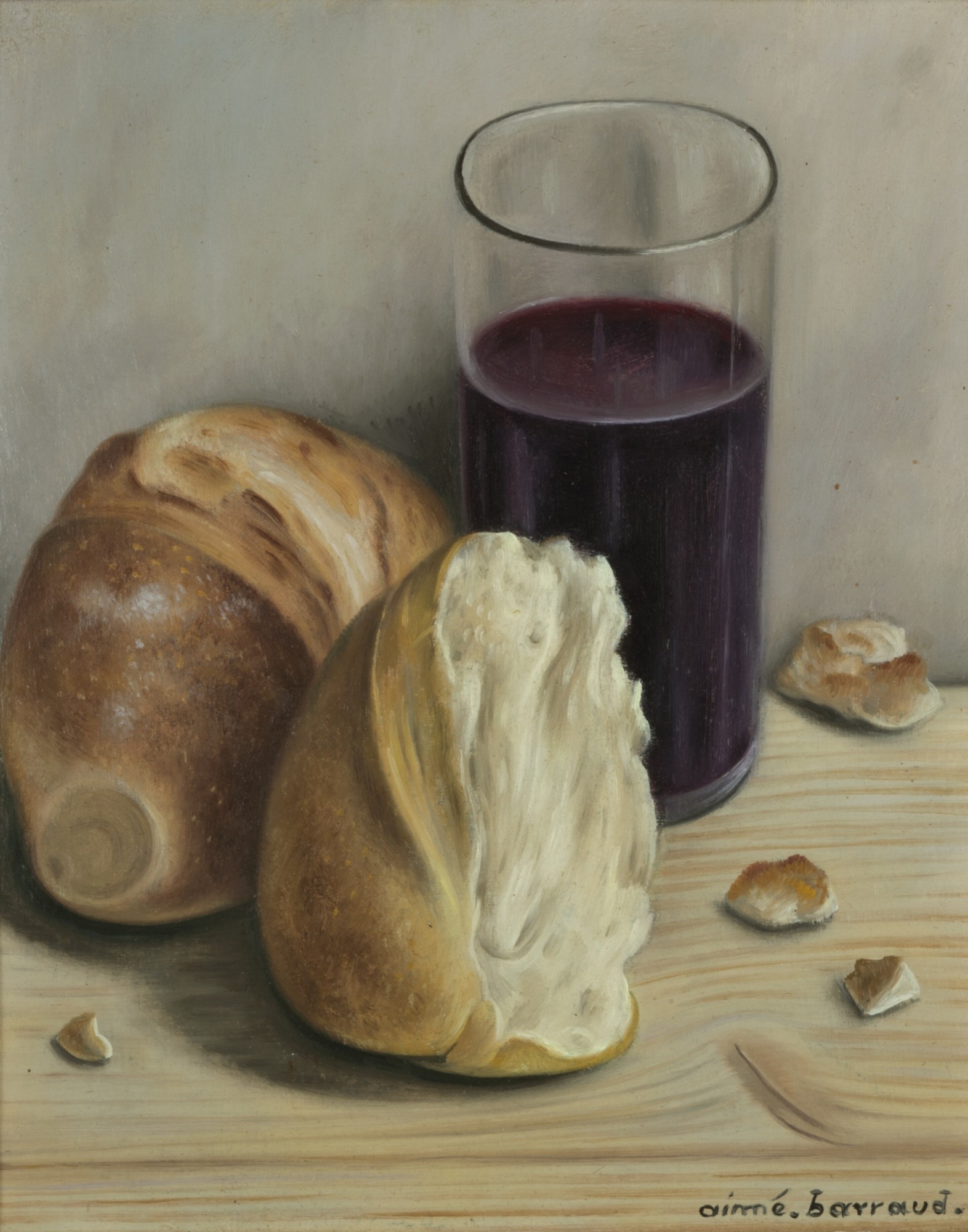
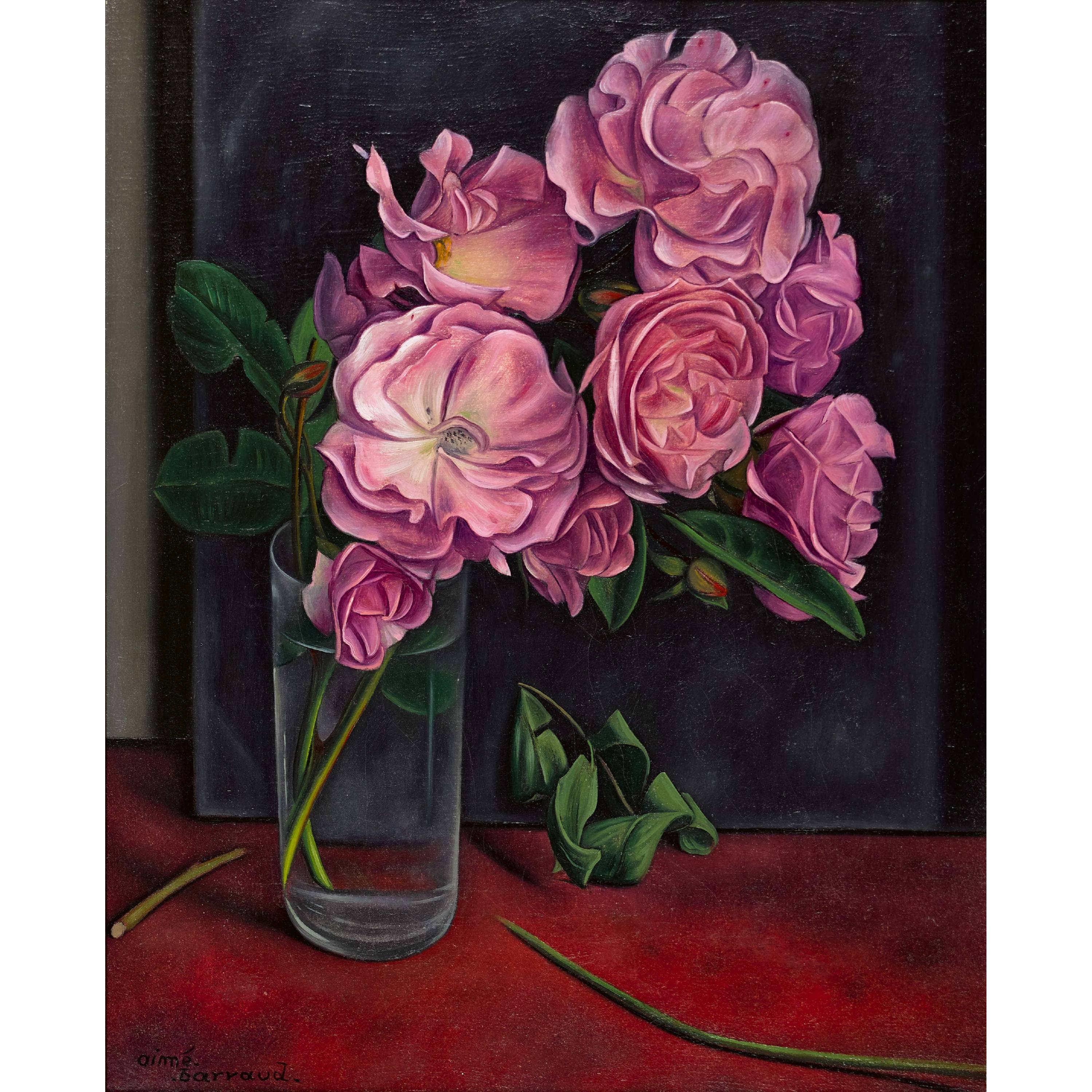
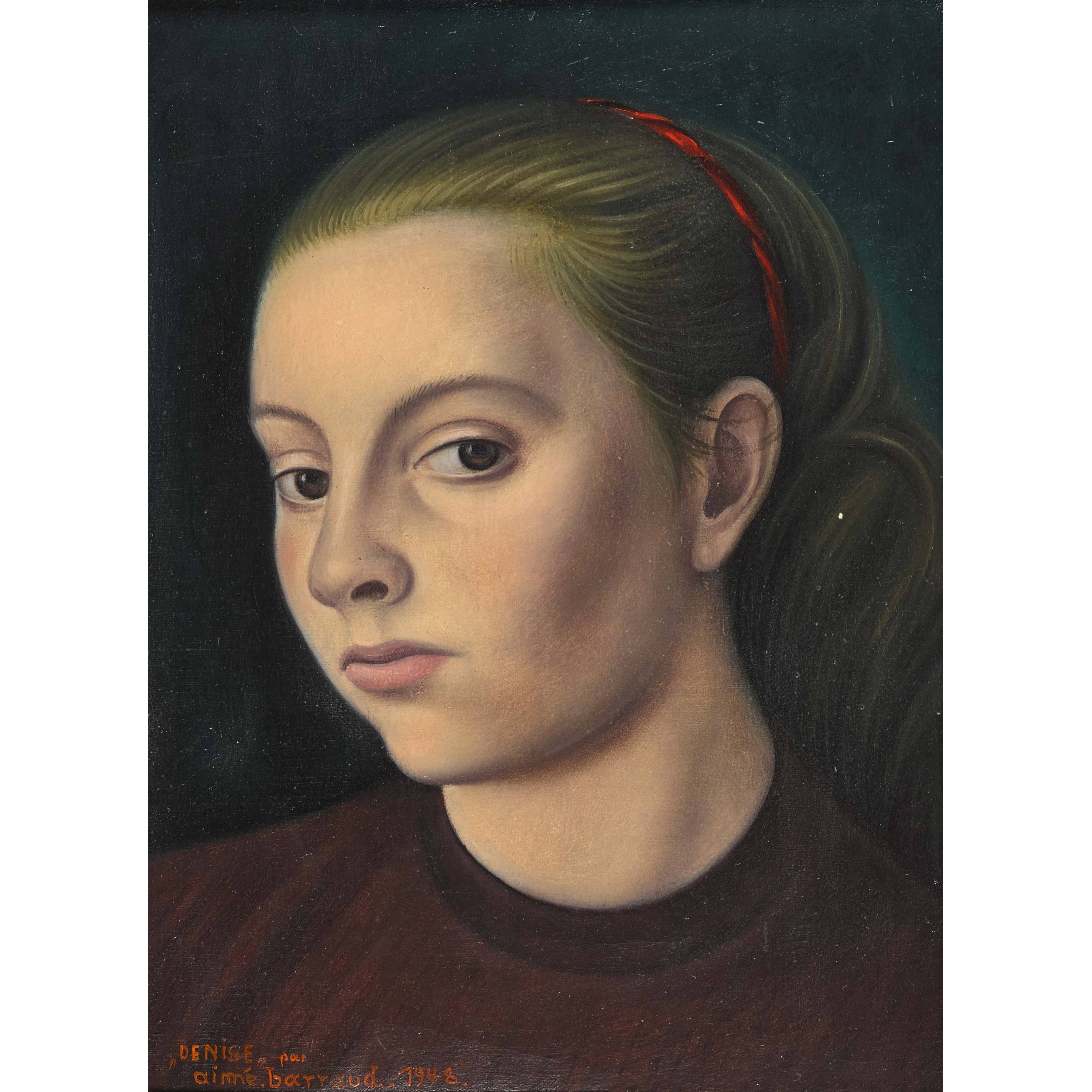
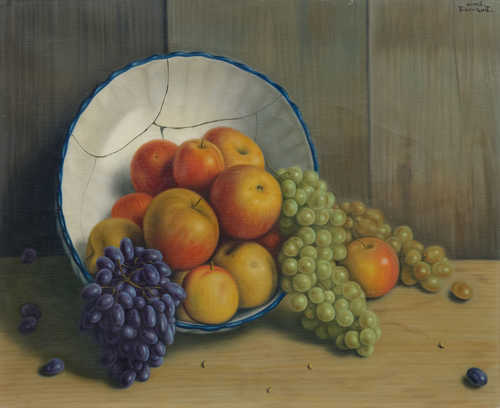
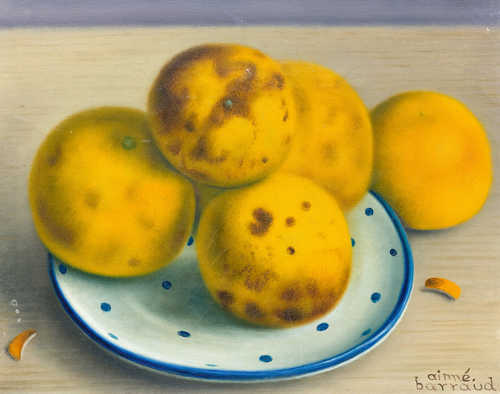
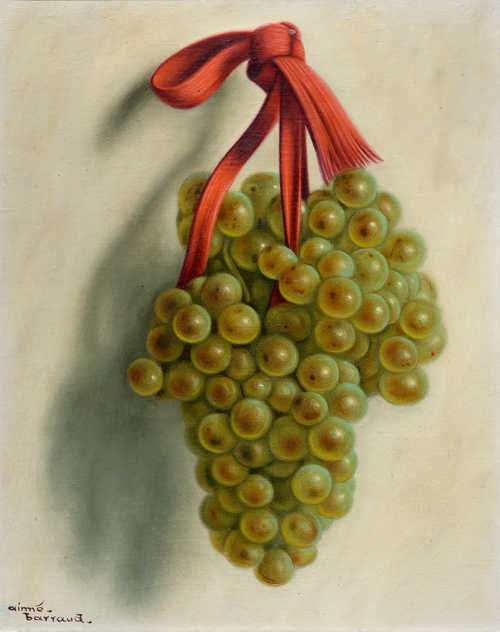
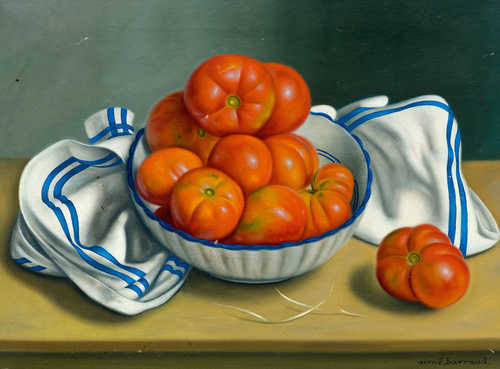
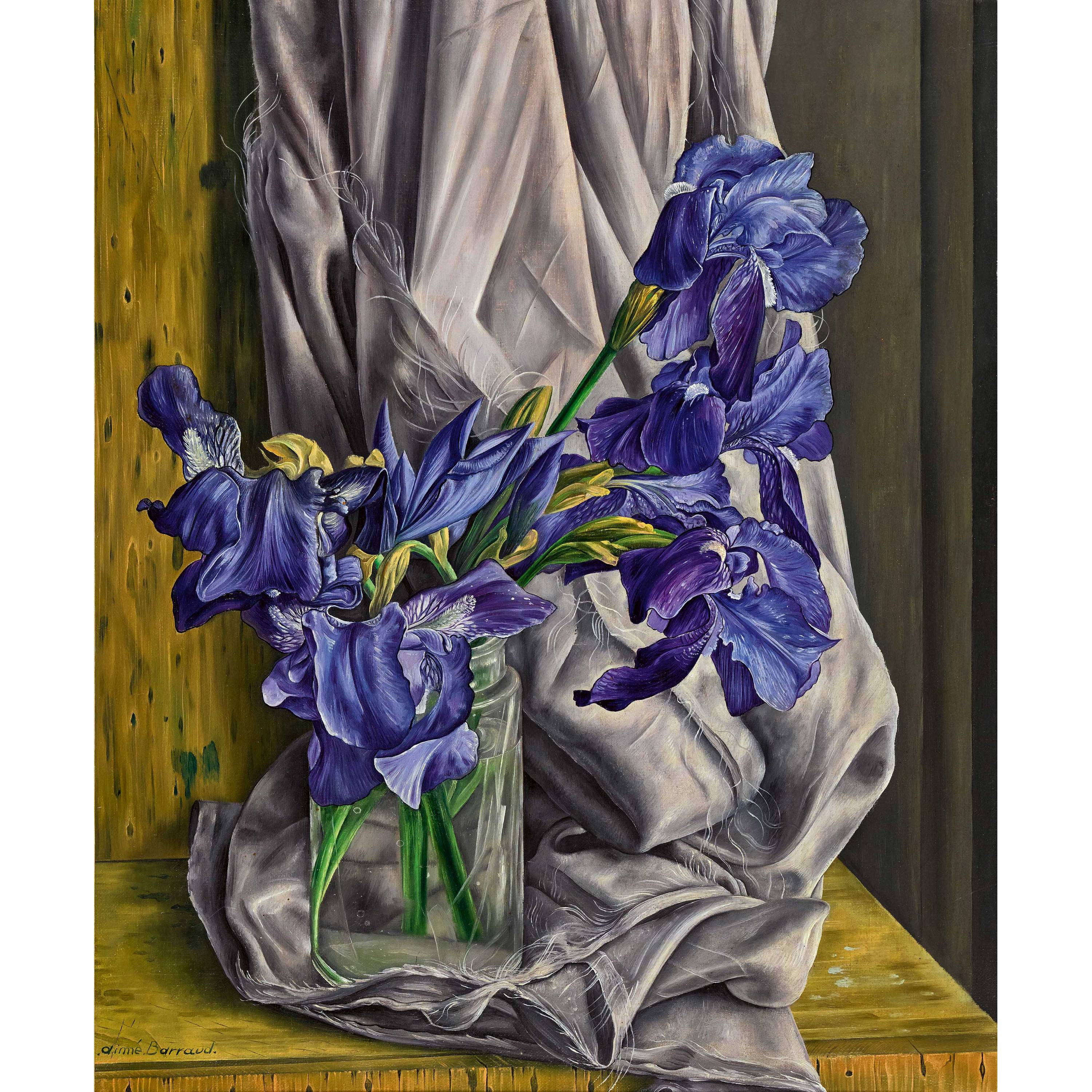
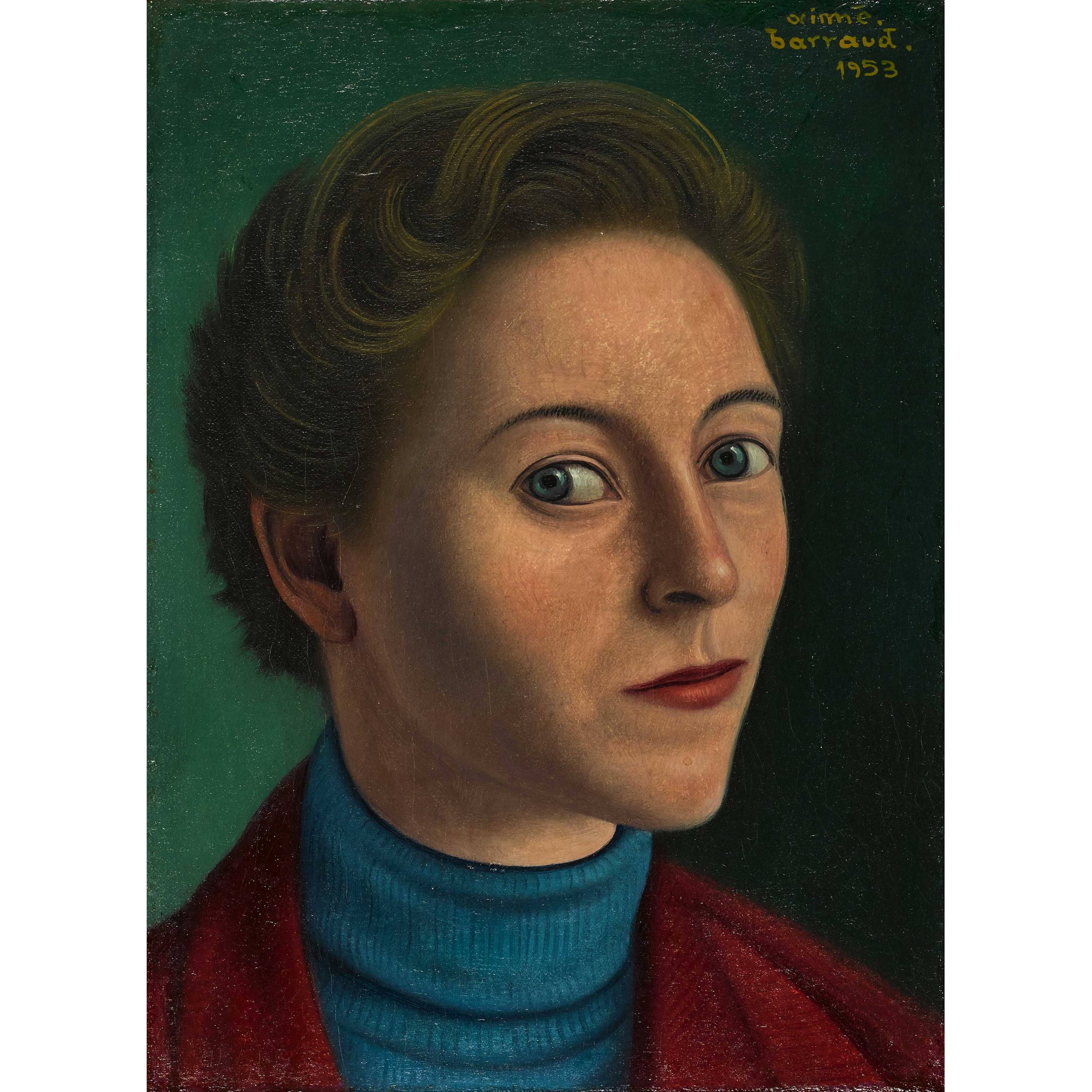
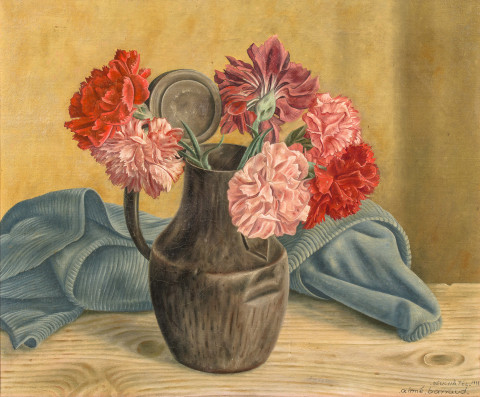
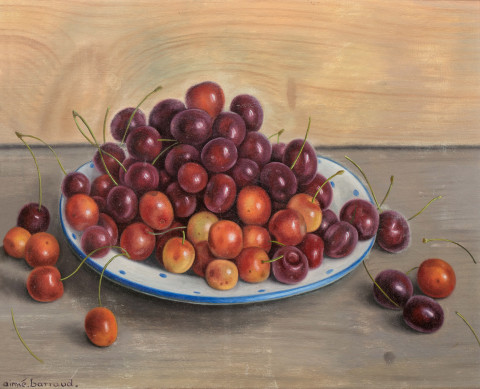
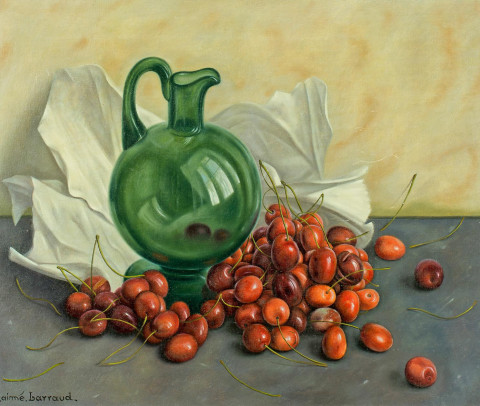
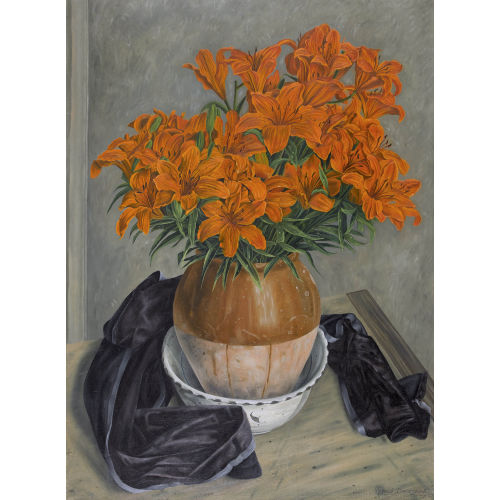
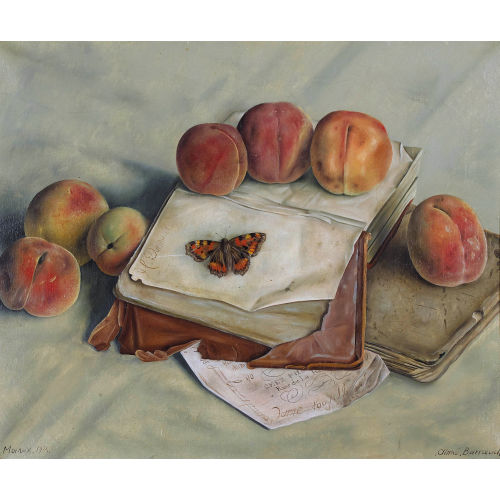
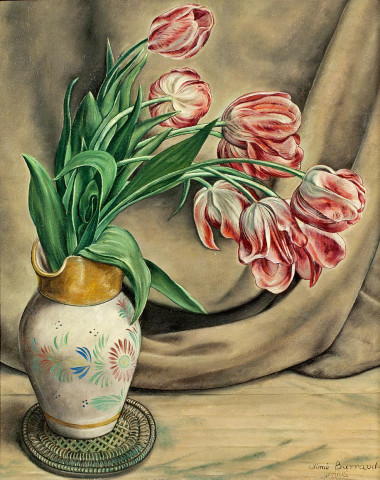
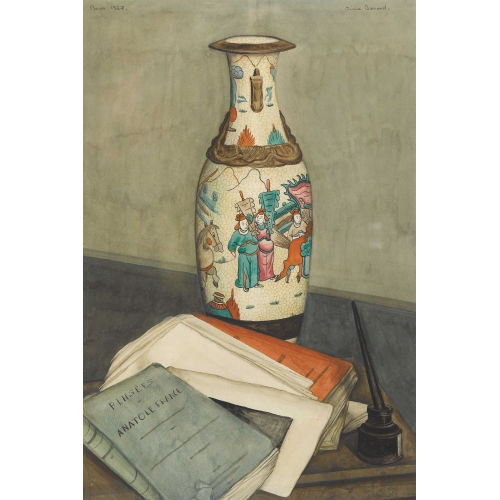
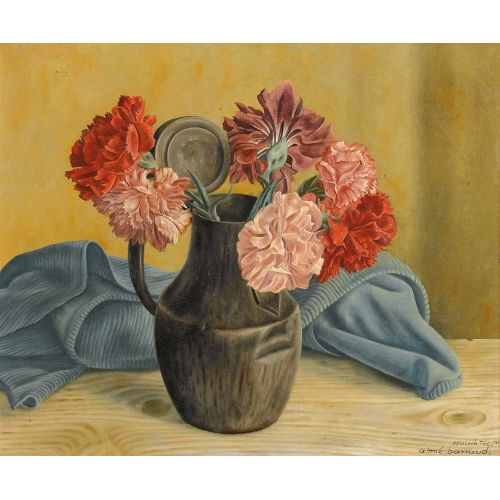
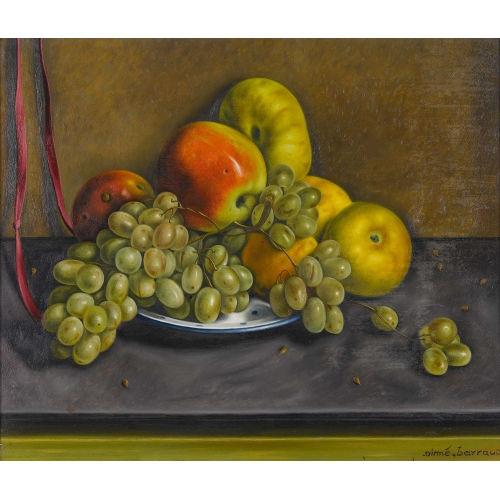
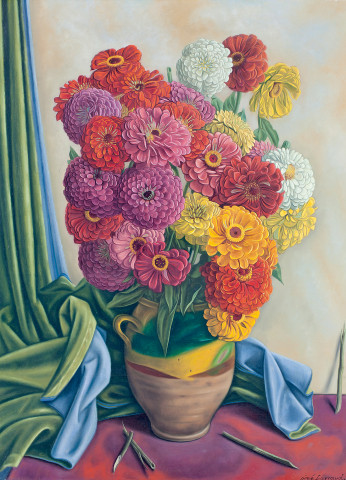
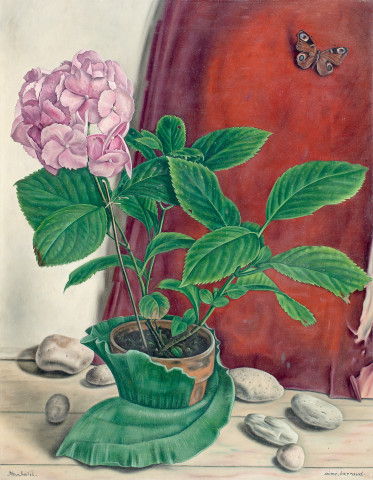
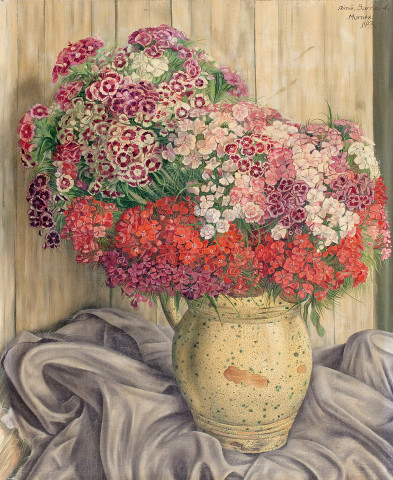
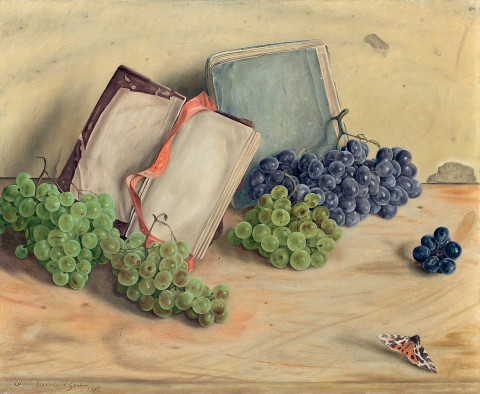
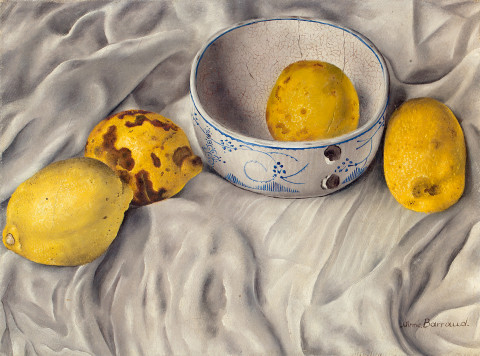
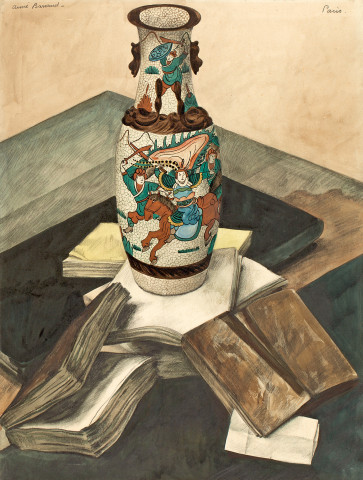
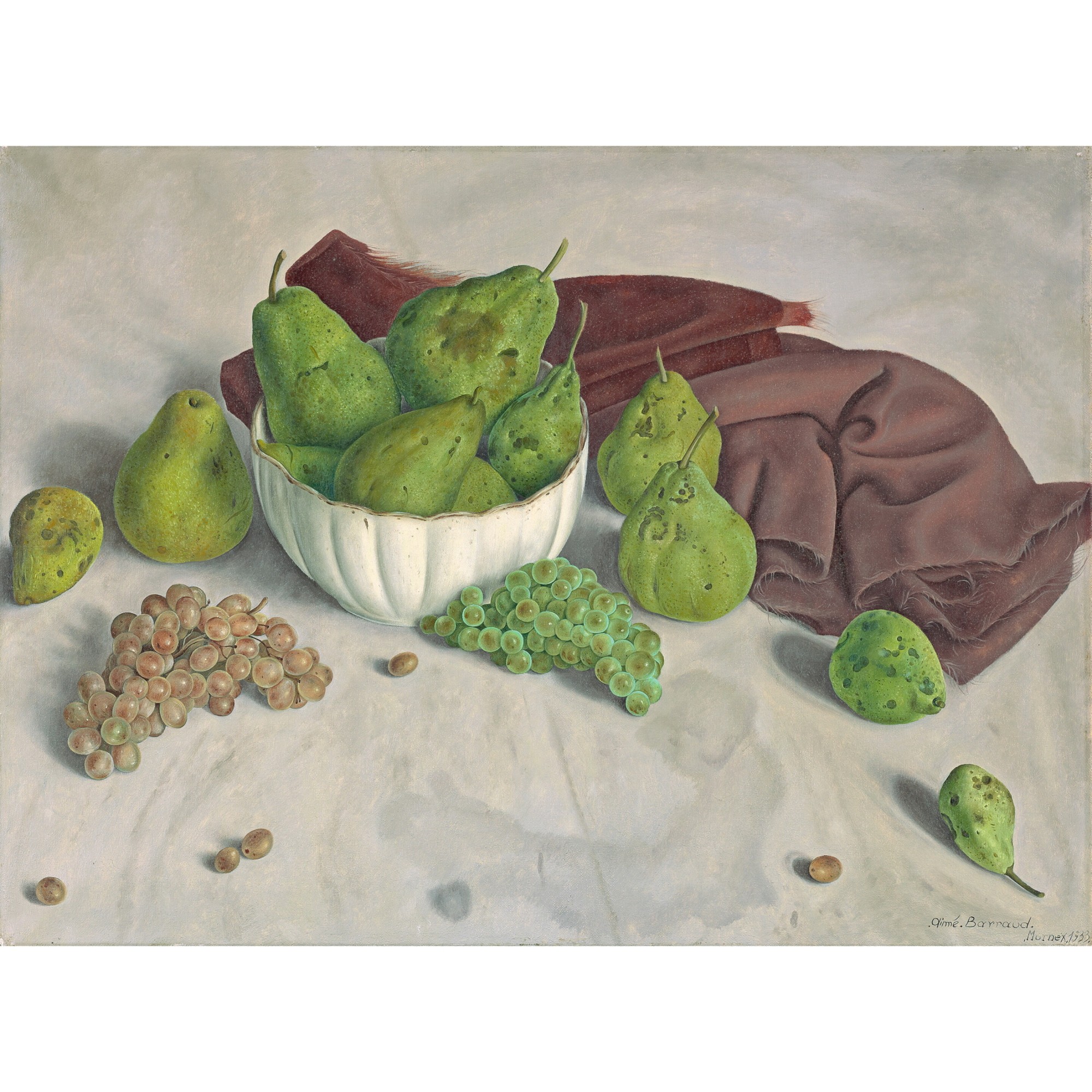
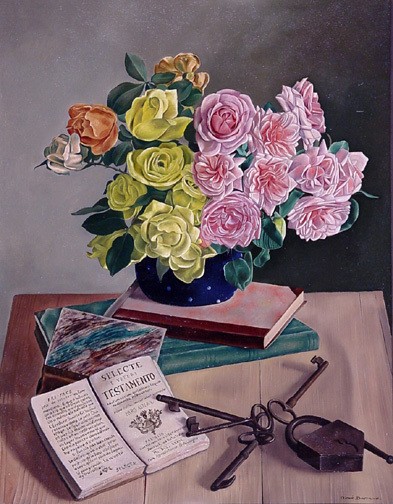
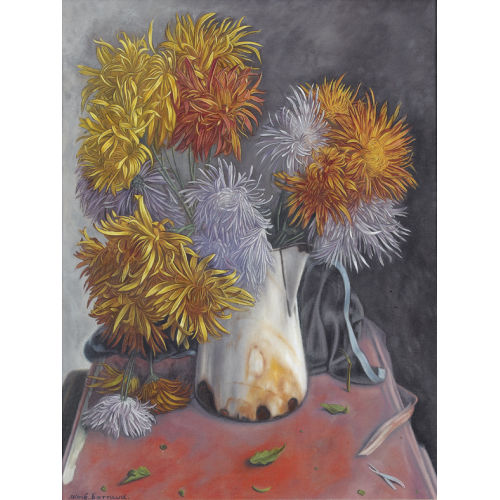
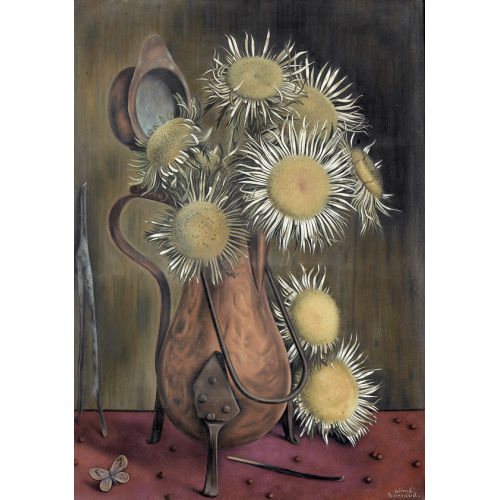
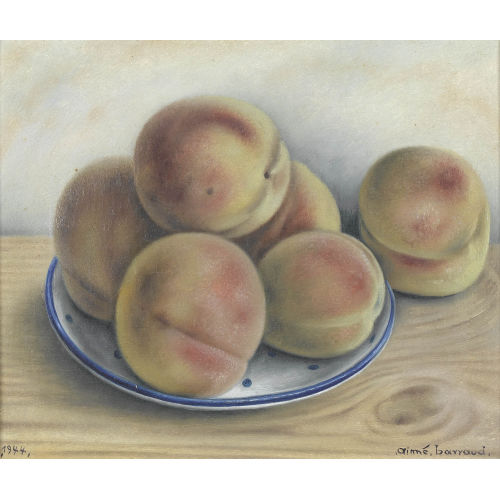
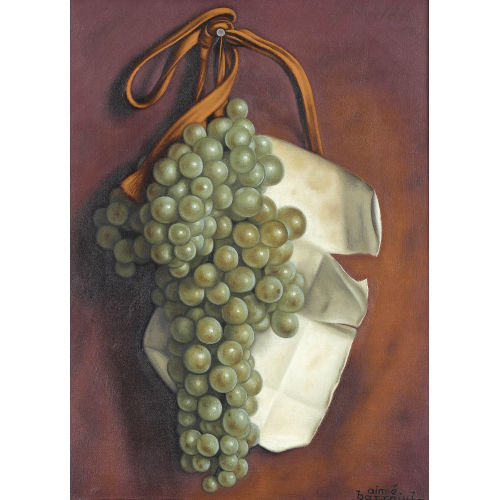
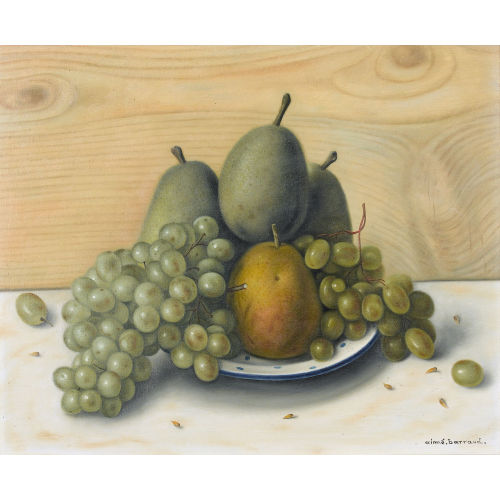
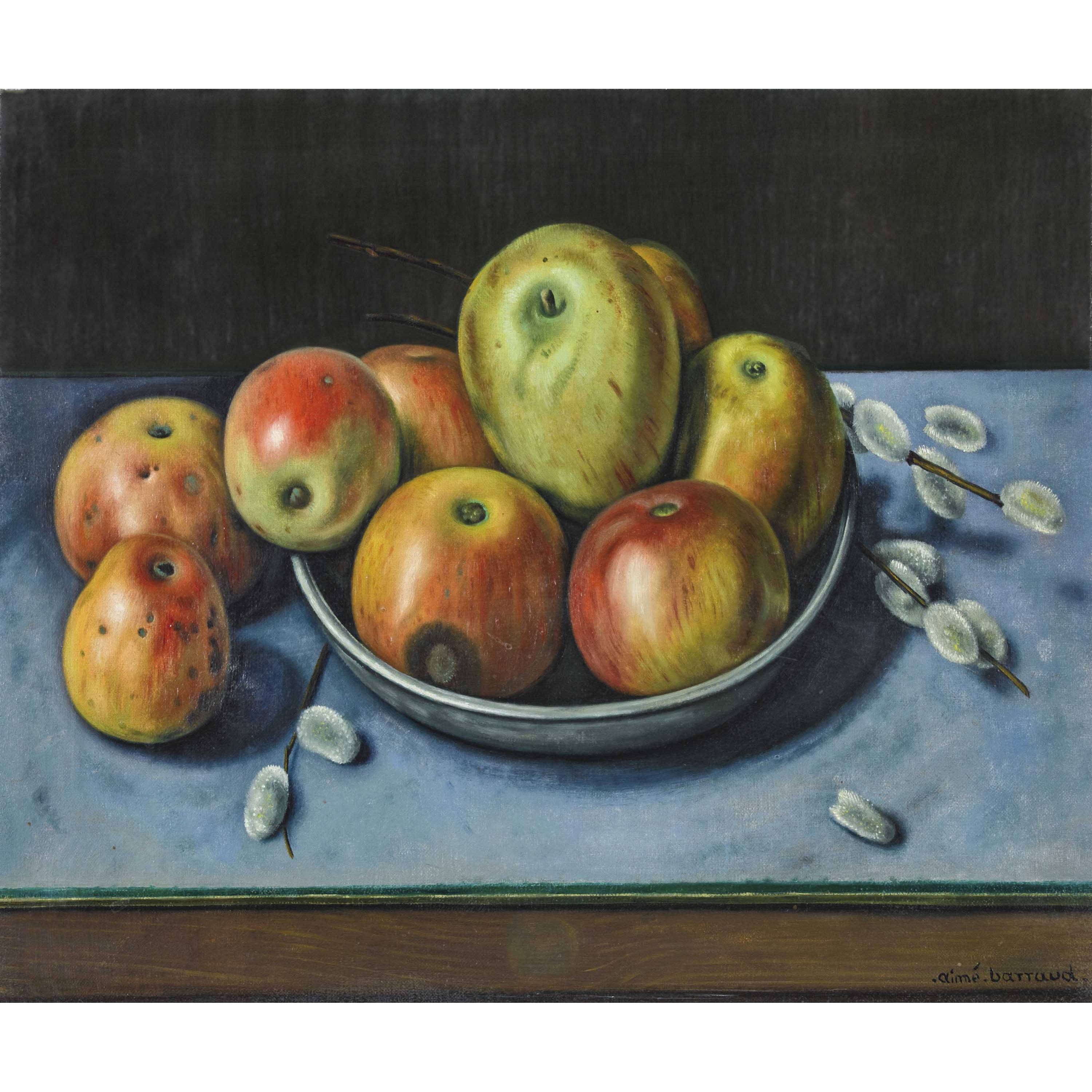
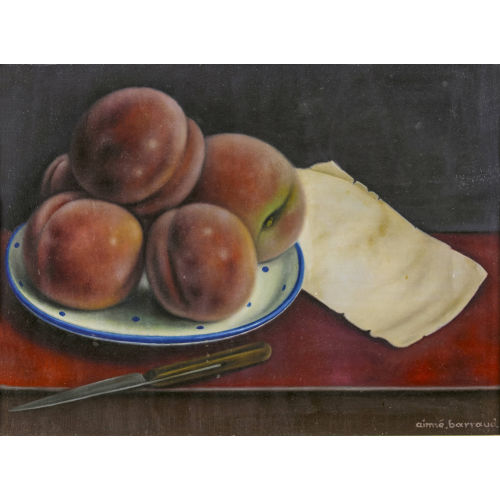
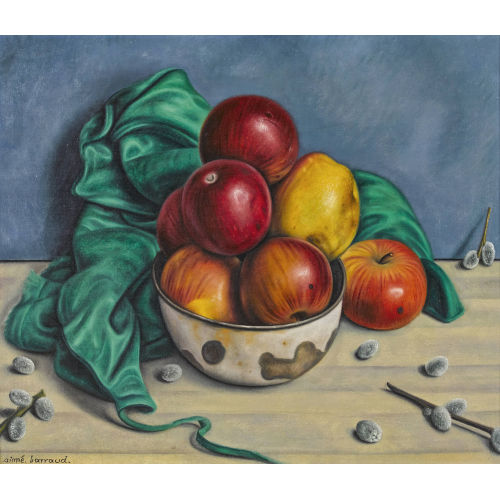
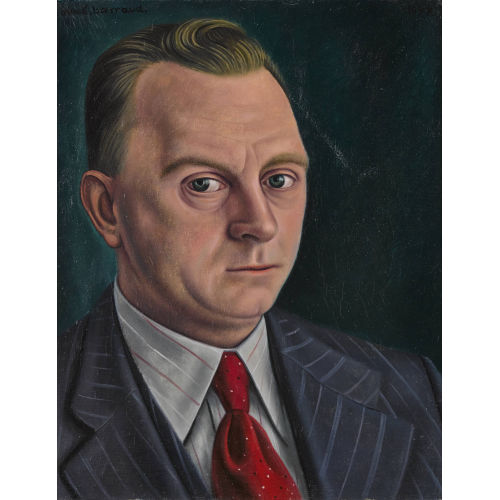
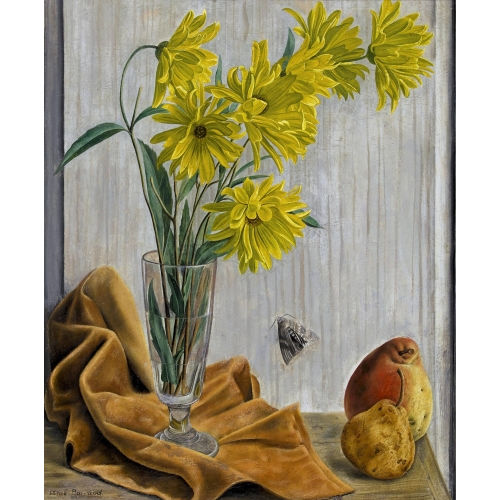
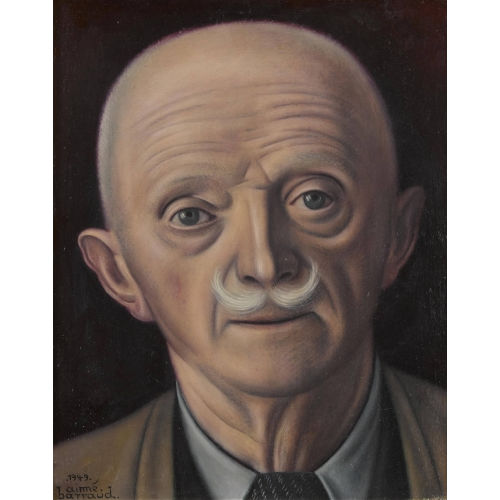
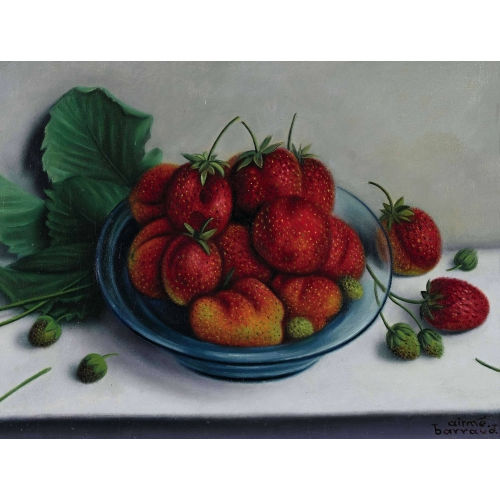
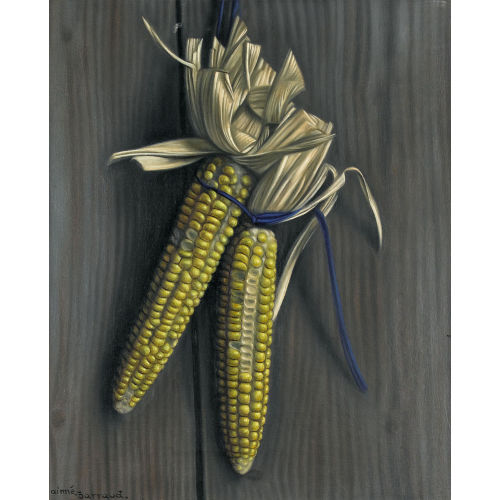
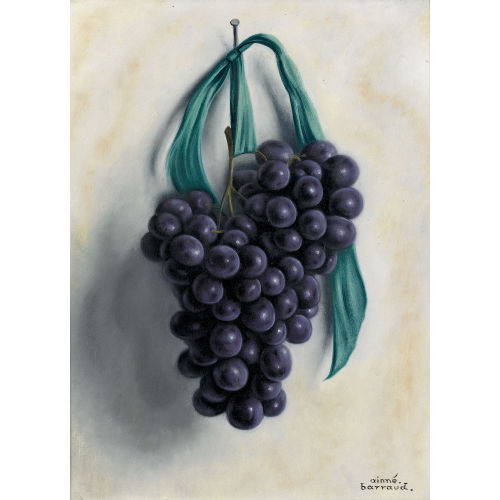
Portraits, self-portraits and still lifes provide him with subjects suited to his scale. He composes restrained spaces in which the arrangement of bodies and objects matters as much as their likeness. L’Estampe japonaise, painted around 1930 and held by the Musée des beaux-arts de La Chaux-de-Fonds, offers a particularly rich key to interpretation.
Brushes, pencil leads, inkwell and colours occupy the foreground of the studio; the Japanese image that gives the painting its title appears behind these working tools. The battle scene it depicts contrasts with the tranquillity of the room. The painting thus shows its means as much as its result, turning the still life into a reflection on the artist’s craft.
In Autoportrait au grand col of 1927, acquired in 1951 by the Musée d’art du Valais, Barraud places himself at the centre of this inquiry into presence. His paintings do not seek spectacular effect. Their clarity, their silences and the precise weighting of their elements instead invite us to look anew at what habit renders invisible.
Through his painting, Aimé Barraud contributes to a Swiss realism capable of holding meticulous observation and inner resonance together.
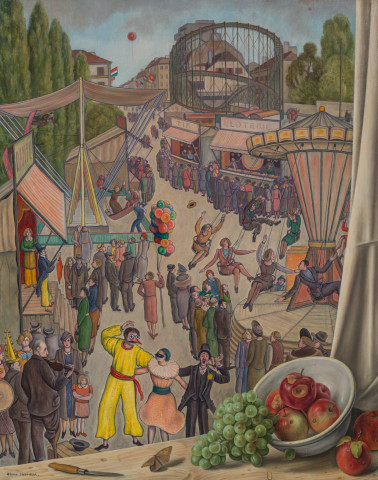
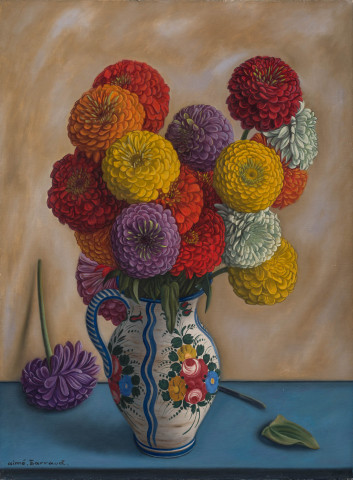
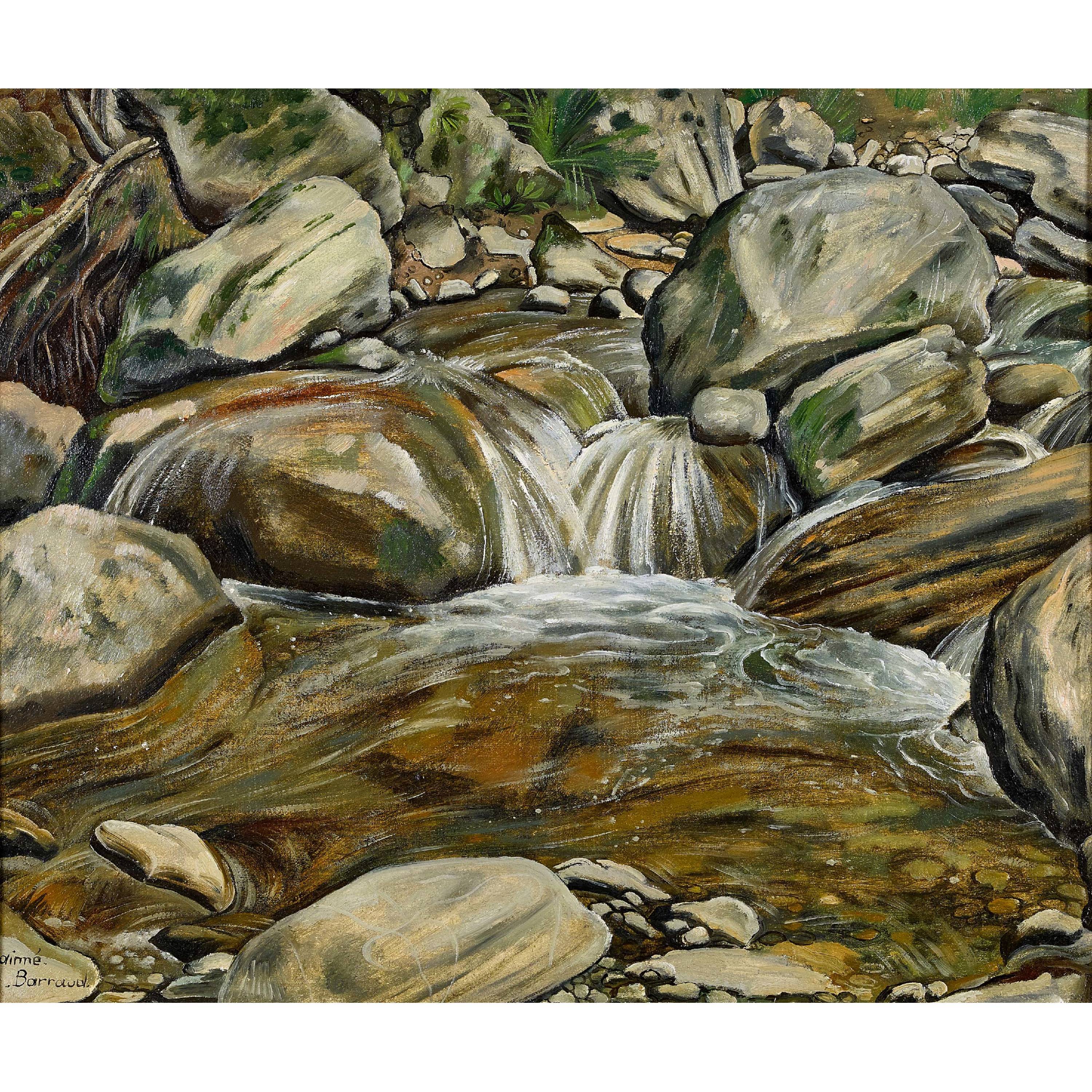
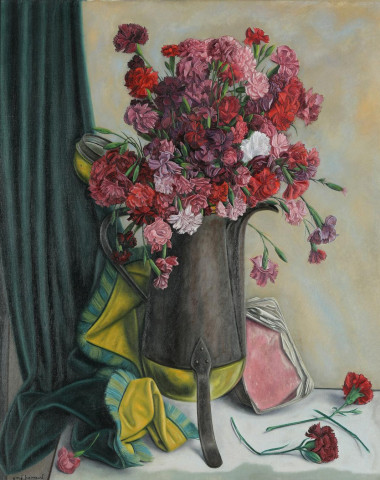
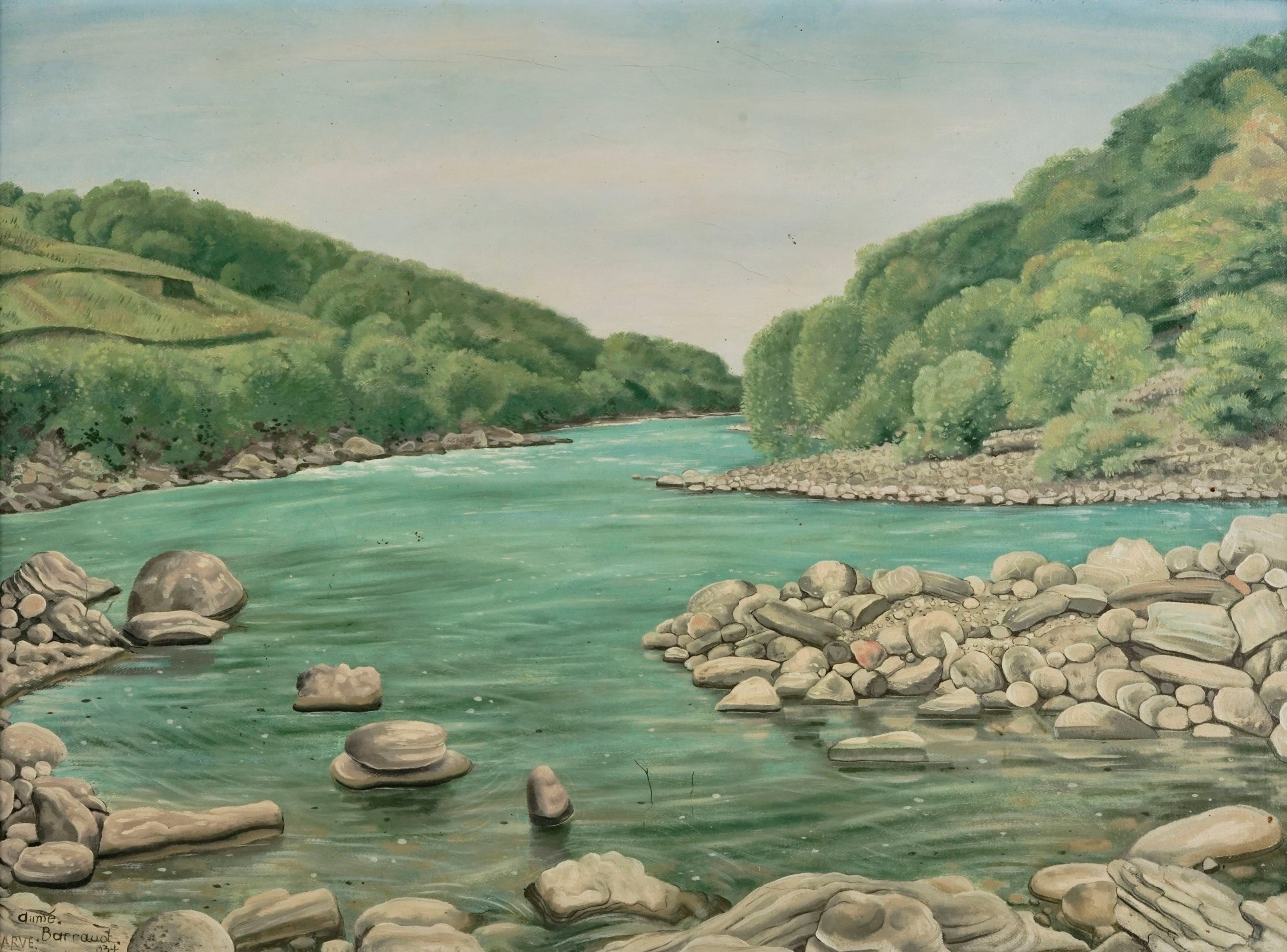
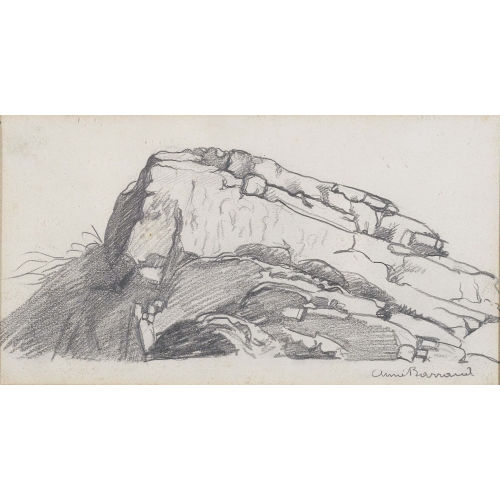
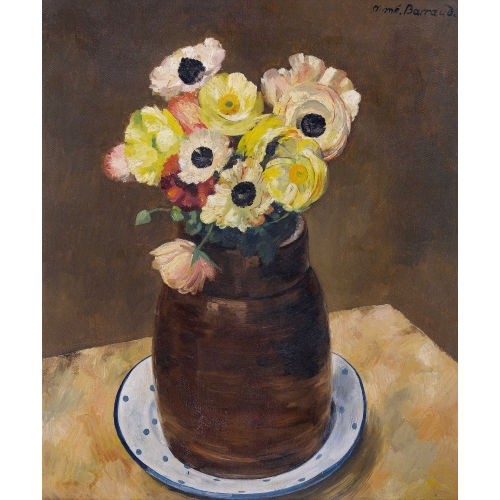
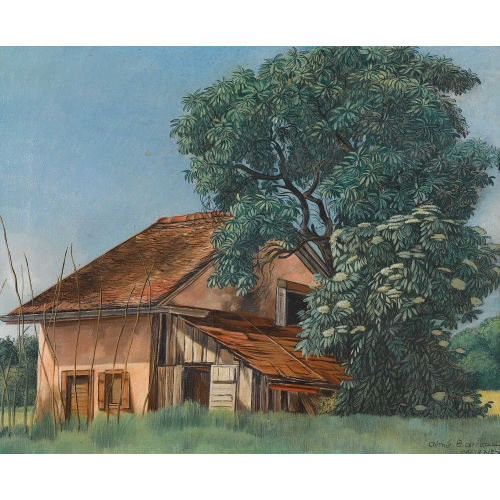
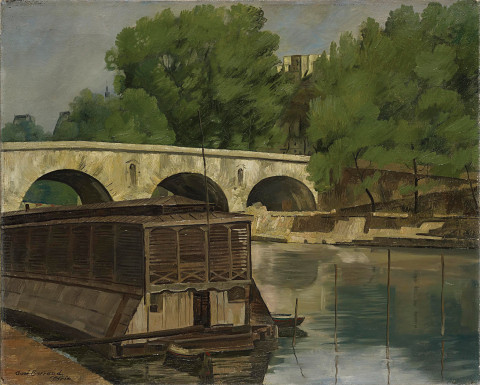
The works by Aimé Barraud presented by Swiss Art Gallery extend this artistic journey and take their place naturally within this corpus.