Born : 1880Died : 1957Documented citizenships : Germany
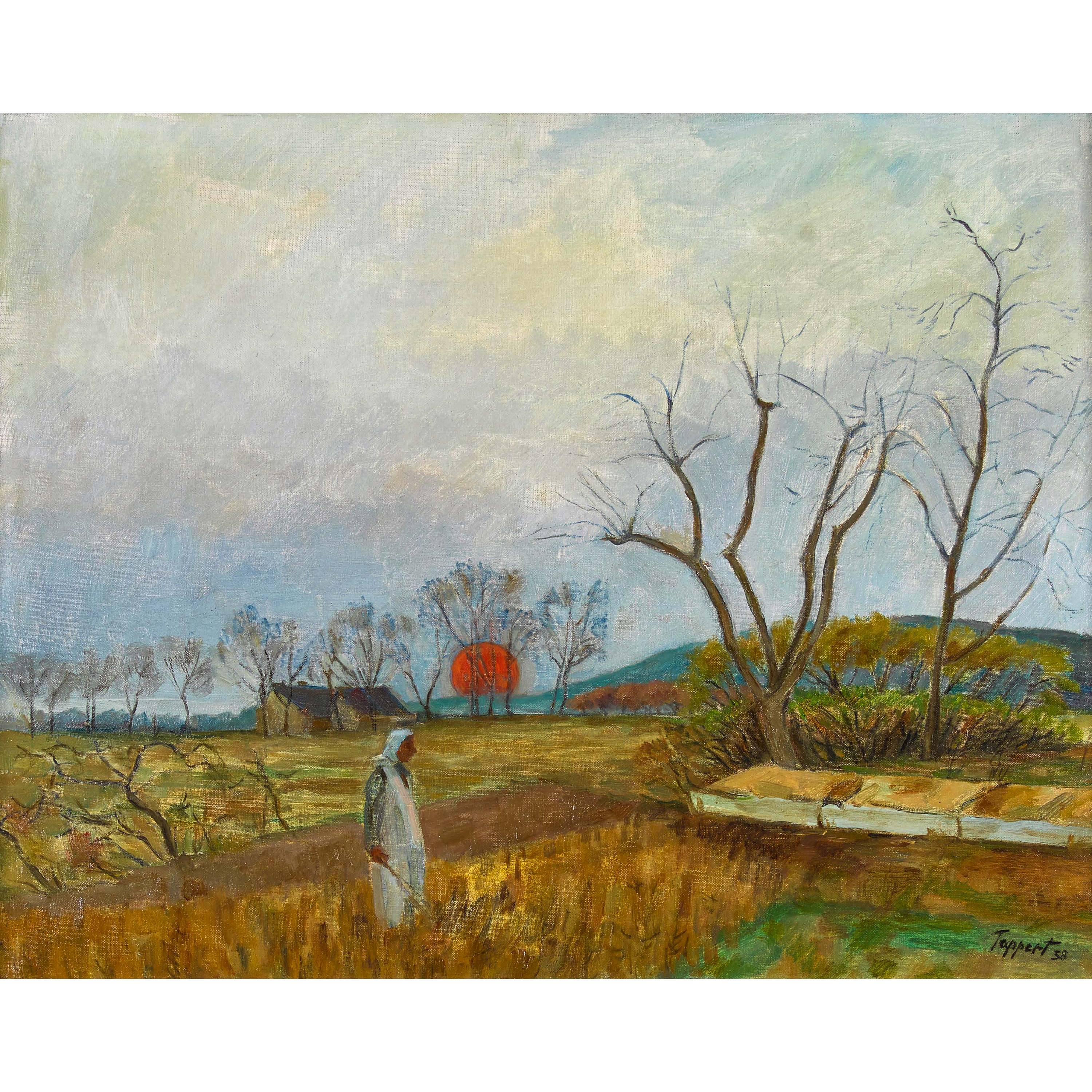
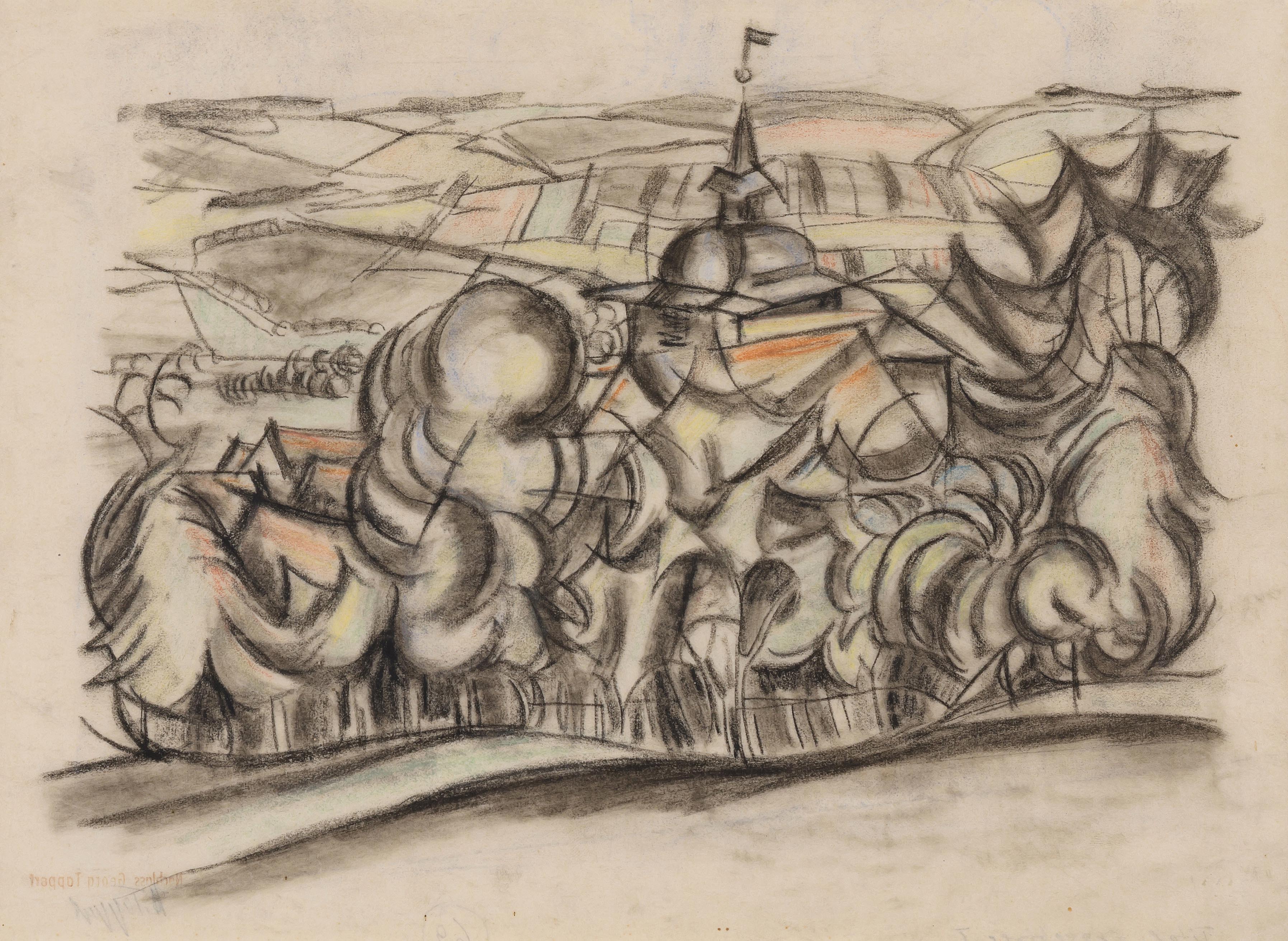
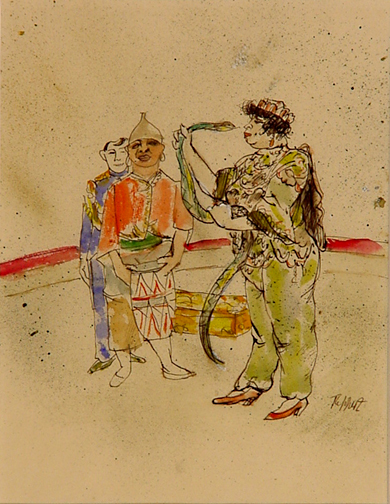
The German painter Georg Tappert, born and deceased in Berlin, developed an Expressionist body of work concerned with female figures, from the dancers and models in his early compositions to the women of Berlin’s cafés, variety shows, bars and circuses in the 1920s and 1930s. Alongside painting, he pursued woodcut, linocut, lithography and etching extensively.
After an apprenticeship as a tailor, he studied at the Academy of Fine Arts in Karlsruhe from 1900 to 1903 under Ludwig Schmid-Reutte and Carl Langhein, with the support of patrons. He then worked as an assistant to Paul Schultze-Naumburg in Saaleck before settling in Worpswede, where he ran a private art school from 1906 until the end of 1909. Among his pupils in Worpswede was Wilhelm Morgner; the two artists remained in contact and exchanged letters regularly until Morgner’s death. It was in Worpswede that Tappert began to develop his personal visual language in flower still lifes, landscapes, figurative compositions and portraits. Before the First World War, he also created large-scale Expressionist compositions, female figures and a series of nudes conceived with his model Betty. After returning to Berlin in 1905 as an independent artist, he held his first solo exhibition there at Paul Cassirer’s gallery.
His career was also shaped by collective initiatives within Berlin’s art scene: after the jury of the Berliner Secession rejected his works in 1910, he prepared the founding of the Neue Secession with Moriz Melzer and Heinrich Richter-Berlin. He became its principal organiser and succeeded Max Pechstein as president after Die Brücke left in 1912. From 1911, he also helped Käthe Kollwitz and other artists establish the jury-free exhibitions in Berlin. In 1912, he showed four large paintings at the Sonderbund’s international exhibition in Cologne and took part in the second exhibition of Der Blaue Reiter in Munich. In 1913, he became a professor at the Royal School of Fine Arts in Berlin and at the private art school in Berlin-Wilmersdorf, before being appointed to a professorship in 1921. In 1918, he was among the founders of the Novembergruppe and the Arbeitsrat für Kunst.
In the 1920s and 1930s, Tappert’s subjects focused mainly on female figures from the world of Berlin cafés, performances and places of entertainment. He painted numerous nudes and large portraits in a style described as expressive-realist. In 1933, the Nazi authorities classified his art as “degenerate”; removed from his teaching posts in February, he was temporarily reinstated six months later, then dismissed in 1937 and prohibited from painting and exhibiting. After ceasing to paint landscapes in 1934, he abandoned artistic work permanently around 1944. In 1945, he re-established the University of Art Education in Berlin, which was later merged with the University of the Arts under the direction of Karl Hofer. His artistic estate is held by the Georg Tappert Foundation of the Foundation of Schleswig-Holstein State Museums at Gottorf Castle. The Kunstmuseum Bayreuth also holds works made during study visits to Upper Franconia between 1926 and 1933.
This profile brings together identity references for Georg Tappert and paintings, drawings and works on paper documented in auction catalogues.
5 references are documented at Dobiaschofsky, Schuler, Germann. Each record links to its source; the amounts are not a general valuation of the artist’s work.
SwissArtGallery documentary note based on the cited sources. Titles, media and qualifications are provided in the profile language; the original catalogue wording remains available in each record. Documentation updated : 2026-10-19