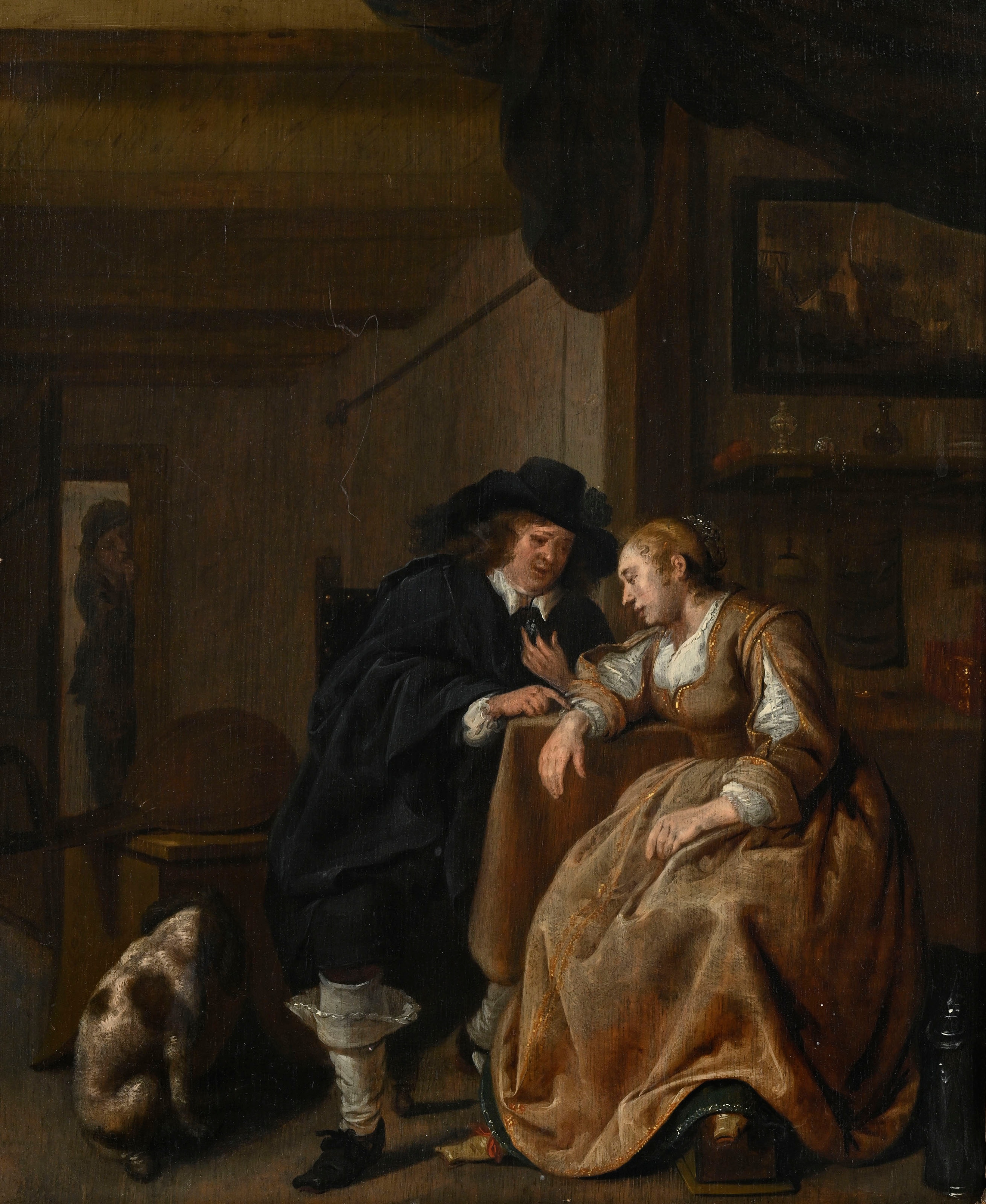
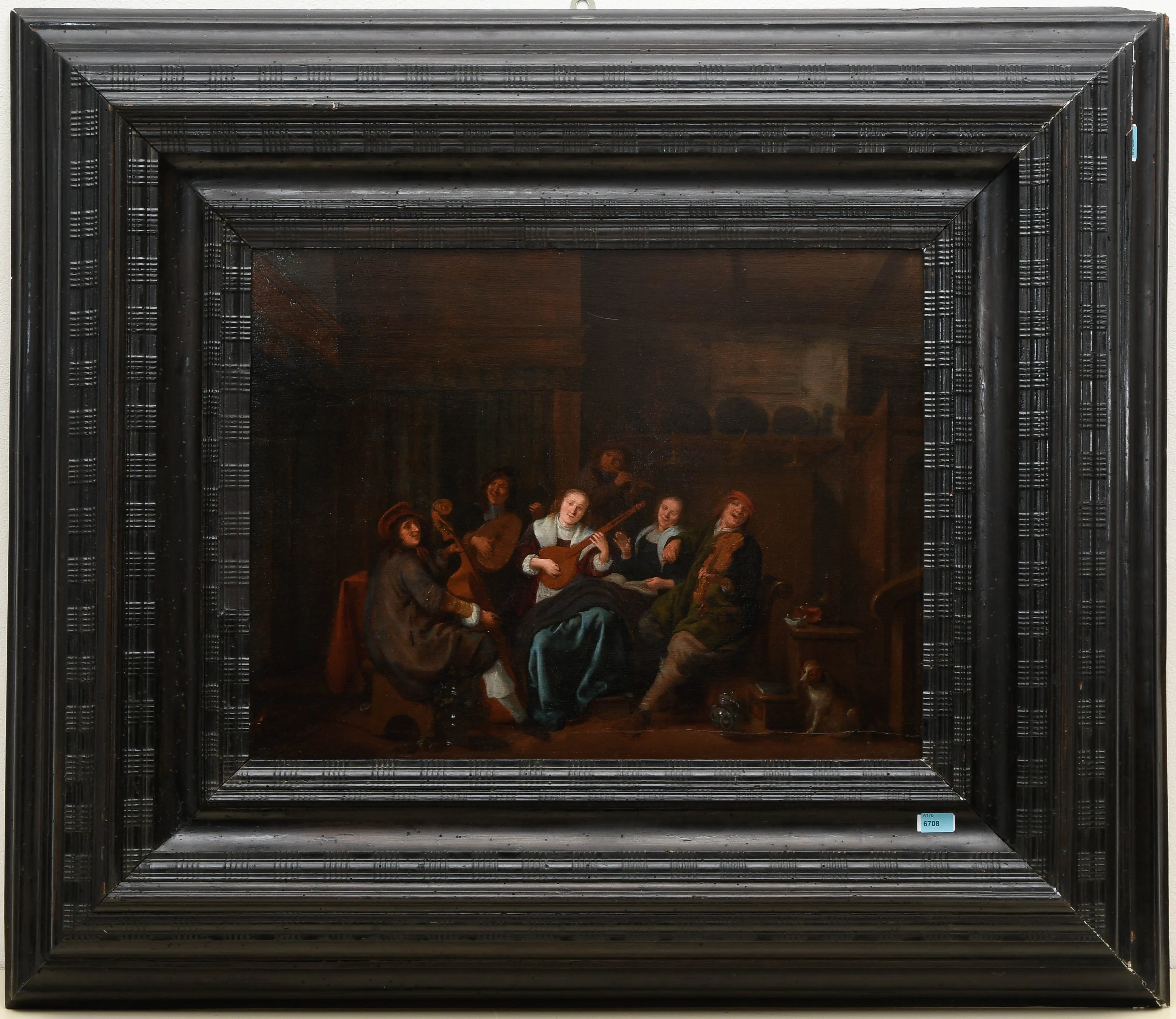
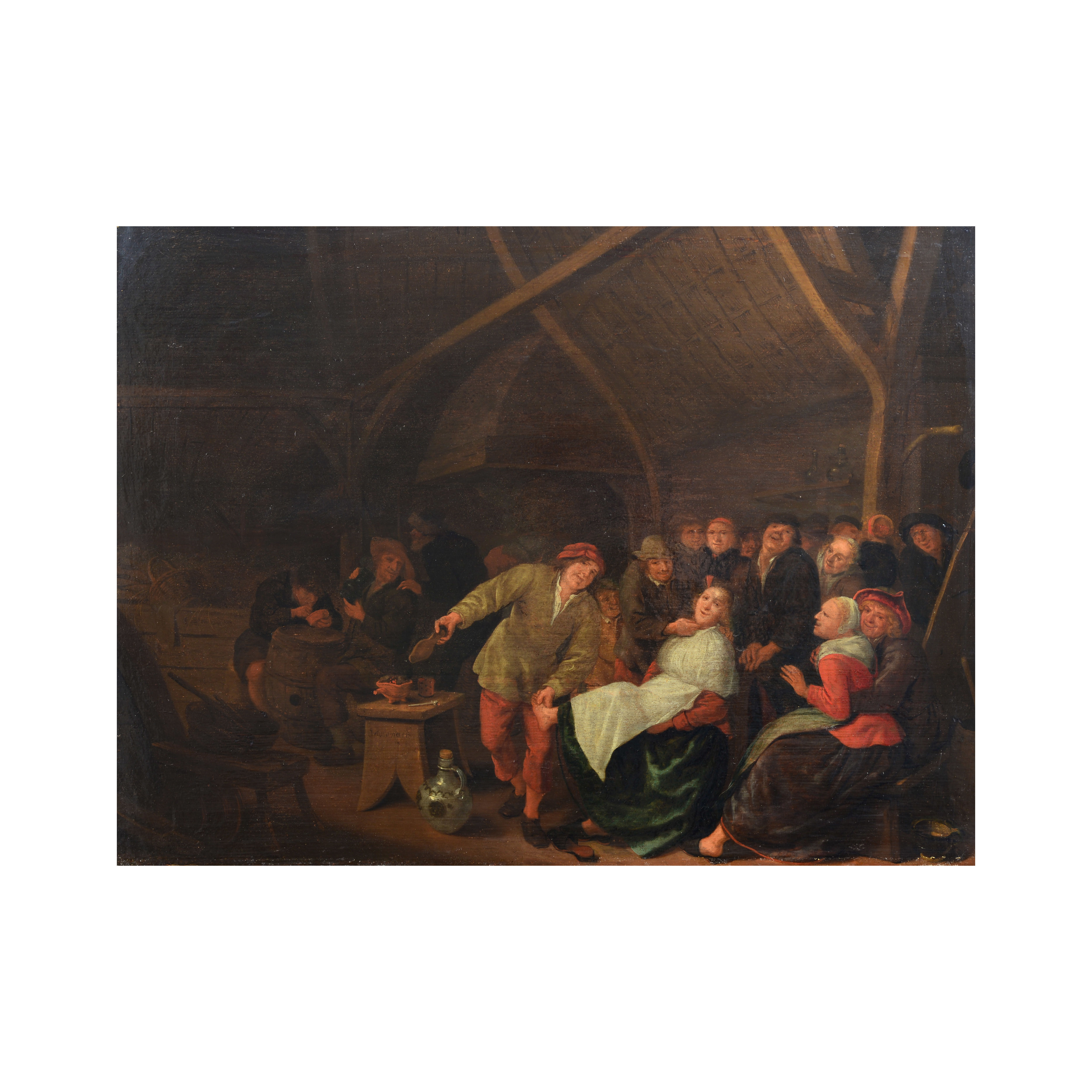
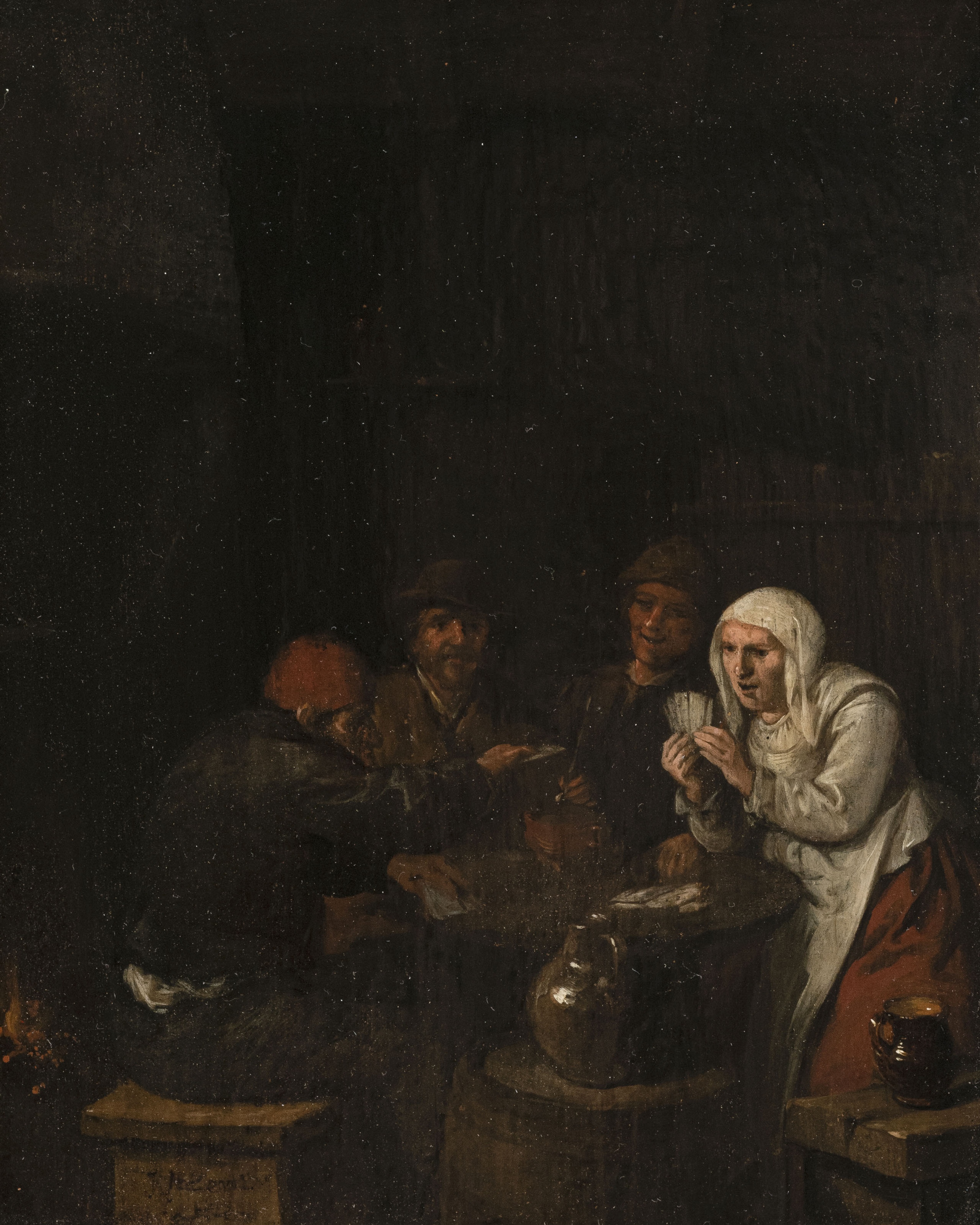
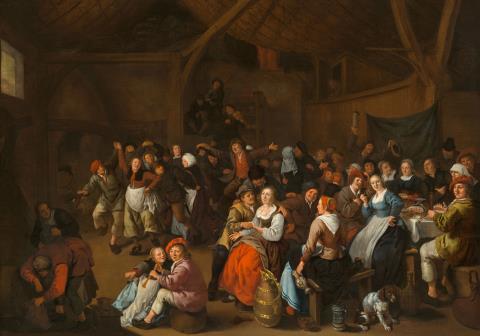
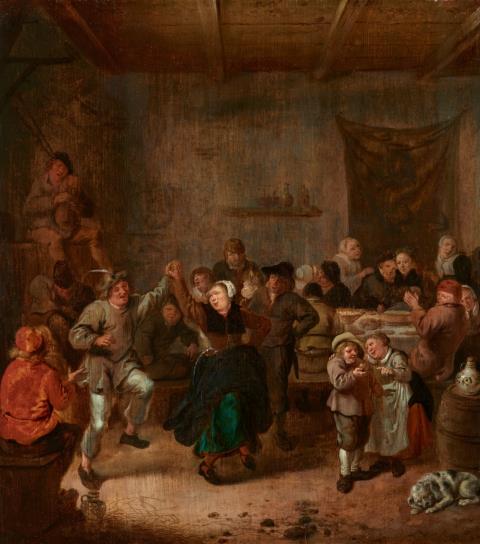
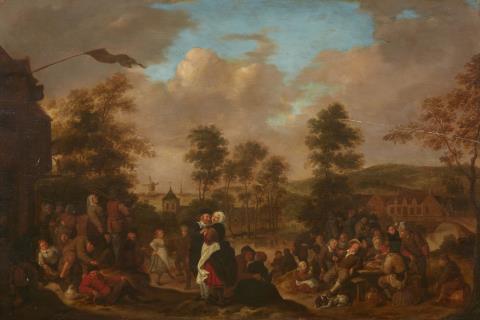
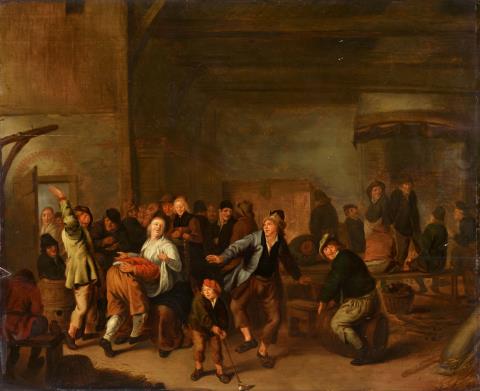
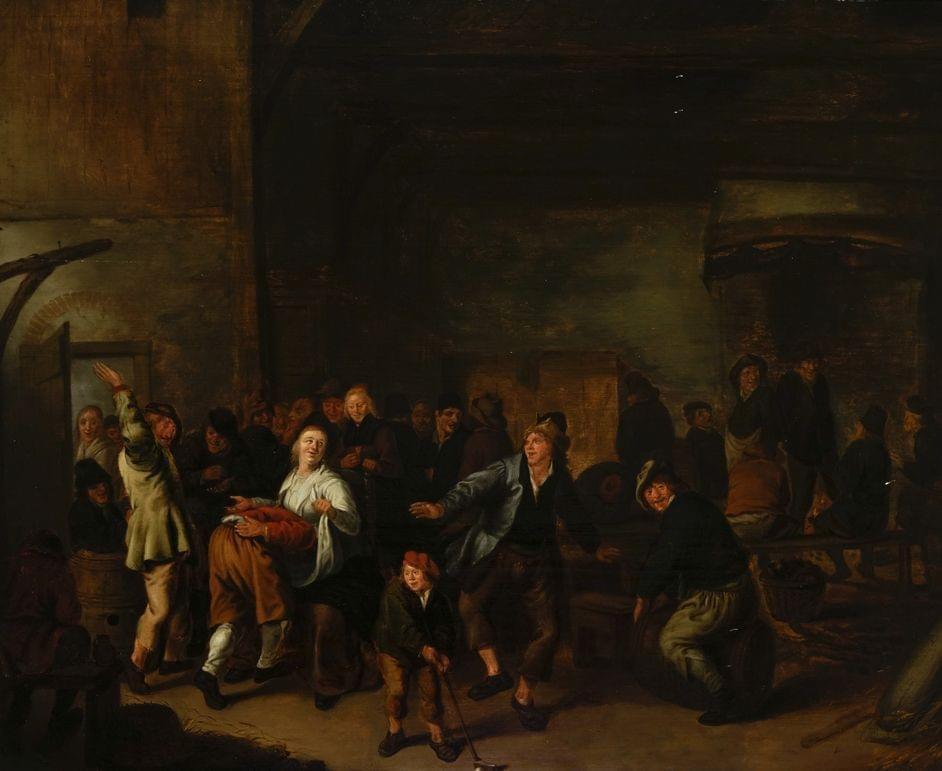
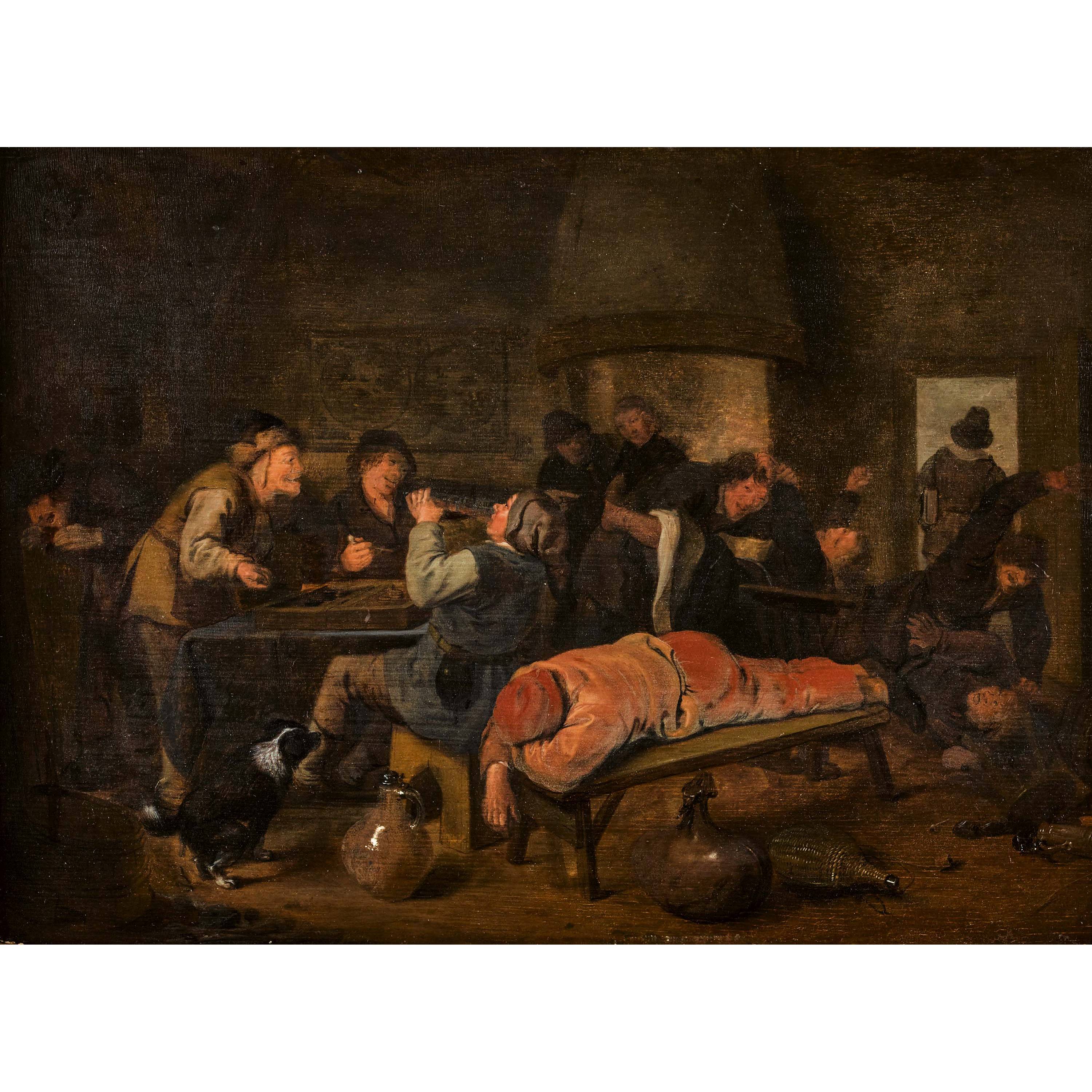
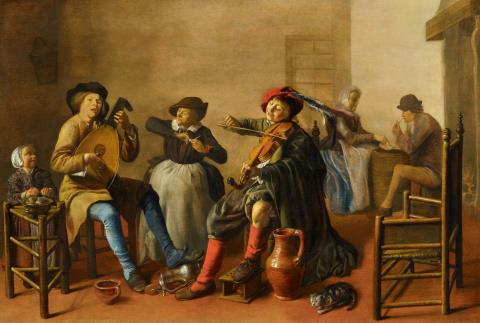
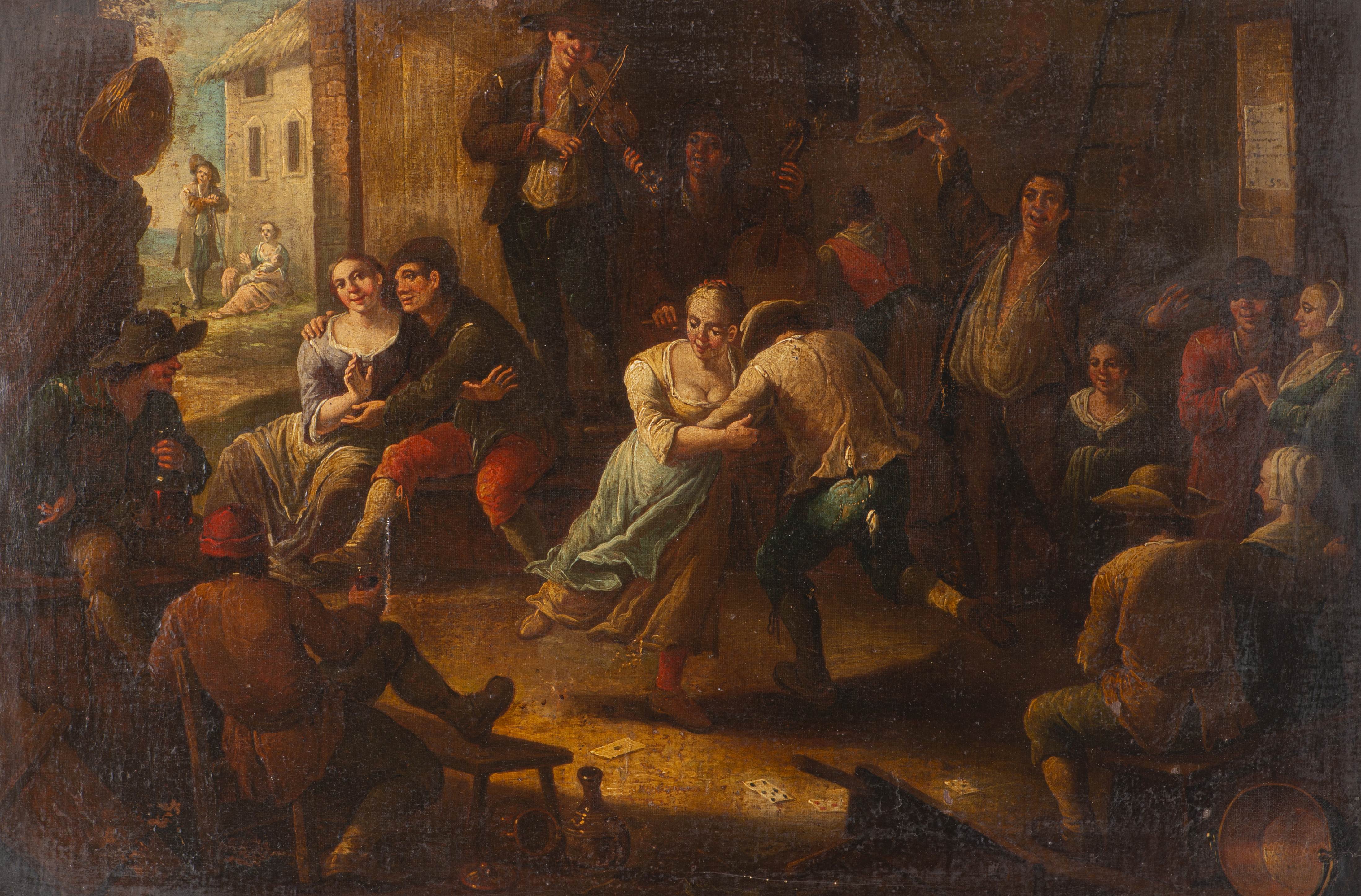
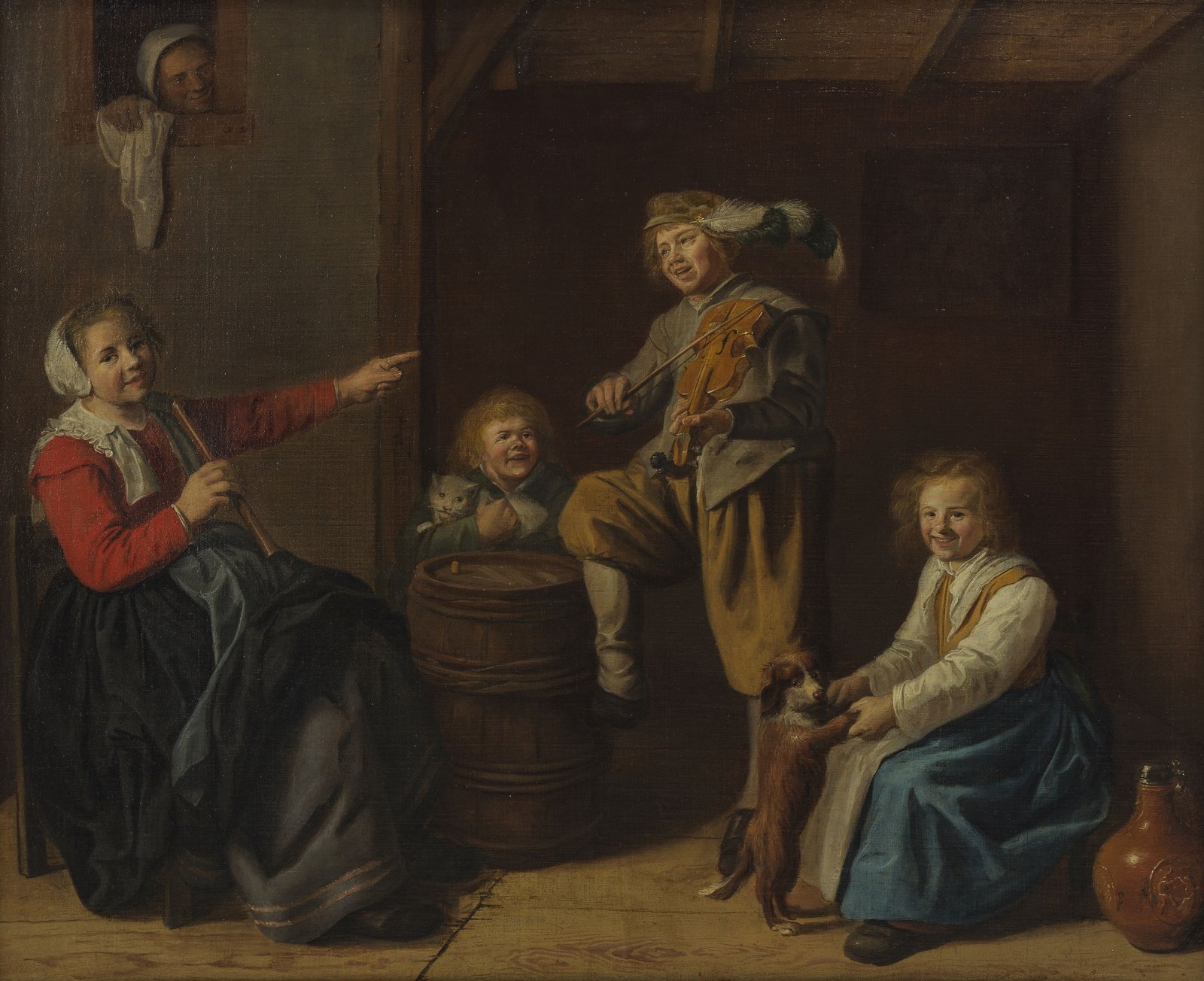
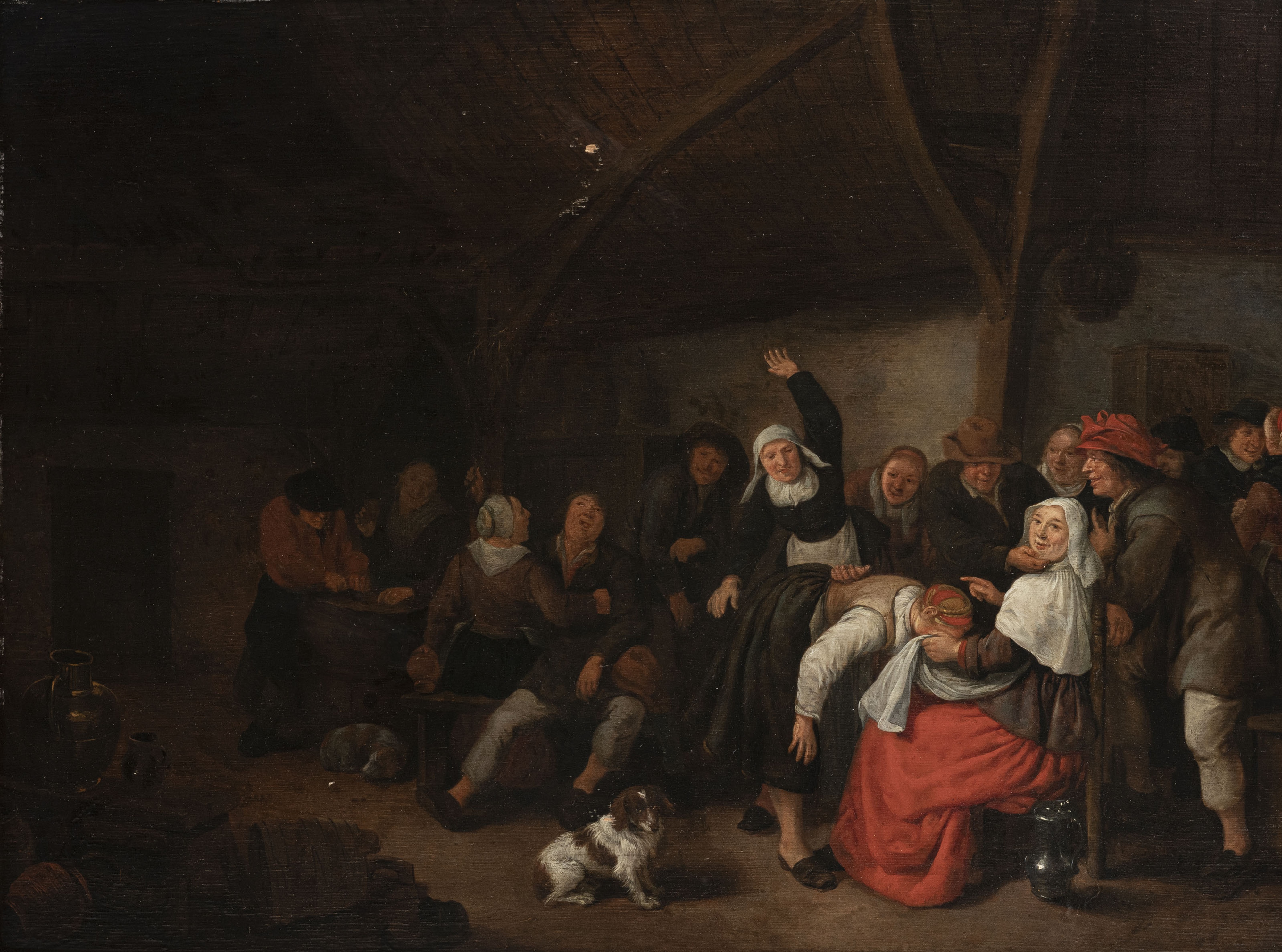
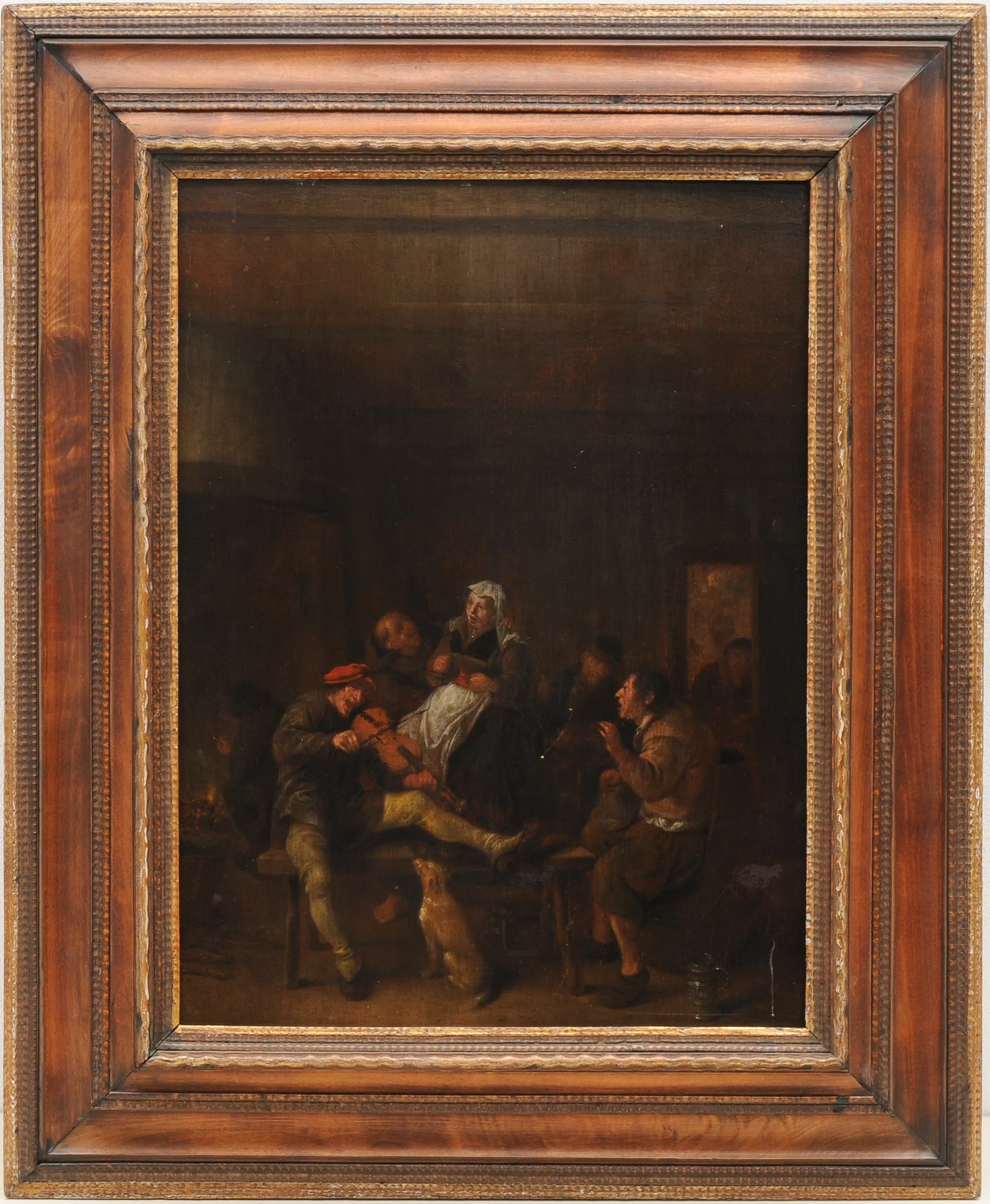
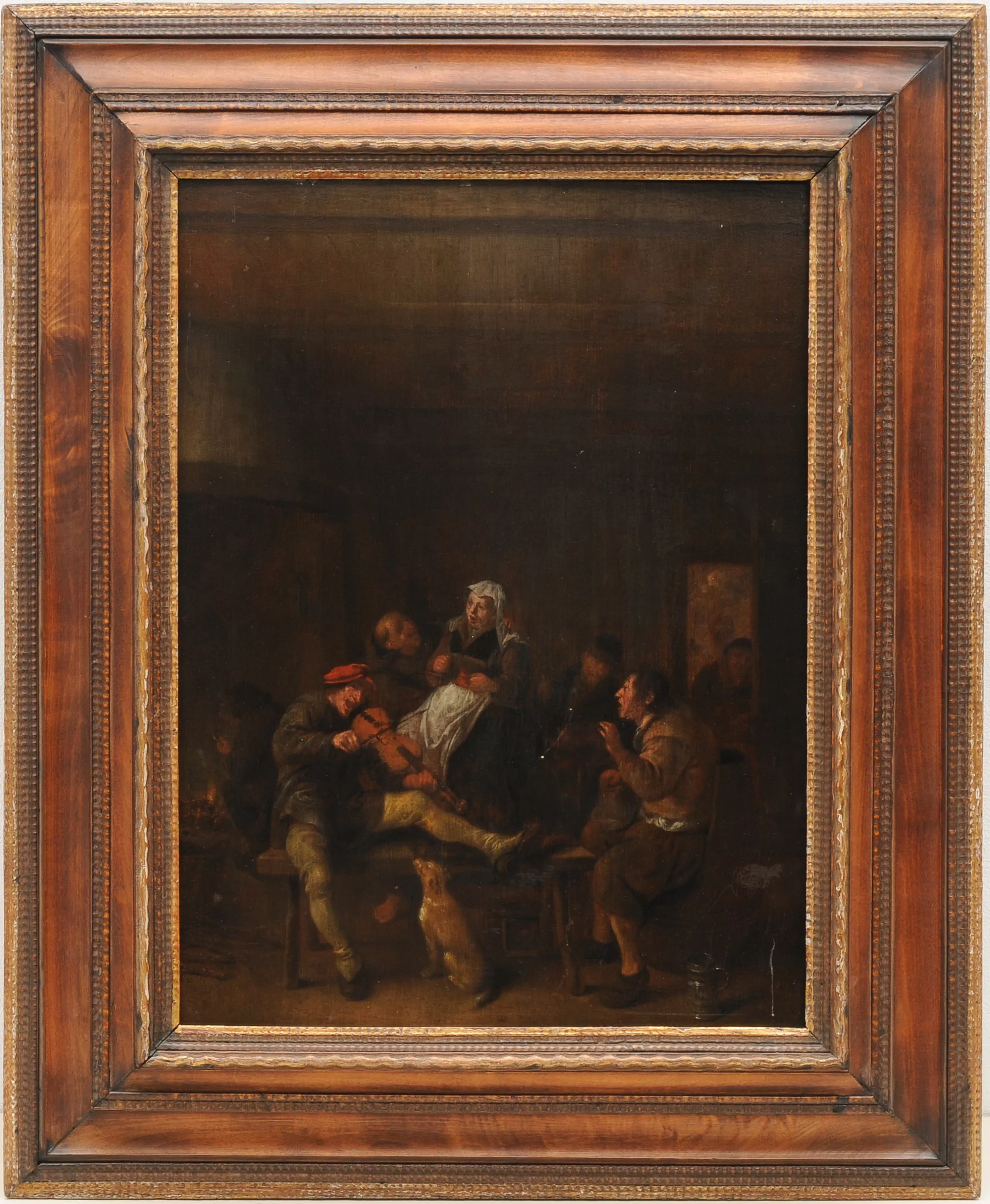
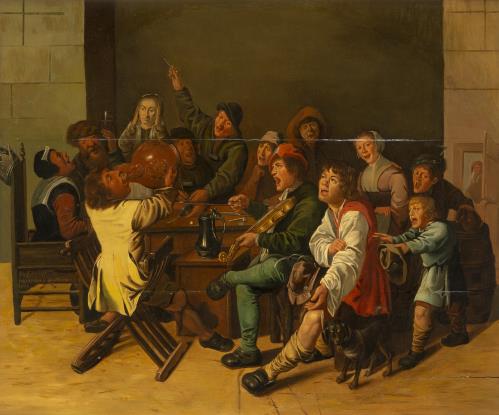
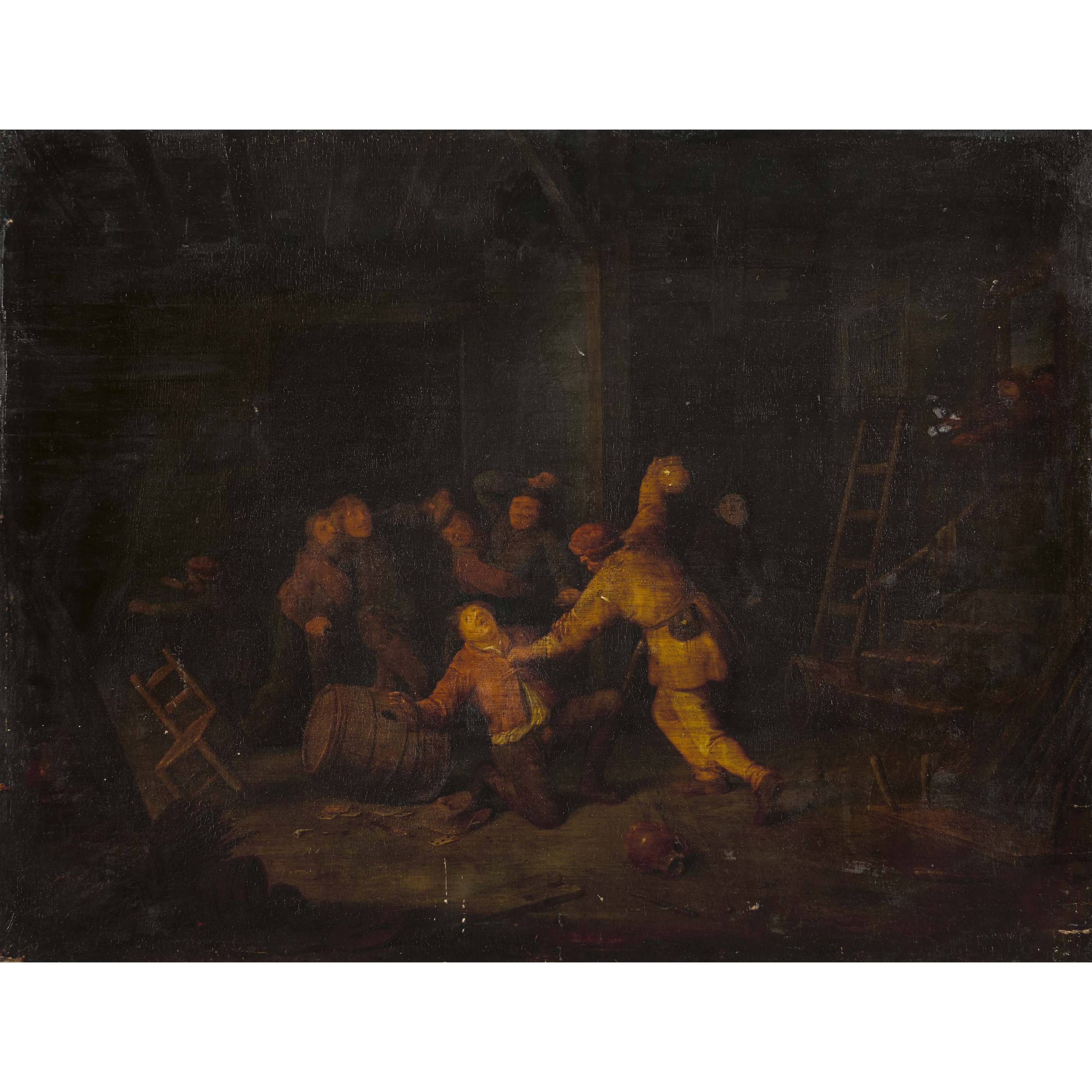
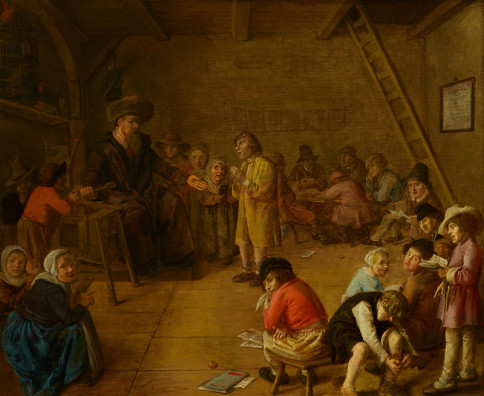
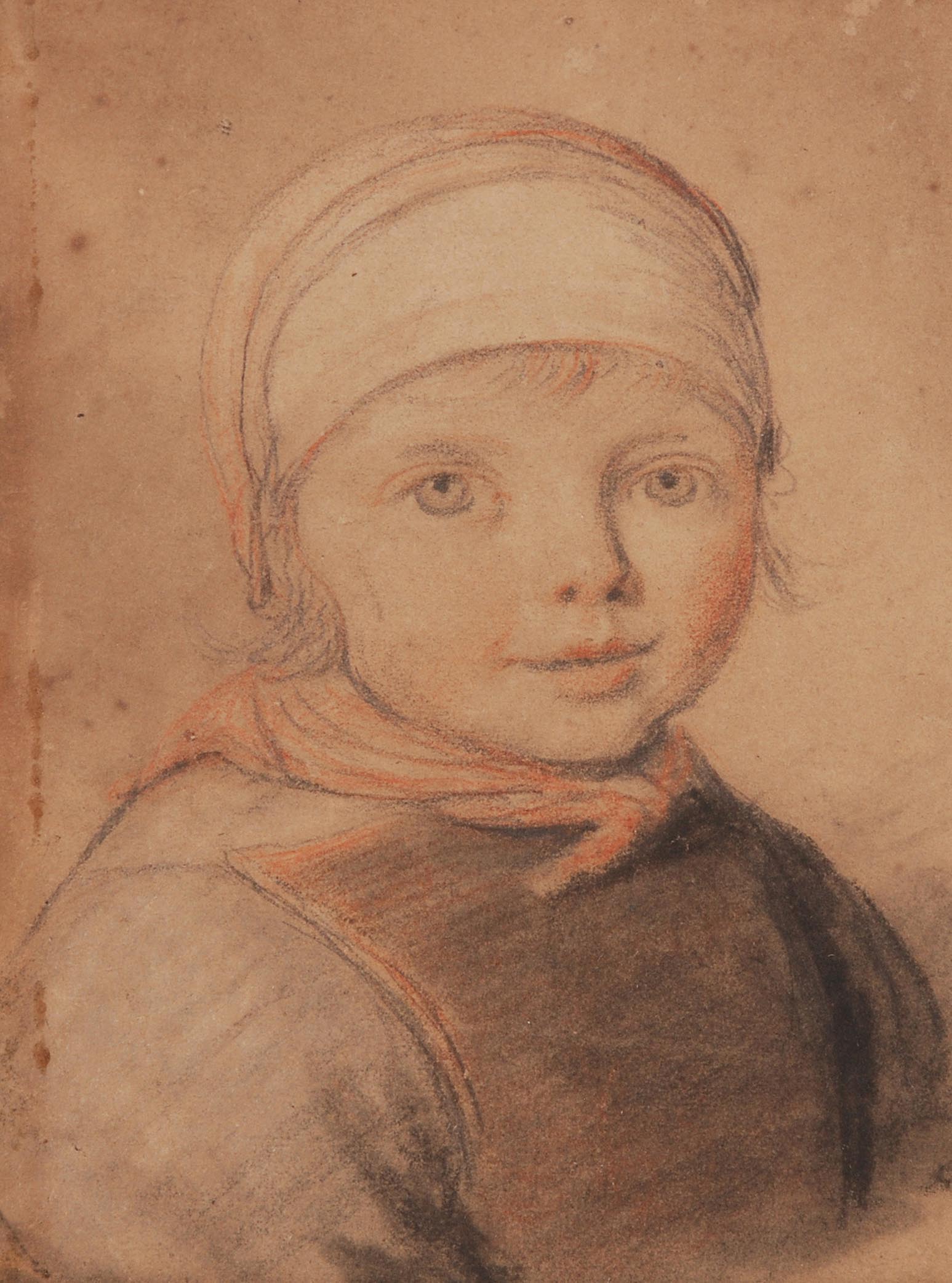
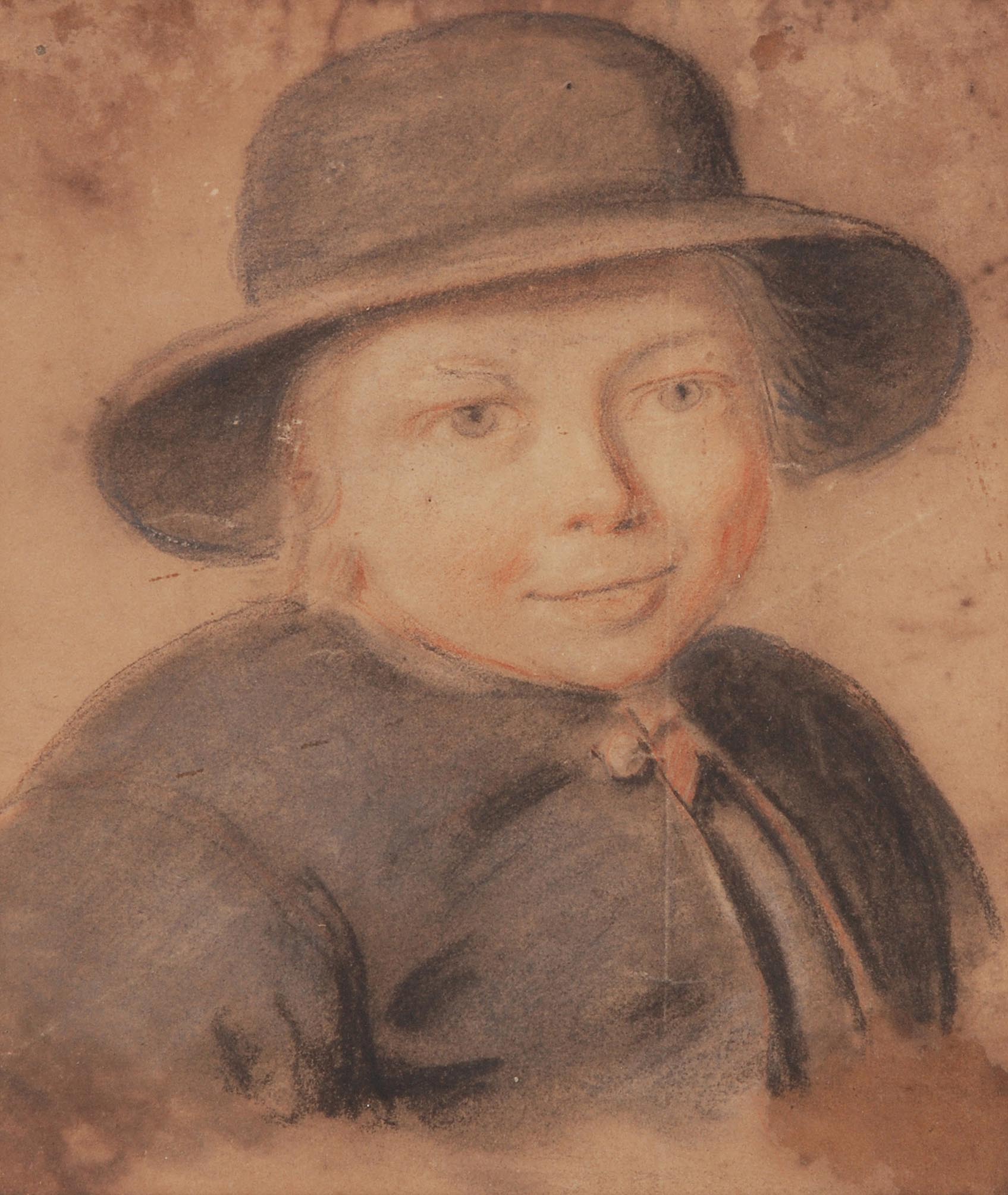
The Dutch painter Jan Miense Molenaer, born and deceased in Haarlem, focused mainly on genre scenes, while also painting portraits and, more rarely, religious subjects. Trained in Frans Hals’s studio, he produced portraits, genre scenes and village festivities in his early work; Jacques Foucart also notes the influence of the styles of Frans and Dirck Hals in these works. In 1636, he married the painter Judith Leyster in Heemstede, near Haarlem; from 1648, he settled there again, while often staying in Haarlem.
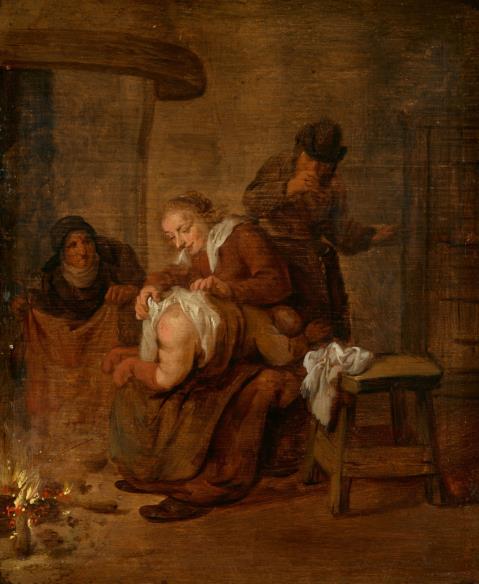
According to Foucart, his style changed considerably during the 1640s, with Rembrandtesque chiaroscuro and rustic subjects associated with Adriaen van Ostade.
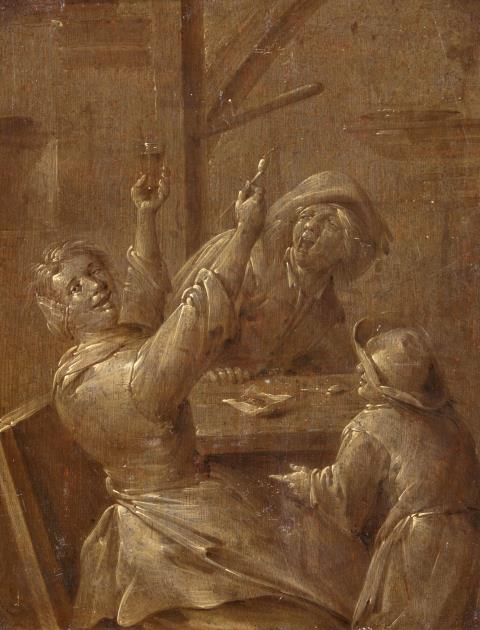
The Artist’s Studio, painted in oil on canvas and dated 1631, is held at the Gemäldegalerie in Berlin. The series The Five Senses, dated 1637, is at the Mauritshuis in The Hague. The Virginal Player, an oil painting on panel dated 1630–1640, is held at the Rijksmuseum in Amsterdam. An Allegory of Smell, oil on wood, 19.5 × 16 cm, is attributed to Molenaer, an attribution confirmed by Fred Meijer after examining the original on 24 October 2020.
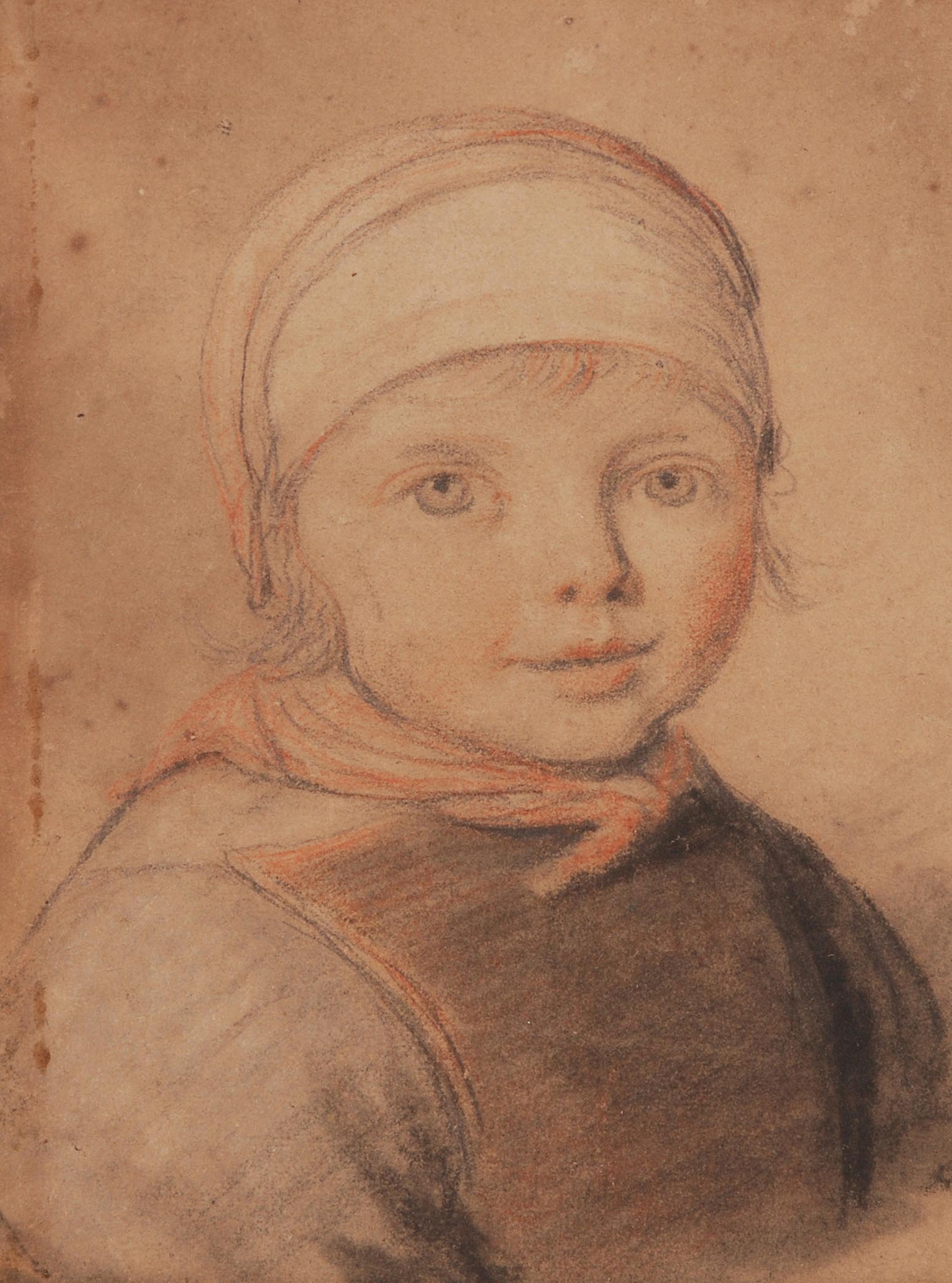
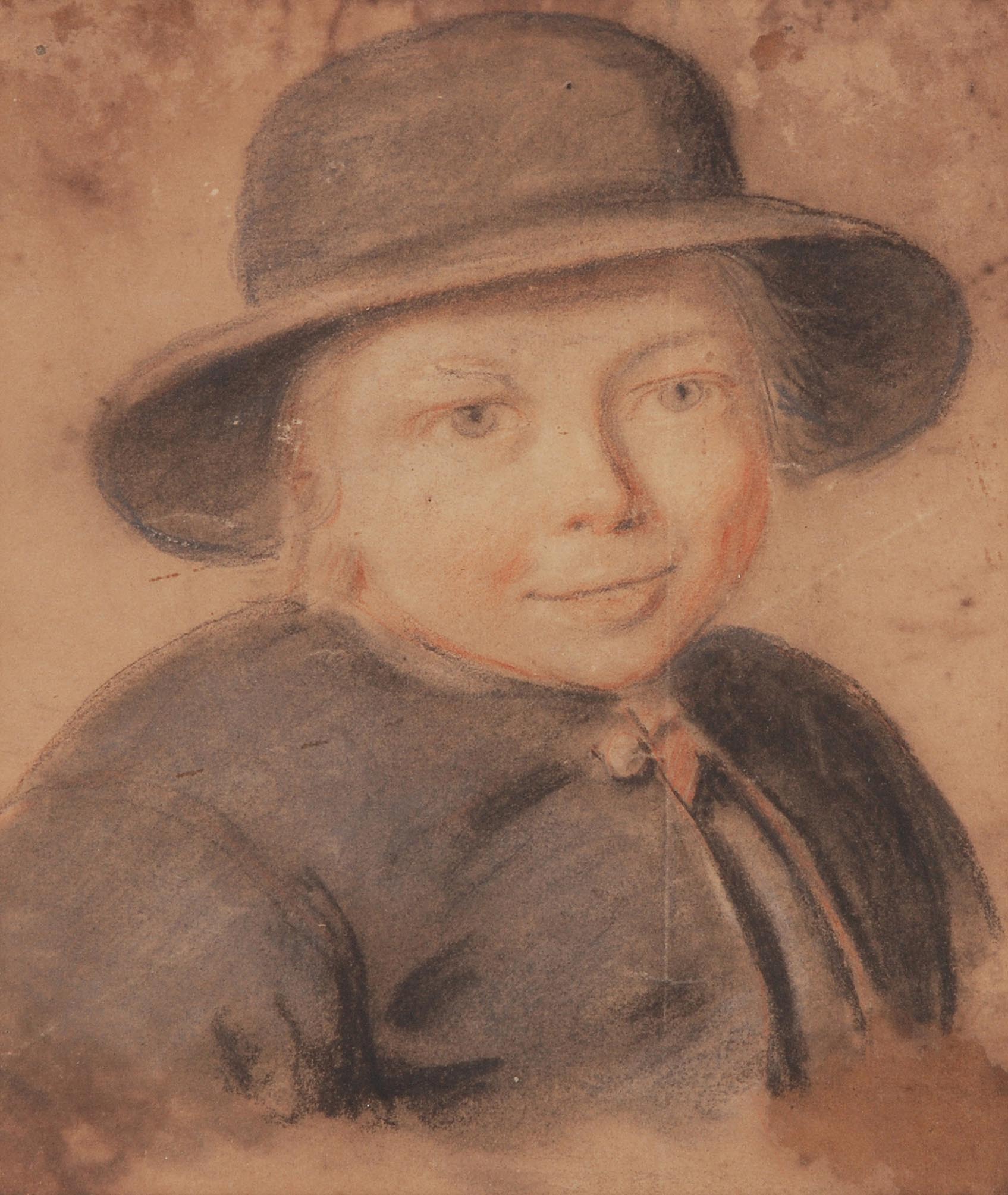
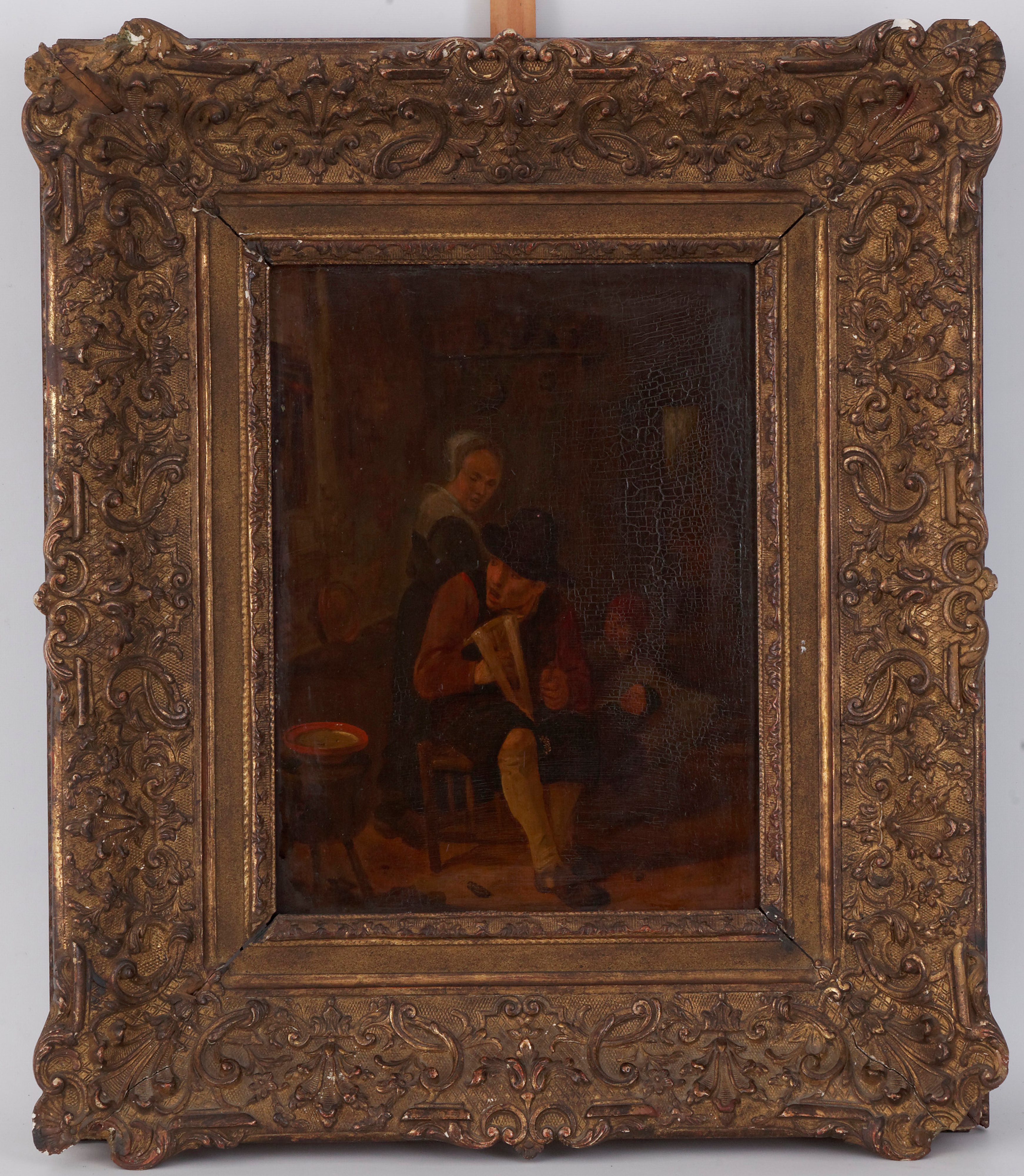
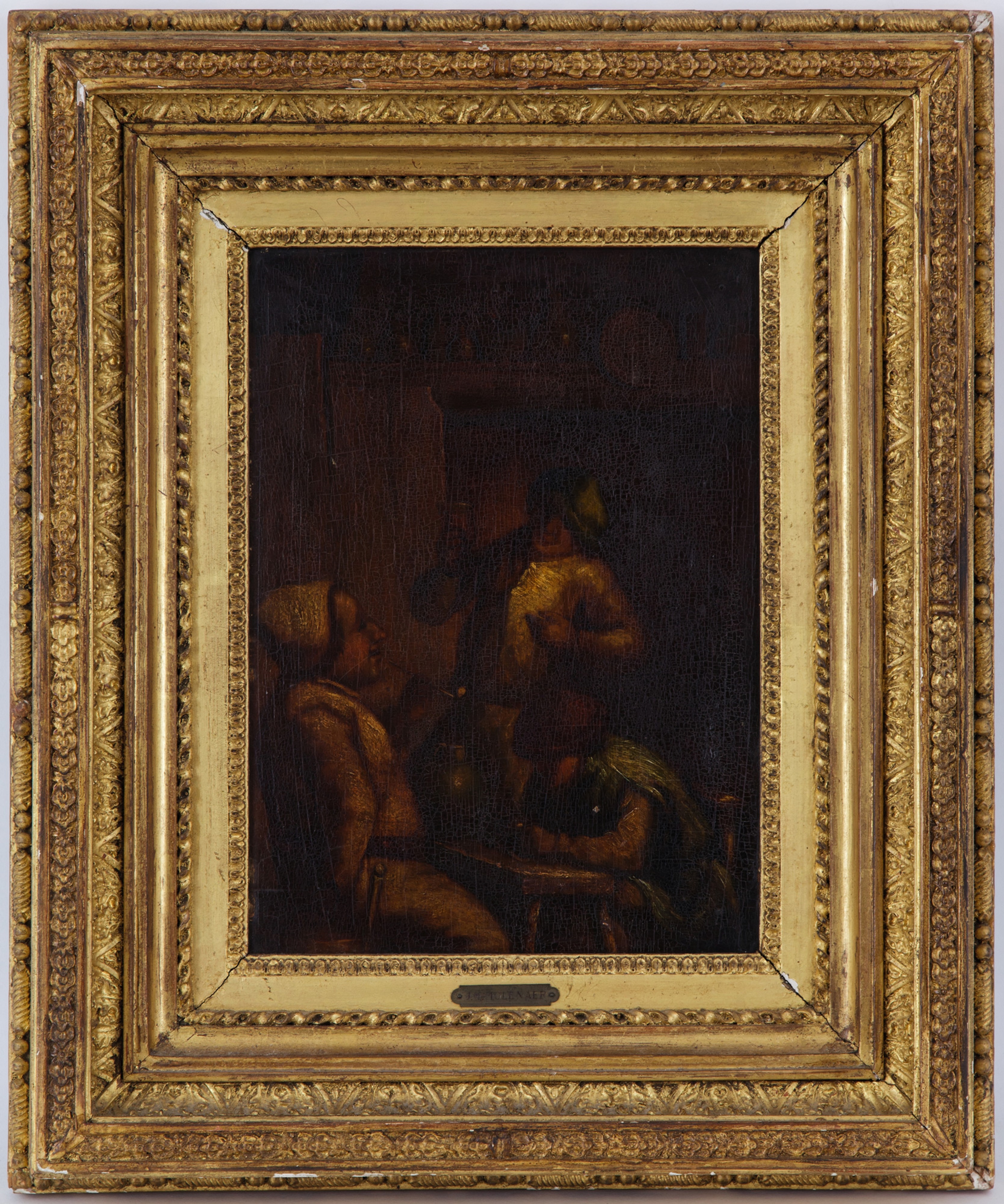
This profile brings together identity references for Jan Miense Molenaer and paintings, drawings and works on paper documented in auction catalogues.
References include catalogue entries and available results; they do not all represent completed sales. Attributed works and special lots are excluded from the priced results.
SwissArtGallery documentary note based on the cited sources. Titles, media and qualifications are provided in the profile language; the original catalogue wording remains available in each record. Profile updated :
The French painter Yvonne Canu (1921–2008), born in Meknès, Morocco, developed a Neo-Impressionist practice characterised by a divided brushstroke and the arrangement of juxtaposed c…
The Italian painter Arturo Ricci (1854–1919) is documented here through his identity and information relating to a work, La supplique. A sale notice states that the painting was purc…
The German artist Hannah Höch uses photomontage and cut-and-paste collage as means of social and political critique. Her compositions parody bourgeois life and question representatio…