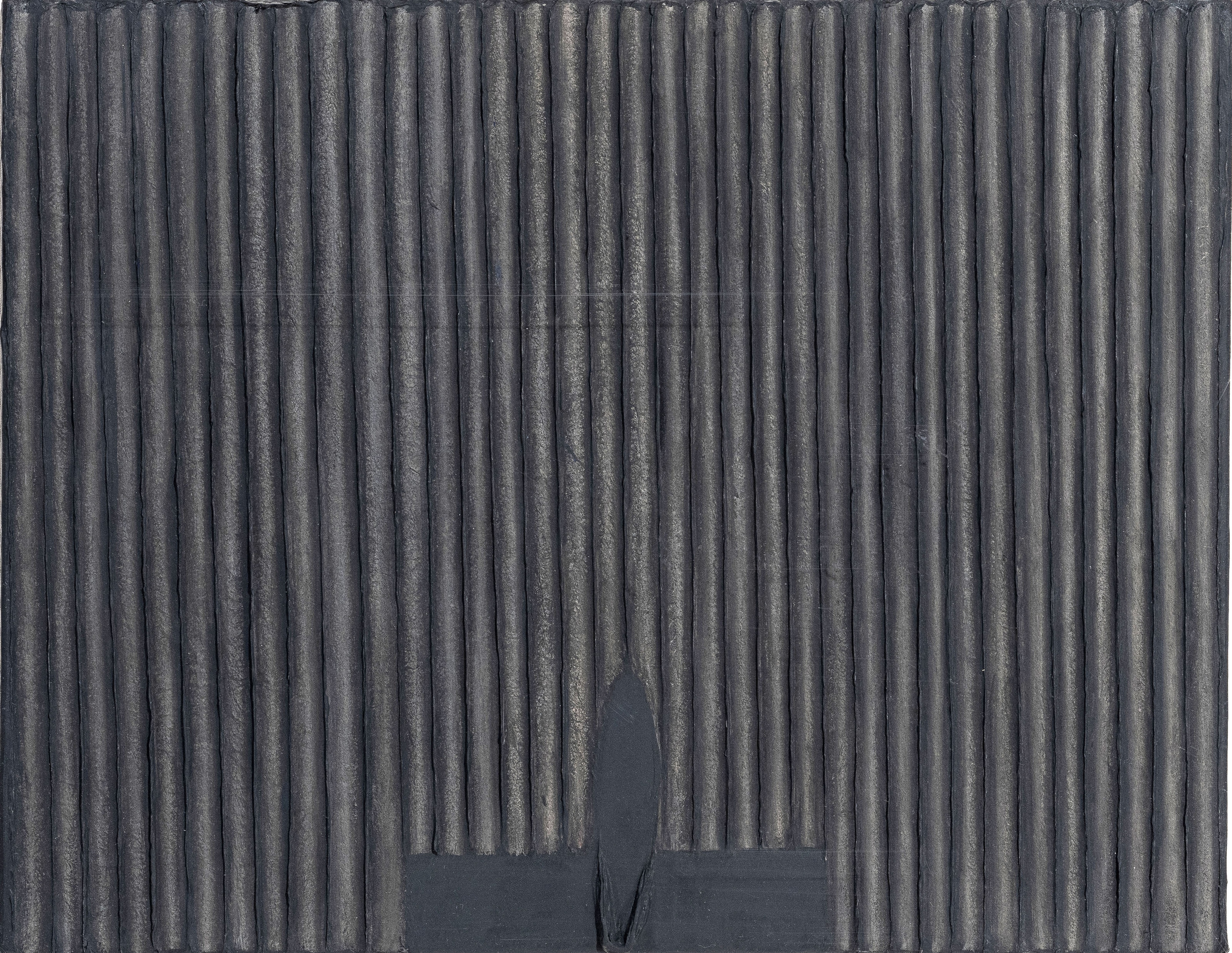
Park Seo-bo was a major figure in Dansaekhwa, a field of investigations into monochrome painting developed in South Korea. His Écriture series, begun in 1967, makes repetition a means of concentration. In the early works, he drew pencil lines into a layer of paint that was still wet. The marks intersect and overlap, allowing the time needed to construct the surface to become visible.
His practice evolved through the introduction of hanji, traditional Korean paper, which he worked into ridges and grooves. Later compositions also incorporated brighter colours. The restraint of the finished image therefore does not erase either physical effort or changes in material. Park understood the painting as the site of a continuous practice, where gesture, duration and support maintain a precise relationship with the experience of the world.
This profile brings together identity references for Park Seo-bo and paintings, drawings and works on paper documented in auction catalogues.
Documented auction references
1auction reference
1auction house
1documented result with a price
Piguet
References include catalogue entries and available results; they do not all represent completed sales. Attributed works and special lots are excluded from the priced results.
SwissArtGallery documentary note based on the cited sources. Titles, media and qualifications are provided in the profile language; the original catalogue wording remains available in each record. Profile updated :
Carle Vernet, who was born in Bordeaux in 1758 and died in Paris in 1836, was the son of the painter Joseph Vernet. A painter and draughtsman, he gave horses a prominent place in bat…
Clare Woods, born in Southampton in 1972, is a British artist who trained in Bath and subsequently at Goldsmiths in London. Her background in sculpture informs painting attentive to…
Lambert Lombard was a painter, draughtsman and architect active in Liège during the sixteenth century. In 1537, Prince-Bishop Érard de La Marck sent him to Rome to acquire antiquitie…