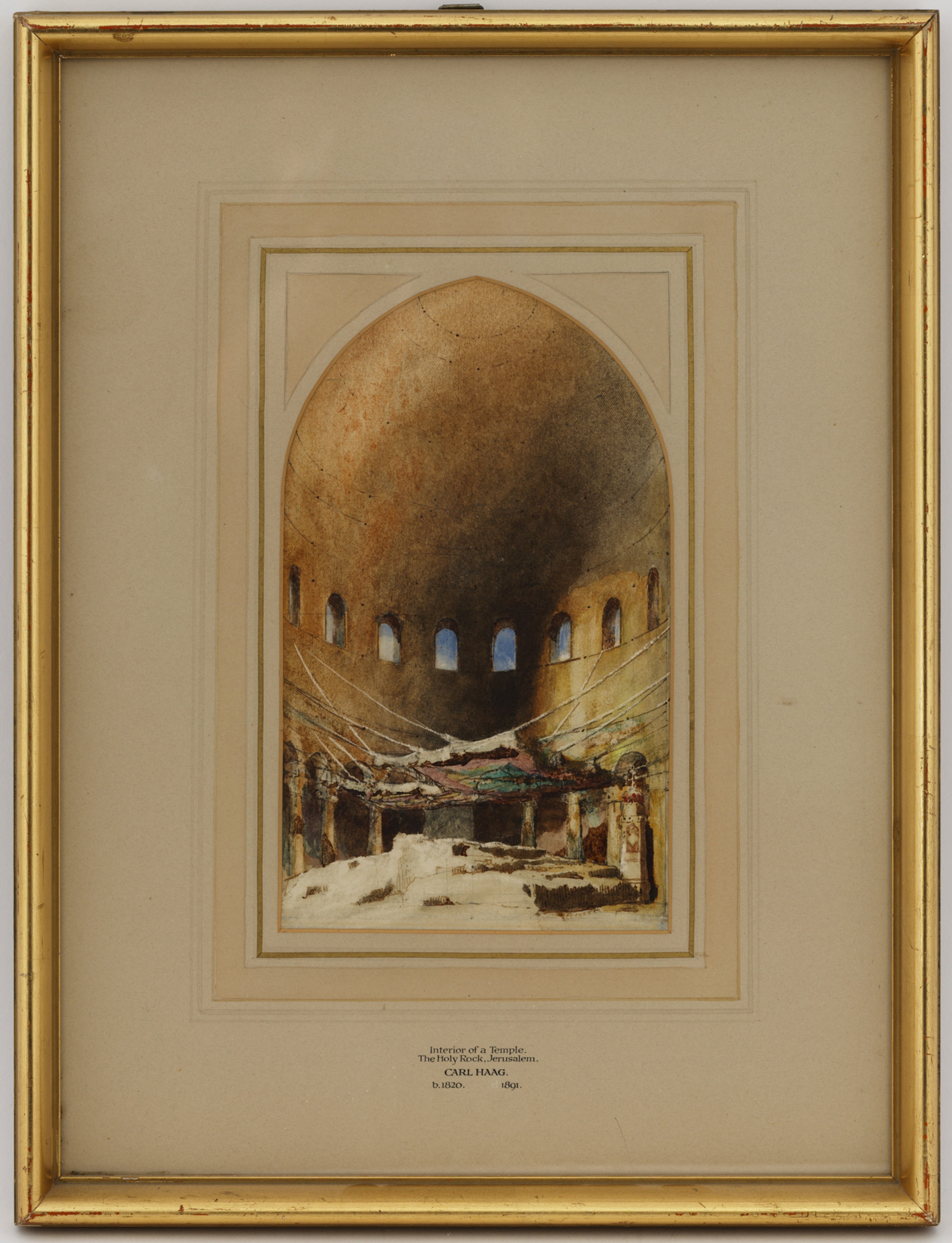
Carl Haag (Erlangen, 1820–Oberwesel, 1915) first trained in porcelain painting and at the Nuremberg art school. After beginning as a portraitist, he found a lasting direction in English watercolour painting. He lived for many years in London, joined the Royal Watercolour Society and travelled in Europe and the Middle East.
Invited to Balmoral, he depicted court life and Scottish landscapes. His scene of salmon fishing in the River Dee records an outing on 9 September 1853. In der Wüste, made in January 1859 and held by the National Gallery of Art in Washington, instead shows the remains of a camel in a desert landscape. The elongated sheet is worked in watercolour over graphite on cream wove paper.
This profile brings together identity references for Carl Haag and paintings, drawings and works on paper documented in auction catalogues.
Documented auction references
2auction references
2auction houses
2documented results with prices
Piguet · Dobiaschofsky
References include catalogue entries and available results; they do not all represent completed sales. Attributed works and special lots are excluded from the priced results.
SwissArtGallery documentary note based on the cited sources. Titles, media and qualifications are provided in the profile language; the original catalogue wording remains available in each record. Profile updated :
Anna Maria Gardell-Ericson was a Swedish painter particularly associated with landscape watercolours. Her training took her to Switzerland, the Academy of Fine Arts in Stockholm and…
Elisabeth Jerichau-Baumann was a Danish painter born in Warsaw, trained in Düsseldorf and later active in Rome. She married the sculptor Jens Adolf Jerichau and pursued an internatio…
Huguette Arthur Bertrand was a French painter associated with lyrical abstraction. Her works in the Centre Pompidou allow comparisons between oil painting and gouache. In Les ajoncs,…