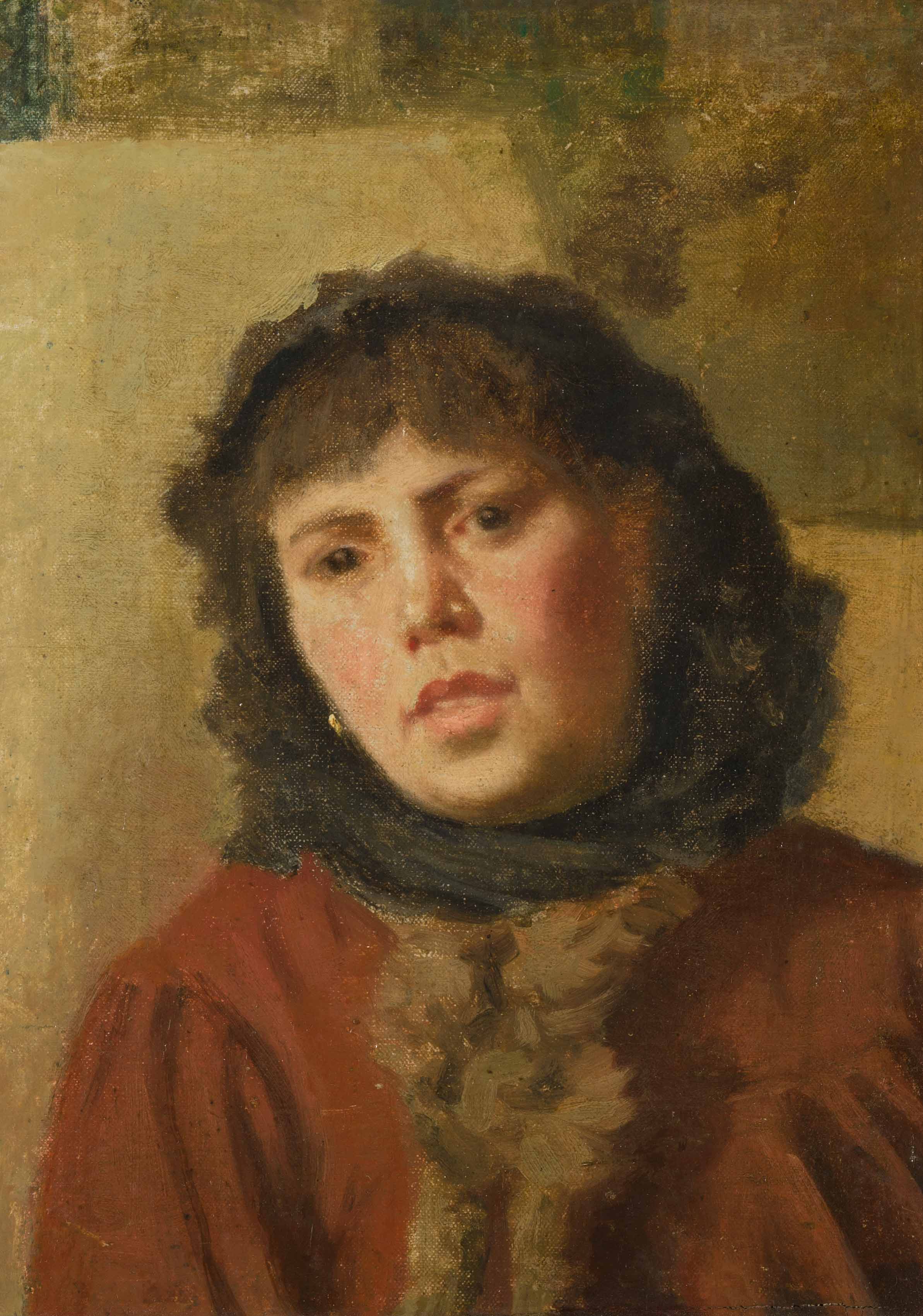
Giuseppe Pellizza, born in Volpedo in 1868 and deceased in 1907, trained at Milan’s Brera Academy. His work combined an investigation of light with attention to social life. He adopted Divisionism, placing separate touches of colour alongside one another to generate luminous effects while maintaining the structure of the forms.
Completed in 1901 after a lengthy development, The Fourth Estate brings a group of workers forward towards the viewer. Their collective march gives monumental presence to a claim for human dignity; the painting belongs to the GAM in Milan. In The Mirror of Life, painted between 1895 and 1898 and held by Turin’s GAM, landscape takes part in another direction of his artistic exploration, bringing his research into light and colour towards Symbolism.
This profile brings together identity references for Giuseppe Pellizza da Volpedo and paintings, drawings and works on paper documented in auction catalogues.
Documented auction references
1auction reference
1auction house
1documented result with a price
Schuler
References include catalogue entries and available results; they do not all represent completed sales. Attributed works and special lots are excluded from the priced results.
SwissArtGallery documentary note based on the cited sources. Titles, media and qualifications are provided in the profile language; the original catalogue wording remains available in each record. Profile updated :
Anna Maria Gardell-Ericson was a Swedish painter particularly associated with landscape watercolours. Her training took her to Switzerland, the Academy of Fine Arts in Stockholm and…
Elisabeth Jerichau-Baumann was a Danish painter born in Warsaw, trained in Düsseldorf and later active in Rome. She married the sculptor Jens Adolf Jerichau and pursued an internatio…
Huguette Arthur Bertrand was a French painter associated with lyrical abstraction. Her works in the Centre Pompidou allow comparisons between oil painting and gouache. In Les ajoncs,…