Carl Hasenpflug (1802–1858), born in Berlin and deceased in Halberstadt, specialised in architectural painting. Initially apprenticed as a shoemaker to his father, he entered the studio of the decorative painter Karl Wilhelm Gropius in 1820. He subsequently attended the Berlin Academy with the support of Frederick William III.
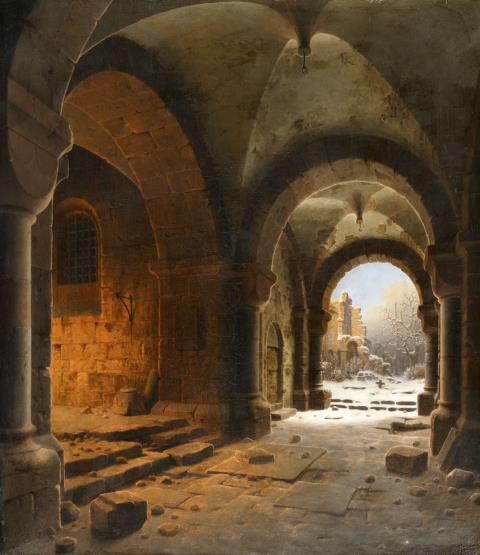
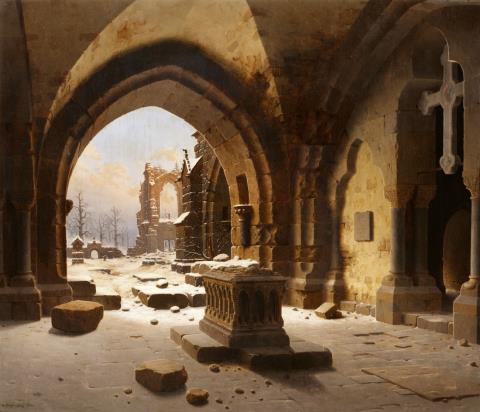
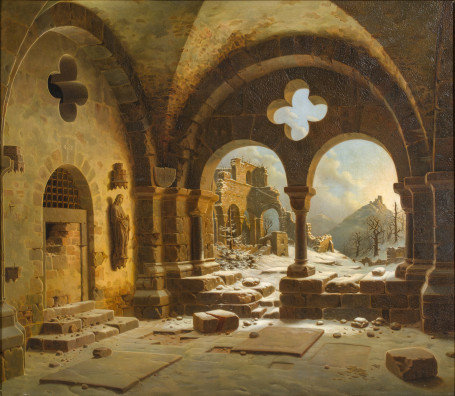
Cathedrals and medieval churches became his preferred subjects. He depicted buildings in Erfurt, Magdeburg and Halberstadt with close attention to their architectural construction. From 1838, snow-covered ruins assumed a dominant place in his work, bringing architectural observation into contact with the Romantic imagination. A version of the ruins of Walkenried Abbey, dated 1850, is held in Hanover. His career thus links a decorative painter’s practical knowledge with pictorial reflection on the remains of the past.
This profile brings together identity references for Carl Hasenpflug and paintings, drawings and works on paper documented in auction catalogues.
Documented auction references
3auction references
2auction houses
2documented results with prices
Artcurial Beurret Bailly Widmer · Lempertz
References include catalogue entries and available results; they do not all represent completed sales. Attributed works and special lots are excluded from the priced results.
Works recorded at auction
Photograph : Lempertz · Enlarge image ↗
Lempertz · Lot 1525
Klosterruine im Winter mit Blick auf Heisterbach
Oil on canvas
Original catalogue wording
Klosterruine im Winter mit Blick auf Heisterbach Öl auf Leinwand
SwissArtGallery documentary note based on the cited sources. Titles, media and qualifications are provided in the profile language; the original catalogue wording remains available in each record. Profile updated :
Trained as a tailor, Michel Nedjar makes reclaimed fabric, thread and sewing into artistic means. From 1978, his Chairdâmes took the form of dolls made from rags immersed in dye, ear…
Painter, poet and playwright Georges Ribemont-Dessaignes pursued several artistic investigations before participating in Paris Dada events. Trained in Jean-Paul Laurens’s studio, he…
Floris Verster renewed floral still life by giving ordinary plants and foliage a prominent role. Trained at The Hague’s academy, he developed an interest in Impressionism through Geo…